Friday, 20 January 2012

NHS STAFF INTERFAITH FORUM


At the Chaplaincy Centre in George Hine House, the Towers, this afternoon, discussing preliminary arrangements for establishing an Interfaith Forum for Leicestershire Partnership NHS Trust staff. I'm meeting with Abida Hussain (Equality and Human Rights Officer, Integrated Equality Service) and Sally Martin (Lead Chaplain).

Abida, Sally, staff and volunteers in the Pastoral and Spiritual Care Team will form the core membership of this group. We don't think that anything of this kind has been provided before. It’s not intended to be a "support group" in the sense that existing groups for BME staff, LGBT staff, or staff who are carers are.

It’s hoped that this can be a forum for seeking and giving advice, for consultation and discussion, for sharing good practice and sounding out new ideas.

It can be a forum in which the organisation can consult with staff on issues regarding religion or belief that impact on their work. Staff input is required to fulfil requirements of the Equality Delivery System recently adopted by Leicestershire Partnership NHS Trust.

It can also be a forum for sharing updates and information regarding relevant issues (e.g legislation and case studies). Chaplaincy staff and volunteers could be invited to attend and speak about their experiences. 

We discuss the relative advantages and disadvantages of different venues as well as other related topics, such as the possible role of social media in amplifying and extending the reach and influence of the forum.

The next stage is for Abida and me to attend a full meeting of the Multi-Faith Chaplaincy team on Wednesday 22 February at which this will be discussed further and brought closer to implementation.

DON'T DANCE TO THIS PIED PIPER'S TUNE

Suleman Nagdi's First Person column appears in today's Leicester Mercury:
Don't dance to this Pied Piper's tune
Suleman Nagdi says that public order is the priority if the EDL visit the city
On Saturday, February 4, the English Defence League (EDL) is visiting Leicester once again. As with last time in 2010, the EDL is doing its utmost to play the role of the Pied Piper. It is up to all of us to firmly press our hands to our ears and drown out the confrontational noises sounded by them.
We are all blessed to live in this great society in the United Kingdom where we are free to speak and assemble as is our right to do so.
We all have differing views across society on a wide range of issues and so long as these views are voiced in a lawful manner then we must respect the fact that every individual has a right to their own opinion.
When public disorder ensues due to the views and actions of some in society who invite aggressive confrontation then it is clear that this is unacceptable and must not be tolerated by the general public.
In this time of economic uncertainty when the population is overwhelmed by issues such as rising costs of living and a distressed employment market, the potential of public disorder is a most unwelcome prospect.
On the EDL's last visit to Leicester, there were several criminal incidents which came at a most massive inconvenience and cost to the taxpayer, such as the smashing up of shop windows and physical skirmishes.
Those who were present at the time of these horrifying incidents will no doubt have been terrified at witnessing such behaviour.
Then there is also the serious issue of how the police are inconvenienced by having to manage the visit of the EDL. The last time the EDL came to visit Leicester it cost Leicestershire Constabulary and the council £850,000 to cover the event and the Unite Against Fascism counter protest. At a time of public sector funding cuts, this places a substantial strain on the police's resources. By having so many police officers patrolling the event on the day it will mean that there will be fewer officers to assist members of the public on matters of everyday concern. The time spent in the lead-up to the event as well as in investigations afterwards will be valuable police time that will have to be diverted from other areas of work.
In these times of record unemployment, it is important to emphasise how getting a job is difficult enough as it is anyway without having a public order offence on one's record. We must collectively persuade people to stay away from events that could potentially lead to public disorder. We must do all we can to assist the police in any way we can to ensure that the threat to public order is kept to an absolute minimum.
The Pied Piper is playing his tune to a deafening cacophony at the moment. It is imperative for us collectively to not get drowned.

Suleman Nagdi is spokesman for the Federation of Muslim Organisations

Thursday, 19 January 2012

CITY MAYOR BRIEFS VCS ORGANISATIONS ON EDL DEMO

At a meeting this morning called by the City Mayor, Sir Peter Soulsby, to brief Voluntary and Community Sector organisations in Leicester about the proposed demonstration by the English Defence League (and proposed counter-demonstration by Unite Against Fascism) in Leicester city centre on Saturday 4 February.

The meeting takes place in the Mayor’s office, floor B7 of the City Council’s New Walk Centre. As well as Sir Peter, the meeting is attended by Cllr Rory Palmer, Deputy Mayor; Cllr Sarah Russell, Assistant Mayor and Joint Cabinet Lead for Community Cohesion; Cllr Manjula Sood, Assistant Mayor and joint Cabinet Lead for Community Cohesion (and Chair of Leicester Council of Faiths); a number of officers of the City Council; and Leicester City BCU Commander Chief Superintendent Rob Nixon.

Around the table are gathered representatives of several VCS organisations, each with a perceived interest in the events of Saturday 4 February and in preparations beforehand:


The Mayor tells us that he and his team – and the Police - are keen to understand the concerns of the community and assures us of their willingness to be open and transparent regarding the range of responses available to them.

If there is a common denominator among those present today, it’s the hope that the EDL come, do their thing, then leave with the minimum impact on the city that day - and on how our communities live and work together, before and after. Well, actually, not everyone can be said to agree on that as there’s a strong voice asking how it is that the EDL can be allowed to come, given what happened last time. Chief Superintendent Rob Nixon reminds us that the Police are required to ensure the safety and security of everyone involved in these events, no matter what side of the line they may be on.

Similarly, divergent views are expressed on whether the EDL are an assemblage of the most cunning criminal minds of their generation or nothing more than a bunch of beer-fuelled thugs. We acknowledge and discuss the relevance and significance of the Rhea Page assault case, which has been seized on by EDL as a pretext for coming back here.

In the end, we can all acknowledge that there's no single, straightforward, formulaic or generic answer to this dilemma that will work for every individual or for all communities. There's no simple way around this - we just have to get through it together. Reminiscent, then, of Michael Rosen's profound and subtle children's story, We're Going on a Bear Hunt. Anyone who knows the story should get its relevance in this context.

Much has been learned from the last time we dealt with such events, in October 2010. On the one hand, activities will be laid on in different parts of the city (particularly for young people) to keep people from coming into the city centre on the day. On the other hand, it's not being assumed this time that the best thing to do is to try and shut down the city centre for the duration of the demonstration and counter-demonstration.

I don't normally single out my own contributions to meetings like this, but I'm making an exception this time. I speak three times, my contributions based on something that happened back in October 2010, something that has only recently occurred to me – and something that doesn’t seem to have occurred to anyone else.

Firstly, I propose that work needs to be done quickly and urgently with schools in and around the city – and not just to dissuade older students from coming into town on the day. This is based on something Harry told me the night before the last EDL demo. The kids were visiting me that weekend. When their mum dropped them off on the Friday evening, they could hardly wait to tell me that we have to stay out of town on Saturday afternoon, because something terrible was going to happen. When I asked what that might be, Harry told me that the word around school was that Muslims were going to set off a bomb in the city centre. He was indignant about this, to put it mildly. He told me that he was angry with his schoolmates for saying this, that he knew Muslims, that he knew I work with and for Muslims - and that they're good people, who wouldn't do such a thing ("Would they Dad?"). I really don’t want to have to hear that from my kids this time. Surely we can do something to counteract this kind of thing, whether it be simple misinformation or malicious rumour-mongering.

Secondly, I mention that this is starting to remind me of The Empire Strikes Back. Perhaps we’re being punished for being a bit too smug over how we handled it last time, a bit self-congratulatory, a bit too quick to pat ourselves on the back. What we might have done is more like making a rod for our own back. On the day following the EDL demo in October 2010, we had “Celebrate One Leicester Day” as a way of claiming back the city centre, of cleansing it even. On the stage that afternoon, Billy Bragg said that that weekend would be remembered as the time when the back of the EDL was broken, that Leicester would be remembered as the place where it happened and that we’d be remembered as the people who did it. Well, here we are, hardly 16 months later – and they’re coming back. You know how Star Wars (the original one, or Episode IV: A New Hope for you fanboys out there) ends with the big ceremony in which Princess Leia hangs medals on Luke, Han and Chewie, the droids are all shiny and tweety, our heroes exchange knowing lovey-dovey looks and everyone takes the applause of the grateful multitude. Then Darth Vader returns, wiser and badder (with the wickedest most spine-tingling theme tune in movie history), kicks the rebels’ collective butt and they only escape defeat in the final reel by the skin of their teeth.

Thirdly, some anxiety is expressed that, following the proposed demo next month, EDL might put down a marker for another run-in on St George's Day in April. I back up the importance and significance of that occasion and point out what a good job City Council has done in the past few years in appropriating the weekend of St George’s Day, filling it with multicultural, family-friendly activities and leaving no room for extremist groups to muscle in. I can only commend City Council for doing this and hope that the same will be done this year – and that all our groups will see fit to join in and support it. There’s testimony to the diversity of Leicester if ever it were needed – a Scot like me bigging up St George’s Day (and not just because I share his name).

Wednesday, 18 January 2012

LEICESTER CITY COUNCIL BUDGET CONSULTATION

At Leicester City Council, B Block, New Walk Centre, King Street (Directorate Meeting Room, 8th floor) for a consultation meeting on the City Council's proposed budget. Not far to travel from the site of my last meeting this time, as it's in the very same room.

This meeting has been convened by Irene Kszyk, Corporate Equalities Lead at Leicester City Council, to give invited representatives of Voluntary and Community Sector organisations the opportunity to discuss concerns about  the City Council's budget proposals and the summary equality impact assessments in each of the service areas.

As well as Leicester Council of Faiths, there are four other organisations round the table, meeting with Irene:

Collectively and individually we make a number of observations and recommendations, that Irene can take away and incorporate into the next stage of this process.

REDP HUMAN RIGHTS SEMINAR: LOUGHBOROUGH


At Voluntary Action Charnwood this morning, delivering the first in a new series of seminars for the Regional Equality and Divesrity Partnership (REDP) on the Human Rights Act 1998.

Strictly speaking, the part on the Human Rights Act is delivered by Chino Cabon from The Race Equality Centre (TREC), while I present a Beginners Guide to REDP.

The purpose of these seminars is to help Voluntary and Community Sector (VCS) organisations appreciate the relevance of the Human Rights Act 1998 to their mission and understand its relationship to equality and diversity issues, as well enabling them to take part in the current debate about the UK withdrawing from the European Convention on Human Rights and replacing it with a new UK Bill of Rights. These topics will feature prominently in REDP's next regional event, in Derby, 22 March.

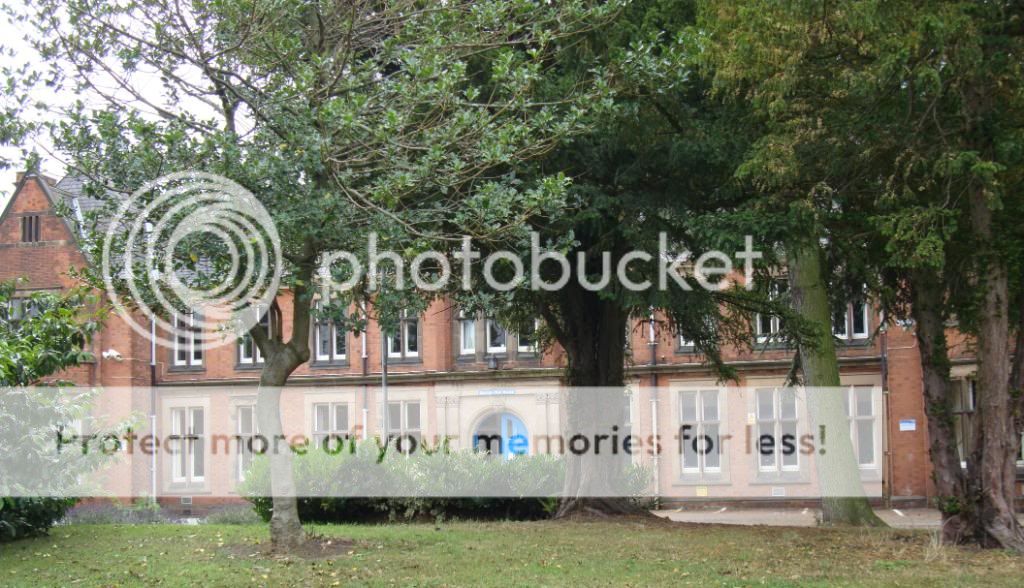
Gathered in John Storer House (photo above) this morning are ten people, representing seven VCS organisations:

STREET ATTACK USED AS REASON FOR EDL DEMO IN LEICESTER

This article is published in today's Leicester Mercury:
Street attack used as reason for EDL demo in Leicester
A vicious street attack by a gang of young women in Leicester provoked the English Defence League's decision to protest in the city.
The EDL, which says it was formed to combat Islamic extremism, issued an online video last week to link its proposed protest on Saturday, February 4, with the case of 22-year-old Rhea Page.
The assault on Miss Page and her partner in the city centre in June 2010 was widely reported in several national newspapers and on a number of web sites.
It was claimed that the sentencing judge had decided not to send the women to prison after hearing that they had acted out of character because at least one of them had been drinking.
As Muslims, one of the defence lawyers told the court, they were not accustomed to alcohol.
The Leicester Mercury was the only news organisation in court for the hearing last November.
In sentencing the women, Judge Robert Brown made no reference to their drinking or their religion.
Instead, he decided to suspend the sentences because he said Miss Page's partner had possibly used unreasonable force in protecting her, although he was not charged with any offence.
The judge said: "I can see there's a context in which there's a sense you felt you were the victim of unreasonable force."
Miss Page later criticised the judge and said the women should have gone to prison because of the attack.
Some critics of the authorities' handling of the case have claimed the women should have been charged with racially aggravated assault because one of the Somali women reportedly called Miss Page a "white bitch" once during the attack.
The Crown Prosecution Service, which determines which charges are brought against offenders, has also clarified its handling of the case.It said: "The CPS reviewed all the evidence in this case, including whether a racially aggravated offence should be brought on the basis that the comment 'white bitch' was reported to have been heard during the incident.
"However, this racist comment could not be attributed to any particular suspect and was not adopted by the group as a whole. There was no realistic prospect of conviction for a racially aggravated offence."
The women – sisters Ambaro Maxamed (24), Ayaan Maxamed (28) and Hibo Maxamed (24), all from East Park Road, Leicester, and their cousin, Ifran Nur (28), of Gotham Street, in the city – all admitted actual bodily harm and got six-month sentences, suspended for 12 months.

Tuesday, 17 January 2012

SACRE AT BAPS SHRI SWAMINARAYAN MANDIR


At BAPS Shri Swaminarayan Mandir, Gipsy Lane, this afternoon for the regular scheduled meeting of Leicester SACRE (Standing Advisory Council on Religious Education).

I'm asked to remove my shoes as soon as I step inside the building. I confess to feeling suddenly despondent at this point, as I can't bear my feet being cold and it’s bloomin’ freezing today and I’ve walked almost an hour to get here. But - miracle of miracles - the temple has heating beneath the marble floor tiles!

For half an hour before the meeting, SACRE members are given a guided tour of the Mandir. Sadly for me, I’m late and miss this part.

In the meeting, we have the second presentation in our ongoing series, Faith Focus, in which one of the members of SACRE is given the opportunity to introduce the group to their religion or belief. Today, appropriately enough, it’s a presentation on Hinduism by Hiten Bhatt, with particular emphasis on the BAPS Swainarayan tradition.

Extracts from two DVDs produced by Leicester Youth SACRE ar shown. The first of these DVDs was filmed at the conference, Challenging RE, on Friday 4 November at Holy Trinity Church. The second, a more purely promotional DVD, in which Youth SACRE members express what they’ve gained out of being involved and in which small groups of members discuss various topics (e.g. identity and belonging; peace and conflict; Wills and Kate’s royal wedding; the killing of Osama Bin Laden; religious stereotypes; prayer; and arranged marriages).

Jill Carr (SACRE’s Secretary) makes a presentation on the place of Spiritual, Moral, Social and Cultural education (SMSC) in the new Ofsted framework (and its implications for schools).

In the past year there were anxieties about the position of RE. However, the new Ofsted framework was introduced in September and there is more emphasis on the inspection of SMSC (spiritual, moral, social and cultural education) and less on community cohesion. 

Inspections will judge how well the school promotes SMSC development of pupils. What matters most is how well schools ensure high standards of achievement, learning and behaviour for their pupils, as well as contributing to their SMSC development and take account for it. All schools should be promoting pupils SMSC development and preparing pupils for life.

“In the present inspection framework, SMSC development is regarded as an outcome for pupils, which is often aligned with judgements about pupils’ behaviour and the extent to which they contribute to the school and wider community.” The new framework proposes “to shift the focus so that consideration of how well the school promotes pupils’ SMSC development forms part of the judgement on overall effectiveness. Evidence to support this will be gathered from consideration of the quality of teaching, pupils’ behaviour and attitudes, achievement, and leadership and management.”

RE, art and music are some examples of subjects that promote aspects of SMSC provision. However, discussion with pupils and staff will provide an important insight as to how SMSC is planned as part of the curriculum in other subjects. Pupils’ spiritual development is shown by their beliefs, religious or otherwise, which inform their perspective on life and their interest in and respect for different people’s feelings and values.

Jill explained how school can promote each individual aspect of SMSC development. Overall, it was good news for RE. Pupils' attitudes have changed towards RE they enjoy doing it and GCSE numbers have increased year on year. On this evidence, then, we may concluded that the RE community is stronger than ever!

Draft copies of SACRE’s annual report were distributed (an electronic version was circulated in advance of this meeting). Jill Carr summarised key points:
Standards and Quality of provision of RE:
  • One RE subject inspection this year
  • 27 Section 5 inspections fewer than last year
  • Fewer schools achieving higher grades for SMSC and Community Cohesion
  • In Leicester number taking full course remained static
  • Exam results improved A* and A brackets went up considerably
Quality Learning, teaching, leadership and Management:
  • Some training offered
  • Recruitment of staff is good
  • Head teachers in primary schools keen to promote RE / SMSC
The effectiveness of the locally Agreed Syllabus:
  • Embraced by schools
  • Raising standards of RE in the classroom
  • Adopted by Diocese and Blackburn with Darwen Education Authority
  • Around 30 Agreed Syllabuses have been sold
  • It will be amended in two years – runs for five years
Collective Worship
  • SACRE has contributed to Collective Worship in schools
  • There have been five new determinations
  • New certificate in place
  • In future, more SACRE input
Management of SACRE
  • Generally well attended meetings in different settings
  • Vacancies in groups B and D
Leicester Youth SACRE
  • Continue to be difficulties in meetings
  • DVD completed
  • Strategies needed to consolidate membership and meeting times
SACRE & Community Cohesion
  • Engaging with Faith Communitiess booklet
  • Interfaith initiatives
  • School outreach
  • Sacred Spaces
Development Plan
  • Clear priorities for this year 2011-2012
  • To develop links between Leicester SACRE and schools
  • To raise the profile of SACRE
  • To support the work of Leicester Youth SACRE

See a slideshow of images of Leicester's BAPS Swaminarayan Mandir here.

Monday, 16 January 2012

MINDFULNESS & WISDOM 1: THE SEMANTICS OF "WISDOM"


At Christchurch, Clarendon Park, for the first session in a new course, "Mindfulness & Wisdom", offered by Christians Aware as part of their Faith Awareness programme. The eight-week course has been devised by Ian Grayling and Kevin Commons (photo above) from the Leicester Serene Reflection Meditation Group (although a small group of us met one afternoon last summer to set the general aims and outline for the course - see blog entry for 12 July 2011).

There are 17 people attending this evening (including Kevin and Ian). We begin by agreeing on Ground Rules and a Code of Conduct:
  • I have the right to state my opinions, perspectives and beliefs;
  • Our dialogue regarding faith, and in general, should be mutually respectful;
  • It is okay to question and explore viewpoints, but within the bounds of mutual respect;
  • We encourage everyone to contribute without dominating and all contributions will be actively listened to.

The programme seeks to enable people to:
  • Be mindful of similarity and difference in views and attitudes;
  • Increase their awareness of breadth and depth of "wisdom" as personally experienced;
  • Consider the practice of "wisdom" as a basis for daily living.

In a break with the previous courses of this type (Mindfulness Through the Senses, 2010; Mindfulness and Morality, 2011) there's no attempt to have every major religion or belief presenting in this particular course. Christians Aware trying to include all these faiths over the course of the academic year, rather than cover each and every one in each and every term. The general shape of the course is described as a "faith sandwich": faith-neutral intro and outro, with the faith-centred part in the middle.


The chart above is a view of wisdom from the study of Knowledge Management, a relatively new academic discipline that focuses on how knowledge: develops within a social or organisational context; can be shared or liberated; can be managed as a tangible asset. It is interesting that wisdom is a recognised and accepted concept within this area of academic study.

We're set a small group exercise to improve our understanding of the process "from data to wisdom", we're broken into teams of three, each team given an envelope containing "word salad": data in the form of small strips of paper, bearing one or two words. We're tasked with sorting and compiling these into complete sentences ("information"), then discussing and deciding which (if any) go beyond "information" to be considered examples of "wisdom":
  • African Proverb: When / there / is no / enemy / within, the / enemies / outside / cannot / hurt you.
  • John Lennon: If / everyone / demanded  / peace instead  / of  / another television  / set, then  / there'd  / be peace.
  • Larry Eisenberg: For / peace of / mind, / resign / as general / manager / of the / Universe.

I don't know how much wisdom is on display in our little group, as it seems to take an inordinate amount of time for us to realise that we could follow the three different colours to collate the data! The respective colours and the way the sentences were cut up are represented above.

The table below is a view of "wisdom" from current, nationally-endorsed, resources to support teacher training. This model poses a challenge to teachers to move beyond shallow learning (for example, rote learning or “teaching to the exam”) to encourage a deeper and more critical learning process.


  • Single-loop Learning = mastering a skill or body of knowledge in its original context.
  • Double-loop Learning = involves a reflection on, and questioning of, the processes of the learning (for example, seeking better ways of achieving the task or identifying processes that could be transferred to other learning contexts).
  • Triple-loop Learning = involves an intuitive grasp and evaluation of the fundamental principles underpinning the learning (for example, "purpose, implications, ethical considerations", etc.) – these may even be used as metaphors for "life".
We're invited to put forward everyday examples of how we have (or have not) developed life skills and relate them to elements of this table. Learning to drive, cooking and film appreciation are mentioned in this context. You can access Ian's Prezi presentation for sessions 1 and 2 online.

MAPPING FAITH & PLACE: 2nd SEMINAR


At St Philip's Parish Church, Evington this morning for the latest seminar in the University of Leicester's Mapping Faith and Place project. Mapping Faith and Place is funded by the Art and Humanities Research Council (AHRC) within their funding stream, "Care for the Future: Thinking Forward Through the Past".

The core aim of the project is explore the significance of South Asian religions and cultural heritage in Leicester's urban landscape. The wider context for this work, of course, includes the other aspects of religious and cultural identity and life in the city. There's more to the diversity of Leicester in terms of faith and belief than just the South Asian representation - as the project acknowledges, both in these workshops and in its print and online publications.

This is the second of three seminars for this project. You can read earlier blog posts for the first seminar (which I didn't attend) and the launch event (which I did), both of which took place in October last year. The third seminar will be held at the University of Leicester on a date yet to be decided, followed by a final conference in the summer (although it's hoped that the project will continue beyond that period of initial funding).

Leicester Council of Faiths lent a hand at various stages of this project (although if we'd grasped how significant Mapping Faith and Place is, we'd surely have done more to help). We borrowed the two pop-up banners for our display at Highcross during Inter Faith Week a couple of months ago, when we also distributed many copies of the Leicester Faith Trail booklet. Members of staff (Dr Deirdre O'Sullivan and Dr Ruth Young - both of whom are here today) and students from the School of Archaeology and Ancient History took part in that exhibition. I'm returning the banners today.

Jen Dickson (Lecturer in Geography at the University of Leicester) kicks off the day's proceedings, outlining some key academic ideas relating to this second seminar. Today we're considering how people develop a relationship with a place, a sense of belonging to a place (and of a place belonging to you). This sense of identity is complex and contested. It's no longer tenable to believe in a discreet, fixed, lifelong identity (which leads only to stereotyping). It's not simply a case of having a single identity, made up of different elements, more a case of multiple identities, which change in relation to space and time; not so much about possessing particular characteristics, more about how we perceive ourselves, especially in relation to others.

Our senses and emotions help determine whether we feel included or excluded in a place or a community associated with it, attached to or detached from them (applies to places and/or objects near and/or far). This brings to mind the particular example of RNIB College Loughborough's Faith and Reflection Room (see blog entry, Friday 16 December2011).

We discuss how contemporary politicians are co-opting debates about belonging, inclusion and exclusion, manipulating power and/or processes that permit inclusion or exclusion, in relation to Big Society, volunteering or where it is or isn't acceptable to dress or behave in certain ways (e.g. wearing the burka). We consider how individuals and groups resist such manipulation in modern society (e.g. Occupy movement)

There are 18 attendees here today, of mixed ages, backgrounds, cultures, faiths and traditions (though I'm sorry to note that there's no one from the Jain Centre or the Nagarjuna Kadampa Buddhist Centre, since they're both such prominent faith sites in the city centre). We’ve each been asked to bring an object with us that connects us to somewhere sacred. Now, I’m sure I don’t need to explain here that "sacred" means "set apart". This seminar is about sacred places, but it also helps shows us in what ways all sorts of things could be considered sacred. That can include things more abstract, including ways of being or doing, feeling, speaking and thinking. It could even be a narrative (I like that - it means even my blog could be considered sacred!)

The Leicester Bahá'í community has no public centre or place of worship these days, although I do mention on occasions such as this that the Bahá'ís had their own official meeting place in New Walk for several years from 1957, before there was a single gurdwara, mandir or mosque in Leicester. Despite this present lack (and without mentioning the historical anomaly) the Bahá'í Faith has its own page in the Leicester Faith Trail booklet published as one of the outcomes of this project.

Similarly, Bahá'ís tend to be "artifact-light" (I just made that up, but I'm sure you get my meaning) at least of the kind that fit into the typical resource boxes you might find in schools or museums. There's little to put in display cases in settings such as the St Mungo Museum of Religious Life and Art in Glasgow for example. There's irony here, inasmuch as the Bahá'ís were one of the most enthusiastic and supportive organisations behind the creation of the museum, but once the decision was made to concentrate on artifacts and objects, then it was a foregone conclusion that they'd be virtually excluded from representation in it.

Bahá'ís have always had a very rich historical self-awareness, consciously collecting, deliberately preserving and systematically archiving material items of all sorts. This is done nationally, internationally and locally, as anyone who has visited the International Archives at the Bahá'í World Centre on Mt Carmel, or has seen items from the British Bahá'í community's archives collection, such as those put on display at the National Bahá'í Centre in London during the recent celebration of the centenary of 'Abdu'l-Bahá's first visit Britain (see blog entry, Saturday 17 September 2011) will know.

But these are sacred items, relics, one-offs; they may amaze, inspire or thrill Bahá'ís but may appear trivial or incomprehensible to others. They aren't things used every day, nor are they everyday things that are used by Bahá'ís in their practice, individually or collectively.

So, within the parameters of the Mapping Faith and Place project, in what sense are the Bahá'ís a community when, for the most part, there are no physical centres, no meeting places for collective worship, when they gather in each others' homes or in rented or borrowed venues? I long ago understood (in my own limited capacity) what it means to be a community of common commitment, of ideas, of love for the same Beloved. We can be the exception that proves the rule here.

When I arrive this morning, Revd. John Hall has thoughtfully collected a small number of Bahá'í books and leaflets from the library in the St Philip's Centre next door and laid them out on display, in case I wanted to draw on them today. That's as close to artifacts as Bahá'ís ever get!

The kind of objects people have brought with them today include books, items of clothing, physical artifacts ancient and modern, original or replica, photos etc.

When we're called on to do pairs work about our object, I'm teamed with Surinder Pal Singh, General Secretary of Guru Tegh Bahadur Gurdwara, East Park Road. While he doesn't have any one particular object with him, he describes how the five Ks are the objects of belonging and identity, not attached to any particular place, but which he takes with him everywhere - which make his whole body a sacred site.

We're asked to consider the following questions in relation to the personal object we've brought with us today:
  1. How does it represent you?
  2. What aspects of your identity in particular does it highlight?
  3. What does it say about you personally and as a member of a community?
  4. How does it represent your relation to Leicester?
  5. How might it represent identity in the past, present and to future generations?
  6. If it does not represent past, present or future identities, why not? What object would?

I had no trouble choosing my object for this exercise today. When I asked Clare to guess what it would be, she said, "I bet it's your bloomin' iPhone!" And it is. Here are a few of the reasons why this is the object I've brought to this event today. I'm not expecting anyone else to agree with me (or even to understand my explanations):

  • Google Maps. I prefer to walk wherever I can in Leicester. Even if it takes an hour or more, I'd rather walk. I would describe myself as a flaneur. Baudelaire defines the flaneur as "someone who walks the city in order to experience it." This is definitely the case when going to (and often returning from) the 19 Day Feast. Beware any routes described by Google Maps as "beta versions". "Use with caution" indeed. First time I looked up the walking route to one venue for the 19 Day Feast and it sent me one way that took more than 45 minutes. Next time, it showed me a route that took 24!
  • Podcasts. I usually listen to podcasts of Astronomy Cast on my iPhone while on my way to the Feast. 'Abdu'l-Bahá instructs us that, "before entering [the Feast] free yourselves from all that you have in your heart, free your thoughts and your minds from all else save God, and speak to your heart". Odd as it may sound to you, faithful reader, listening to my favourite podcast, about the origin, history, present condition and future of the universe helps give me a sense of my place in the scheme of things. I don't see how anyone could attend to such matters and still consider themselves the centre of creation. It's like the Total Perspective Vortex from Hitchhikers Guide to the Galaxy (but in a good way!)
  • Twitter. I can connect with Bahá'ís in other places, who are similarly anticipating or preparing for their 19 Day Feast, or who may recently have held theirs. It's not just those Bahá'ís whom I follow on Twitter or who follow me; I find the unpredictability, the randomness, not knowing who will see or respond to the hashtags #Bahai or #19dayfeast while on my way to the Feast genuinely intriguing and connecting.

I'd like to think that this will connect with the topic of the next seminar, which will consider how new technologies can be used to represent place.

After lunch, we further explore the articulation of identities, specifically religious identities, through the mind, body and the senses. We ask:
  1. How are religious identities articulated in private home spaces through food and fasting; dress; music; dance; ritual practices?
  2. How can religious identities or belief systems be articulated though the body in public spaces?
  3. How can religious identities or belief systems be articulated through time and place in public and private spaces (e.g. birth; coming of age; marriage; death)?

It seems to be taken for granted by those participating in this part of the seminar that the challenge facing religious people today is that of maintaining practices or traditions exemplified and transmitted in the home and family, against the malign influence of a changing society, maintaining momentum gained over generations. There were fewer thinking of how many people, newly awakened to the religious life (or who switch religious affiliation) are challenged to establish new practices, for oneself and/or one's children, from a standing start. So I challenge that first assumption (in typically courteous fashion, of course).

In the photo above: Dr Chris King (who began the processes that have led to the Mapping Faith and Place project at the University of Leicester, but is now attached to the University of Nottingham); Dr Deirdre O'Sullivan; Jen Dickson; Dr Dr Viv Golden; Dr Ruth Young.
Sunday, 15 January 2012

WORLD RELIGION DAY 2012

Today (the third Sunday in January) is World Religion Day.

Established in 1950 by the National Spiritual Assembly of the Bahá'ís of the United States, World Religion Day has been increasingly taken up in other countries - at first by national and local Bahá'í communities in different parts of the world, although it has also become an event widely recognised and keenly celebrated by people of other faiths too. Its purpose is:

  • to bring together people of various faith communities
  • to celebrate the unifying power of religion
  • to promote inter faith understanding
  • to encourage religious leaders and adherents to acknowledge the similarities between their faiths and work together for the common good.

In the United States, 16 January is National Religious Freedom Day, officially proclaimed each year by an annual statement by the President of the United States. I can't say whether it's more than just a happy accident that these two dates are observed so close together, but hopefully, there's a mutual reinforcement of the positive message of the unifying power of religion, that it can illumine hearts and minds with its own positive light.

There's no celebration of World Religion Day in Leicester today - again. I'm sorry to be saying that for the third year in a row. You'd think it'd be just the kind of thing Leicester would take to, wouldn't you, faithful reader? Bit of a no-brainer really - like other anniversaries, events and occasions that we could celebrate each year (but don't) such as Golden Rule Day, Week of Prayer for World Peace or any number of United Nations international days and observances. Even World Interfaith Harmony Week, established in 2010 by King Abdullah of Jordan.

We do manage to get it together for Inter Faith Week (est. 2009) and for Holocaust Memorial Day (est. 2001) of course, which shows what can be done when we put our collective shoulder to the wheel. At the age of 62, World Religion Day is the grand dame of such events. You'd think it would have had sufficient time to establish itself. How come it's so neglected?

I think that, in common with other occasions such as Golden Rule Day (for example) no one feels ownership of World Religion Day. Even though it was established by Bahá'ís, still it hasn't really gained a foothold in the Bahá'í community in the UK. Firstly, it was set up by Bahá'ís in the US and may be seen as more of an American thing. Secondly, perhaps its age is working against it. Maybe it's been around so long that it seems a bit tired now - as if it were trying to fight a battle that's now been won. After all, back in 1950 when World Religion Day was established, inter faith dialogue, encounter and relations was neither  the everyday experience or the major concern that it is today.Thirdly -and, to my understanding, most importantly - it may be considered an extraneous bolt-on, hitching a ride on the Bahá'í calendar without properly being part of it. Bahá'ís are more essentially committed to the goals of World Religion Day than any other faith community (obviously, since they invented it) but maybe, where this occasion has been successful, Bahá'ís may have done too good a job in selling it to other agencies, communities, group or organisations to see it as still being something for which they hold greatest responsibility.

Take Holocaust Memorial Day, for example. While that has deliberately expanded its appeal in relation to other communities, faith-based or not, still it is the Jewish community that drives it forward more than any other. 

Considering how exhausted I felt at the end of Inter Faith Week last year and how long it took me to get over it, maybe I shouldn't be thinking of another event that I can throw myself into, so soon.  All the same: someone or other should get their act together for this event when it rolls round again next year. It's an open goal, isn't it? Custom-made for an organisation like ours, you'd think. I'm sure we could reap considerable reward without very much effort.

In the meantime, I wouldn't World Religion Day 2012  to pass unmarked, so here it is in the blog – again (although admittedly it’s a poor show that it should be a case of all words, no action – again).

There’s a good collection of tweets about World Religion Day, many of which show what's happening in other places around the world. Just search #worldreligionday. There's some very good stuff out there, including information about ways of celebrating World Religion Day that could easily be adapted here.