Showing posts with label Office for National Statistics. Show all posts

Friday, 5 July 2013

CITY WELCOMING REST OF THE WORLD

This article appears in today's Leicester Mercury:

City welcoming rest of the world
by David Owen
Nearly a quarter of all people living in the East Midlands who were born abroad reside in Leicester, according to new study.
Not only do 24.7 per cent of the region's foreign-born residents live in the city, but Leicester also has the highest number – 100,843.
The city also saw the largest numerical growth in the migrant population – 46,283 additional non-UK born residents – in a 10-year period.
It follows a study of the migrant population in England and Wales by Oxford University's Migration Observatory, based on its analysis of 2011 Census figures compared with the previous Census in 2001.
The research is the most comprehensive carried out on the city's migrant population.
It reveals that Leicester's migrant population has increased by 71.7 per cent – from 64,560 to 110,843 in 10 years.
The data reveals that of the 329,839 people living in Leicester – the East Midlands' largest city – in 2011, 33.6 per cent were not born in the UK, the highest proportion of any place in the region.
Dr Carlos Vargas-Silva, the senior researcher leading the Census project, said: "Reports produced by the Office for National Statistics often only provide information about broad immigration trends in the country.
"The purpose of our study was to give people a clearer idea of what is happening as far as immigration is concerned where they live."
Residents born in India represent the most numerous non-UK-born group in Leicester (37,224 residents, 34 per cent of Leicester's foreign-born), followed by residents born in Kenya (7,118; 3.3 per cent); Poland (6,417; 2.9 per cent); Pakistan (3,534; 1.6 per cent), and Zimbabwe (3,377; 1.5 per cent).
Of the proportional change in foreign-born residents since 2001, Poland represents the biggest increase (1,111 per cent; 530 to 6,417), followed by China (728 per cent; 290 to 2,401); Iran (508 per cent; 111 to 675); Zimbabwe (270 per cent; 913 to 3,377, and Nigeria (269 per cent; 307 to 1,133).
Dr Vargas-Silva said: "Leicester is interesting in many ways. We expected it to be an important destination for immigrants to the country, but what we found is it is also much more diverse than most other areas. People come to Leicester from all over the world."
He said the type of immigration was also interesting.
"You have networking migration, which is people who have family, friends and relatives already living in an area, and also areas with high student populations and people looking for work. But while some places like Vauxhall, in London, have high migrant populations due to students, and Boston, Lincolnshire, with a large migrant workforce, Leicester scores high on all counts."

Wednesday, 12 December 2012

DIVER-CITY

This article appears in today's Leicester Mercury:
Diver-city
White British people now form less than half of the population of Leicester.
Figures released yesterday revealed 45 per cent of the city's residents are white British – compared with 61 per cent in 2001.
About 49 per cent of the population is made up of people from Asian, African or Caribbean or mixed race backgrounds and about 5 per cent are white but not British.
The numbers were the latest to be released by the Office of National Statistics from the 2011 Census.
The city's 93,335 Asian or British Asian Indians make up the next biggest ethnic group in Leicester, accounting for 28 per cent of the population – an increase of two per cent since 2001.
Leicester now has the highest proportion of people of that ethnic group in England and Wales, where three per cent of the total population is Asian or British Asian Indian.
Meanwhile, two per cent of people in Leicester are Asian or British Asian Pakistani, equalling the average for England and Wales.
City mayor Sir Peter Soulsby said: "It has always been recognised we have a diverse community in Leicester, and I think that is a great strength. It is quite interesting these figures should come in the year the Queen chose to start here jubilee tour here – obviously it is a strength that she recognised, too.
"These statistics are so useful as they help remind us of the people in the city.
"I think you will find a large proportion of people who, for instance, might say they are Asian will actually be Leicester born and bred."
Sir Peter said the figures would be analysed to make sure the council was providing services suited to the whole population.
The statistics, which are made up of information provided by residents, also revealed 65 per cent of the city's population was born in England.
This is lower than the average for England and Wales, which is 84 per cent.
The religious make-up of the city's population has changed drastically since the last census in 2001.
The most common religion is still Christianity. However, it is now the religion of 33 per cent of city residents, compared with 45 per cent in 2001. The next biggest group is people who said they had no religion. This accounted for nearly a quarter – 23 per cent – of people in the city, and is up six per cent since the last census.
Canon Barry Naylor, the Bishop of Leicester's adviser on urban issues, said he thought the change was down to people feeling like they could be "more honest" about their religious beliefs.
"I think in the old days people would just say 'put me down as C of E,' because they felt they should," he said.
"I think when people are more honest, it helps to show where we are.
"Also, we seem to be at a time when the church seems to be doing its best to alienate people, and that means we are not very effective at communicating what the Christian gospel is about.
"That could be a factor here."
The city has the third highest percentage of Hindu people in England and Wales – 15 per cent.
Leicester has the 11th highest percentage in England and Wales of Muslims, who account for 19 per cent of the population, an increase of eight per cent since 2001.
Overall in Leicester, 51 per cent of residents class themselves as white, regardless of where in the world they are from originally, and 49 per cent as not white.
Suleman Nagdi, chairman of the Federation of Muslim Organisations, said: "I think we are seeing what makes Leicester so unique – there is no such thing as a majority.
"I think it shows we need to keep working hard to keep our relationships going."
The figures released yesterday were the second set of statistics released from the 2011 census.
Population figures were revealed in July, when the Mercury reported the city has 329,900 residents – 16 per cent more than in 2001 when the figure was about 282,800 – the fastest growth of any city in the region.
More than a quarter of Leicester's population – 27 per cent – is aged 20 or under, making it the youngest population in the East Midlands.

Thursday, 14 July 2011

EAST MEETS WEST IN BURTON ON TRENT


This afternoon I attend a joint meeting of the East Midlands Network on Spirituality and Mental Health and its West Midlands counterpart (or, depending on your viewpoint, the other way round) at All Saints Church, Branston Road, Burton on Trent. There's a good turnout of more than a dozen today, including faces old and new to me:

High on our agenda today is how to make best use of our personnel and resources across the East and West Midlands. We decide that from now on, both networks will meet four times a year: independently then jointly then repeat the pattern. We'd like to encourage members to cross over between the regions in the independent meetings as well as taking part in the joint meetings.

We enjoy three presentations today:
  • "On Common Ground / The Wounded Healer" by Peter Gilbert
  • "The Development of a Spirituality E-Learning Package" by Helen Philpott
  • "We Need to be Made to See the Elephant: Clinical Psychologists' Experience of Addressing Spirituality in Supervision" by Sam Malins

We discuss some upcoming conferences and hope we'll be able to participate in some of them, in one way or another:
  • "Living in Hope: Spirituality and Practice in Mental Health Care", Liverpool Hope University, Thu 13 October 2011
  • "Doctors, Clergy and the Troubled Soul: Two professions, One Vocation?" St Marylebone Parish Church, London, Wed 2 November 2011
  • "Dementia and Belief systems", Staffordshire University, Fri 6 January 2012
  • "Spirituality in a Fragmented World", Highgate House, Northampton, Tue 15 - Thu 17 May 2012

Phil Henry speaks about the proposed programme of public events at the Multi-Faith Centre at the University of Derby in the autumn (and possibly into the new year) on the theme of Well Being. He gets several volunteers today willing to present sessions in the programme - including me! I fancy doing something based on the consultation about indicators for measuring national well being run by the Office for National Statistics, to which I responded for the Regional Equality and Diversity Partnership (REDP) in May.

Professor Peter Gilbert has edited a new book, Spirituality and Mental Health, which he brings to our attention today. This will be of interest and importance for everyone interested in the relationship between the two. I promise Peter I'd give the book a boost in every way I can, including here in the blog.

This is a handbook for service users, carers and staff wishing to bring a spiritual dimension to mental health services. It contains 23 chapters on aspects of spirituality and mental health written by experts in the field. It promotes an understanding of people’s belief systems rather than a mechanistic approach to mental health services and proves the increasing importance of spirituality in health and social care.

Saturday, 19 March 2011

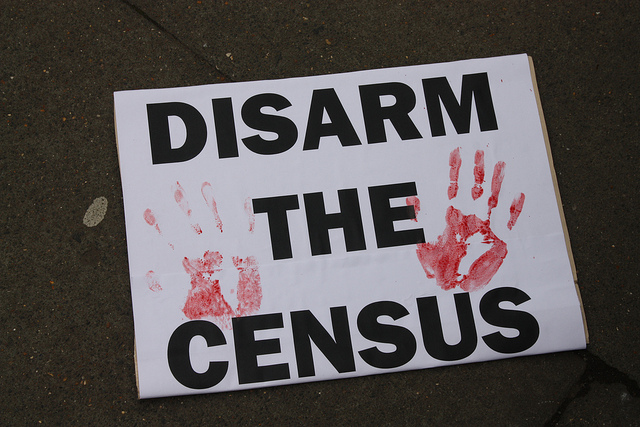
FEARS OVER CENSUS SECURITY FUEL BOYCOTT THREATS


Eight days to go before the Census on Sunday 27 March. Debate, discussion, dissension and protests continue. Here's a piece from today's Guardian.
Fears over census security fuel boycott threats

Backlash against £150m contract for US arms firm

Law professor dismisses worth of data safeguards

By Matthew Taylor

A growing number of people are planning to boycott this year's census amid increasing fears about data security and the involvement of arms manufacturer Lockheed Martin.

Many campaigners are angry that the £150m contract to run the census has been awarded to the American arms company while others claim the legal safeguards in place to prevent breaches in data security are "so flimsy as to be useless".

Chris Browne, from the Count Me Out campaign, said: "The more people who find out about the involvement of the world's largest arms producer in our census, the more civil dissent we will witness, and the bigger the campaign will get."

Protesters held a day of e-action today in which people were urged to swamp Lockheed Martin a "Twitter storm" and email messages detailing the minutiae of their day. Hundreds more are expected to take part in protests across the country on Saturday, with many saying they are willing to risk a criminal record and a £1,000 fine by refusing to fill in the 32-page questionnaire.

"I have no objection to the census itself because I recognise that it has served an important purpose historically," said Emma Draper, an anti-arms trade campaigner from London: "However, I think it is outrageous that the government can get away with paying a huge arms company millions of pounds in order to process data which is supposed to be of benefit to public services and people's welfare."

Lockheed Martin, which makes Trident nuclear missiles and F-16 fighter jets, won the £150m contract in 2008. A spokesman for the Office of National Statistics defended the company's involvement, stating it was "a major supplier of non-defence-related services for the public sector".

An ONS spokesman said: "The contract for census processing was awarded to Lockheed Martin UK – not Lockheed Martin US – in August 2008. Lockheed Martin UK offered best value for money in an open procurement under European law and the EU procurement directives were satisfied."

Symon Hill, writer and associate director of Christian thinktank Ekklesia, said many people remained unhappy about the decision and that he would be among those not be filling out the census. "Lockheed Martin is a company that has armed dictatorships around the world that has played a heavy role in the disastrous wars in Afghanistan and Iraq... I have reflected at great length. I have not taken this decision lightly but I feel that being asked to fill in the census is being asked to co-operate with an arms company and, as a Christian and as a pacifist, that is something that I feel I can not do in conscience."

Data from the census forms, which need to be completed by 27 March, is sent to a secure plant in Manchester and then to Titchfeld, Hampshire, for analysis. It is owned by ONS and a spokesman said it remains confidential for 100 years.

The government uses the information to award billions of pounds in grants and a boycott would cause widespread policy and funding difficulties. Councils would be hit hardest, potentially missing out on hundreds of millions of pounds if large numbers of people are not counted.

A spokesman for the ONS said: "The census ... is a unique snapshot of the population on a single day and is vital for your local community."

Lockheed Martin does more than 60% of its work for the US defence department and assists more than two dozen American government agencies. It is also reportedly involved in surveillance and data processing for the CIA and the FBI.

Campaigners fear that because it is a US company and therefore subject to the Patriot Act, which allows the US government access to any data in its possession, US authorities could have access to personal data on the UK's entire population.

The ONS has dismissed this claim, stating: "Under the contractual and operational arrangements we have put in place, no employees of Lockheed Martin UK or of its US parent or of any other US company will be able to access personal census data. The US Patriot Act could not therefore, be used to access such data." The spokesman added that a recent independent review had declared: "the public can be assured that the information they provide to the 2011 census will be well protected and securely managed".

Douwe Korff, professor of international law at London Metropolitan University, has questioned the security arrangements, warning that the "legal safeguards against breaches of confidentiality are so flimsy as to be useless".

"In a democracy under the rule of law, one should not have to rely on blind trust in the authorities; the law should guarantee restraint," he wrote in e recent paper. "However, the law that applies to the census data shortly to be collected does nothing of the sort. It does not stand in the way of the UK police, or intelligence services, or indeed foreign law enforcement agencies and secret services, seeking access – not just in exceptional cases but for general 'trawling' or 'fishing'."

Tuesday, 1 March 2011

CALLS FOR CAP ON IMMIGRATION

This article appears in today's Leicester Mercury:
Calls for cap on immigration
Asian leaders in Leicester are calling for restrictions on immigration to help make it easier for the unemployed to find work.
They spoke out after a survey showed more Asians are now opposed to immigration than white Britons.
Research commissioned by anti-fascist charity Searchlight Educational Trust found 39 per cent of Asians, 34 per cent of white people and 21 per cent of black people believed immigration should be halted permanently or at least until the UK's economy was back on track.
Mukesh Naker, spokesman for the Leicester-based pressure group British Hindu Voice, said: "Most British Hindus in Leicestershire would subscribe to the view that considering the state of the UK's economy, it is unwise to have uncontrolled immigration.
"British Hindus are concerned that if immigration and extremism are not managed and controlled properly, groups with far right extremist views will make advances which could lead to more difficulties for everyone."
Mr Naker said he was not surprised more Asians opposed immigration than white Britons.
"The number of Asians holding this view may be higher because most new arrivals tend to settle in large cities which normally have a higher Asian population, and the impact on jobs and the availability of resources would be that much greater on those communities," he said.
Suleman Nagdi, of Leicester, is spokesman for the Federation of Muslim Organisations. He agreed the number of immigrants should be controlled.
"We believe that in the economic downturn, when jobs are hard to come by, it would be very difficult to absorb many more people into this country," he said.
"However, we do recognise there are some skills that certain industrial sectors need, so it would be difficult for the Government to halt immigration completely.
"The other area of concern is a rise in immigration would play into the hands of far-right groups for whom immigration is the only issue."
More than 5,000 individuals were questioned for the immigration survey, including 455 respondents from the East Midlands.
The subsequent report, titled Fear and Hope: The New Politics Of Identity, reveals a large proportion of voters, across all races and communities, now have immigration concerns.
The level of net migration into the UK rose by 36 per cent last year, according to the Office for National Statistics.
An estimated 572,000 people entered the UK on a long-term basis in the year to June 2010 while 346,000 emigrated.
Ministers want to reduce net migration levels, the difference between the two figures, to tens of thousands by 2015.
To help do this, the coalition Government plans to cap immigration from outside the European Union.