Showing posts with label Inter Faith Network UK. Show all posts

Thursday, 23 May 2013

INTER FAITH NETWORK UK STATEMENT RE WOOLWICH INCIDENT

As you can imagine, faithful reader, many comments and statements will be made regarding the incident in Woolwich, Wednesday 22 May 2013. I'm posting a selection of these on the blog, limited to relevant organisations with which Leicester Council of Faiths is involved to some extent. Below is a statement by the Inter Faith Network (UK) issued today in the names of the Co-Chairs:
We learned with deep shock and great sadness of the murder of a young member of the armed forces in Woolwich yesterday afternoon. Such acts of violence and terror have no place in our society.
Our thoughts and prayers are with the victim’s family.
The attackers linked their actions with the religion of Islam.  Statements from major national Muslim bodies have, in the ensuing hours, condemned the act in the strongest terms and stressed its lack of connection to – and complete contradiction of – teachings of Islam.   Even so, there have been attacks on two mosques over the course of the last 24 hours and concerns expressed about the possibility of further attack.
Our thoughts and prayers are also with any whose places of worship or personal safety are affected.
In the wake of this terrible attack, all who share a commitment to a peaceful, safe and just society have a vital role to play in strengthening community bonds and working for greater understanding and mutual support at times of difficulty.
Dr Manazir Ahsan MBE (Co-Chair)
The Revd Bob Fyffe (Co-Chair)
Dr Girdari Lal Bhan (Vice-Chair)
Mr Mohinder Singh Chana (Vice-Chair)
Mr Dorab Mistry (Vice-Chair)
Mr Vivian Wineman (Vice-Chair)

Tuesday, 20 November 2012

INTER FAITH WEEK 2012, DAY 3: HIGHCROSS EXHIBITION


Second day of our week-long exhibition in Highcross for Inter Faith Week.

Last time we were in this spot, our ten banners were arranged “circle the wagons” style. That seemed good enough for a while, but palled after a bit – the arrangement appeared somewhat unstable, somewhat shabby, especially when viewed from above. This time I’ve partly followed the style we adopted last year, of putting the banners back-to-back, though this time they’re laid out in a straight line. The display is bookended by the “generic” banners for Leicester Council of Faiths itself, with Leicester University’s "Mapping Faith and Place in Leicester" and "Leicester Faith Trail" behind them.


As regards the individual banners for our faith community members, they're set back to back so that the visitor, approaching from one direction, sees the four Abrahamic religions of Middle Eastern origin in historical order (Jews, Christians, Muslims, Bahá'ís).


Approaching from the other direction, the visitor sees the four Dharmic religions, of Indian origin in historical order (Hindus, Jains, Buddhists, Sikhs).


First on this morning, John Catt (Leicester Secular Society) and Kartar Singh (Near Neighbours project). They're in the photo at the top of this post. They were joined by Scott MacDonald (Leicester Bahá'ís) shortly after I'd left.


I arrive on the stall just before 1400 to do a couple of hours myself. Dr Ruth Young (Senior Lecturer in Archaeology and Director of Distance Learning Strategy at the University of Leicester School of Archaeology and Ancient History) is photographed above, handing over to Sheila Markham (Leicester Hebrew Congregation). Sheila also took part in the philosophy panel at St Paul's yesterday, so I get a bit more info about how that went.

In the middle of the afternoon we receive a visit from Paresh Solanki of the Inter Faith Network of the UK. I'm hoping for better coverage of our Inter Faith Week activities in the national report than we received in last year's. Paresh and Sheila are pictured below.


Shortly after 1600 I leave the exhibition in the evidently capable hands of Billy Dedat and Ravinder Kaur. This is the first time that either of them have taken part in this event, the first time that I've met either of them - and the first time they've met each other. Their involvement together here today is serendipitous. Billy is Chair of the Leicestershire branch of the Association of Muslim Police and is a member of Leicestershire Police's Prevent Engagement Team, while Ravinder works for Leicestershire County Council's project LWA: Living Without Abuse. They're quickly talking about ways in which they can work together after this event. They're shown together in the photo below (Billy on the left, Ravinder on the right).


My immediate task now is to get a couple of banners and some of our free literature out to Leicestershire Police HQ in Enderby, where our Faith in Family seminar is taking place this evening. What with phone batteries running out, parking in the wrong street etc it's not quite as smooth a procedure as I'd have hoped. Eventually, Fayyaz Suleman (Vice Chair of Leicester Council of Faiths) swings by Pilgrim House to pick up the stuff and get ti to the venue on time.

I'm not attending the seminar myself. We've had no one come forward to fill the Tuesday evening slot and we can't leave the exhibition unattended during opening hours at Highcross, so I'm on duty here for a couple of quiet hours.

After Highcross closes, I head back to Pilgrim House and wait for Sughra Ahmed to drop off the banners and literature, since I'll need to use them very early tomorrow. She brings them back at 2145 - with some nice munchies left over from the seminar.

Here are some of the things that visitors and volunteers have written on the labels and hung on our little white tree today:
The earth is but one country and mankind its citizens
Hate creates hate, love creates love. May love concure [sic] over hate
It's only when we believe we can't make a difference ... will humanity end!
Multiculturality - more of it please!
For all those who are not going to get better
It's your actions that define who you are and not what labels you give yourself
I wish my grandad gets healing from spirits! Love, Tara, Sarita, Simren, Bobby xxx
God bless everyone at Christmas
I wish the peace everywhere around the world
Mutual respect and appreciation
The unexamined life is not worth living

I'd bought a set of mixed coloured Sharpies for people to use when writing on these labels. I left them in the OMG mug on the table at our display overnight. Sometime between the end of last night and the start today, someone nicked them. I can only hope that some underprivileged person will be getting a nice set of Sharpies for Christmas.

Wednesday, 13 July 2011

EMAS COMMUNITY ENGAGEMENT EVENT FOR LEICESTERSHIRE & RUTLAND


This morning I take up on invitation to attend a "Community Engagement Event" with the Leicestershire and Rutland Division of the East Midlands Ambulance Service (EMAS). I'm here today (with the agreement and support of my Personnel Management Group) rather than being at the National Meeting of the Inter Faith Network being held in Birmingham (the first time in four years I've missed attending that).

The venue is The Venue, a multi-purpose community facility in Gwendolen Road that I didn't know existed before today - and very nice it is too. The event has been funded through proceeds from EMAS's recycling scheme, so not a penny has been taken from front line services to pay for this today.

When I arrive and start putting up our banner, I'm told that there's already a Council of Faiths pop up banner inside the main meeting too. I'm initially baffled by this and go in to have a look. I'd forgotten that EMAS had paid for one of the banners when the exhibition was made for display in Highcross during National Inter Faith Week 2009. EMAS had said that they'd be using this banner at their own events and, true to their word, here it was. So I put up the banner I'd brought in the foyer That's it in the photo above, flanked by Mukesh Barot on the left (Equalities Manager at EMAS) and Jagtar Singh (conference facilitator) on the right.

This event provides an opportunity to meet the Interim Chief Executive of EMAS (Prof. Tamar J Thompson OBE) and members of the Management Team for Leicestershire and Rutland; for the Ambulance Service to hear the views of the patients, public and communities they serve; and for us to become more directly involved in discussions about EMAS's current and future service provision.

East Midlands Ambulance Service provides emergency, urgent care and patient transport services for 4.8 million people across the six counties of Derbyshire, Leicestershire, Lincolnshire (including north and North East Lincolnshire), Northamptonshire, Nottinghamshire and Rutland. EMAS is currently in the process of becoming an NHS Foundation Trust. An NHS Foundation Trust is a new form of NHS organisation with greater freedom from government control so that it can better meet the needs of local communities. It remains part of the NHS and is subject to NHS standards, providing care paid for by the taxpayer, to NHS patients. To make this transition successfully, EMAS it has to involve service users and community representatives. People from all walks of life in the area served by EMAS can sign up to become members of its Trust.

This is the first meeting of its kind that EMAS has held, focusing on one of its geographical divisions (in EMAS terms, Leicestershire includes the city of Leicester). It's introduced as having an educational purpose, with the intention of helping save lives by encouraging communities, families and individuals to take better care of their health and well-being. We're asked not to think that it's merely a box-ticking exercise on EMAS's part, but a genuine beginning of working with alongside communities as partners. It follows up EMAS's presence and involvement in the Mela in Leicester at the weekend just gone, where more than 350 people were enrolled as members of EMAS's Trust.

A few facts and figures that we're given about EMAS (Leicestershire and Rutland Division) today:
  • Geographical area: 1,000 square miles
  • Population served: 984,000
  • Ambulance stations: 11
  • Staff: 544
  • Accident and emergency call demand (2010-11): 91,000

With the current restructuring of service providers, EMAS will shortly be the only genuinely regional health body serving the whole of the East Midlands.

I feel a debt of gratitude and loyalty to EMAS, inasmuch as they contributed to funding my post after the initial grant from central government ran out at the end of March 2008. If it hadn't been for that assistance (paid for helping EMAS organise a summit on issues of religion and belief related to ambulance service provision in August 2008) I don't think my post would have survived beyond that initial stage. The summit was covered in depth in an illustrated article in EMAS's Lifelines magazine which is still accessible online (issue no. 9, Autumn 2008, pp.11-14).

As well as being here as a show of good faith with an organisation (and certain individuals inside that organisation) that helped preserve my post, I've also been asked to be here specifically because of a small number of incidents involving paramedics at local places of worship. More than once in recent months, paramedics have been called to attend places of worship for what is classed as a "Category A8" call ("A" signifying top priority - meaning that there is a perceived immediate risk to life, "8" being the number of minutes within which they must arrive at the scene of the incident) but have then been denied entrance to the premises because they have not removed their shoes or have not taken the time to cover their heads. One such incident also involved people at the place of worship being upset because a female paramedic arrived to treat a male patient. I take the time to speak with members of the EMAS team who have a special interest in these matters and we tentatively agree to meet up soon after this event and discuss in more depth what can be done to avoid such incidents occurring in future.

I also have a friendly and interesting chat with Simon Behan, EMAS's Recruitment Manager, about ways in which to make a career in the Ambulance Service more appealing to young people within the diverse faith communities of Leicester.

Kelly Jussab and Liz Harrison are here with promotional material for the Regional Equality and Diversity Partnership (REDP) as is Chino Cabon from The Race Equality Centre (TREC). REDP has been involved in helping EMAS develop its Community Engagement Strategy - both through attending focus group meetings around the region and critiquing the strategy as it has developed on paper.

There's a demonstration of how paramedics treat patients suffering cardiac arrest and the opportunity to take a guided tour round an ambulance vehicle. We're also offered a free mini health check today. The queue for that forms to the left of our banner and leaflet display, as you can see in the photo above. That's good news for one attendee, who is discovered to have a dangerously slow pulse and is given what's described as "life saving treatment" right away.

There's a choice of four workshops:
  • Performance and response: what happens when you ring 999
  • Infection control and vehicle cleanliness: practical demonstration with Q&A
  • Engagement: how can EMAS engage/involve you more effectively
  • Access: what can the Ambulance Service do to improve access to services and career opportunities?

Guess which one I attended, faithful reader ...

A buffet lunch brings this short, but very useful meeting to an end. We're told that we won't be allowed to leave today until each one of us has designated an ICE number on our mobiles. That's a person who should be contacted In Case of Emergency. Paramedics routinely look for this number on the phone of patients who are unconscious or can't communicate. I do this for mine - and sign up as a member of EMAS's Trust too.

Wednesday, 23 February 2011

Near Neighbours comes to Leicester


Here's the text of a press release from the St Philip's Centre for Study and Engagement in a Multi Faith Society that's being circulated today. Rev. Dr Alan Race brought this to the Council of Faiths Board meeting last night, though there wasn't time to do much more than acknowledge it. Clearly it's something to which we should give greater attention.
The Government has today announced a £5 million grant to help bring people who are near neighbours together. Those living in communities that are diverse are encouraged to get to know each other better, build relationships and collaborate together on initiatives that will improve their local community.

To deliver the Near Neighbours programme, the Church Urban Fund and the Church of England are setting up a new charity providing national oversight, called Near Neighbours, who will administer the scheme. Locally, the programme will make use of the parish network of the Diocese of Leicester, and administer the programme through the St Philip’s Centre (other parts of the programme will focus on centres in Bradford, Birmingham and London).

Near Neighbours has two key objectives:
  1. social interaction – to develop positive relationships in multi-faith areas
  2. social action – to encourage people of different faiths, or no faith, to come together to act for the improvement of their local neighbourhood

The programme will see grants from £250-£5,000 being made available to groups from the Christian faith and other faiths, and those from no faith, who meet the programmes objectives in bringing people together to build relationships and strengthen local communities. The first grants will be released towards the end of 2011.

In announcing the programme in a press release today, the Secretary of State for Communities and Local Government, Eric Pickles, said “religious organisations play an enormous pastoral role in our neighbourhoods and have excellent networks within our communities – no more so than the Church of England … Near Neighbours will build on this and bring folks from different backgrounds together for the good of the community that surrounds them – be it a sports event or working together to improve a local park.2

In welcoming the news that Leicester will be a focus for this new work, the Bishop of Leicester, the Right Reverend Tim Stevens, said, “I am very glad that Leicester has been chosen to be part of the Near Neighbours project. We have a long track record of working together as faith communities to strengthen our community. With partners right across the city and county, we will now be able to continue this work, and ensure we all work together for the common good.”

The project has support from the Inter faith Network for the UK, the Christian Muslim Forum, the Council for Christians and Jews and the Hindu Christian Forum. Dr Musharraf Hussain of the Christian Muslim Forum said, ‘We are hugely grateful to the Department of Communities and Local Government for supporting this work’, and Ramesh Pattni, of the Hindu Christian Forum echoed this message with support of his own, "The Near Neighbours project has a real resonance with the Hindu ethos of the Universal family… We are confident of the positive outcome of greater understanding and local change with the implementation of this project."

Rev. Canon Dr John Hall, Director of the St Philip’s Centre, said, "After several months of careful planning and conversations behind the scenes, it is excellent news that from today we can go public and begin further strengthening the bridges already in place between different faiths and neighbours in Leicester. To be able to have funds to facilitate this will mean a great deal to local people who want to strengthen the association and relationships locally, and of course give practical expression to this through social action. This will enable the Good Samaritan story to live time and time again!"

Read an article on the Near Neighbours project from The Guardian's website:
http://www.guardian.co.uk/society/2011/feb/20/church-of-england-community-cohesion

Find out more about St Philip's Centre for Study & Engagement in a Multi Faith Society:
http://stphilipscentre.dioceseofleicester.com/

Tuesday, 18 January 2011

Leicester Council of Faiths: full meeting

We have a full meeting of the Council of Faiths in the Welcome Centre this evening. Seven of our eight member faith communities some of them in a variety of denominations.

Our topic this evening is a Code of Conduct for members. A Code of Conduct for Directors / Trustees has already been agreed - at this meeting we're discussing how this can be adapted to fit members of the wider Council.

Some members of longer standing, some past office bearers in years gone by, refer to a Code of Conduct produced by the Inter Faith Network of the UK, that had been agreed and adopted in the past. Not only that, Leicester Council of Faiths has played its part in developing this code and is a signatory to it on a printed list on the published version of the code itself (which is available in a variety of community languages). At some point, the fact that we'd signed up to this dropped off our radar and when it was felt again that such a thing was necessary, a new one was created, based on good practice among charities and and voluntary organisations, rather than turning to this one.

Rahter than simply junk this recently written one in favour of the existing code by the Inter Faith Network (which seemed like an option at one point), we discussed how to use them in a complementary way, recognising the special nature of our institution and our work in Leicester. We had a similar discussion about the relation between a Code of Conduct and our Articles of Association.

By the end of the evening, we'd collectively read through the proposed Code of Conduct, trimming and refining it, and agreeing on its wording. I think we were all pleased with how this evening went. The meeting was conducted in an affable, supportive way, with a lightness of touch.

When we're provided with the accepted form of this Code of Conduct, I'll publish it here.

Friday, 17 September 2010

National Inter Faith Week 2010: aims

Lots of time this morning for thinking about the forthcoming National Inter Faith Week, following yesterday's welcome news that we'll be exhibiting in Highcross again. I look back over the blog to remind myself of the aims for the week, as declared by the Inter Faith Network UK:

  • to strengthen good inter faith relations at all levels;
  • to increase awareness of the different and distinct faith communities in the UK, in particular celebrating and building on the contribution which their members make to their neighbourhoods and to wider society;
  • and to increase understanding between people of religious and non-religious belief.

Nine weeks to go - not forgetting that there's the Council of Faiths contribution to "Leicester Speaks" (AKA Local Democracy Week) to organise in the meantime!

Thursday, 8 July 2010

INTER FAITH NETWORK UK: ANNUAL NATIONAL MEETING 2010


This is my third time attending this annual event since I began working for Leicester Council of Faiths. The first was in this same venue, Glaziers Hall (2008), the second at Grace Road, home of Leicestershire County Cricket Club (2009). On those two earlier occasions, I acted as note-taker at one of the workshops. This time I'm free to take part in the day in my own right.

The theme of the National Meeting this year is "Shaping Our Shared Society: The Key Role of Local Inter Faith Organisations". Growing numbers of inter faith organisations are working at local level to develop good inter faith relations and to encourage cooperation on social issues. This meeting offers a chance to hear about how they are developing their work and about the challenges they are facing and the opportunities they see ahead. The topic is relevant to all types of body in membership of the Inter Faith Network: to local bodies themselves; to national faith communities which support and encourage their work; and to national and regional inter faith bodies which are, increasingly, looking to find ways to work in partnership with local projects and to support their work.

We're welcomed by Rt Rev Dr Alastair Redfern and Dr Girdari Bhan, Co-Chairs of the Inter Faith Network

Plenary sessions this morning:
Building good inter faith relations locally: a task for our times
Dr Harriet Crabtree, Director, Inter Faith Network, considers the changing landscape for local inter faith work and some of the key issues helping shape this; and reflects on the vital importance of local inter faith initiatives.

Developing good relations in the multi faith city
Kashmir Singh Rajput, Chair of Bradford District Faiths Forum, gives an insight into how this busy metropolitan faith forum has been working to identify issues of importance to the different faith communities in the city and its neighbourhoods and to build a range of partnerships to enable dialogue and social cooperation, both across communities generally and also bilaterally and trilaterally between particular communities.

A perspective from Government on the importance of local inter faith work as part of developing good community relations
Andrew Stunell OBE, MP, Parliamentary Under Secretary of State in the Department for Communities and Local Government with responsibilities including community cohesion (including future of Prevent); building regulations; race equality and the Big Society.

Dialogue on the spot
A moment to talk with your neighbours about the themes of the day

Developing local inter faith work in less diverse areas
Dr Maureen Sier, on secondment from the Scottish Inter Faith Council to the Scottish Executive/Government draws on her experience of working with local inter faith groups in Scotland to discuss how inter faith work is being developed in less diverse areas. How – if at all – does this differ from work in a multi faith city?

National faith communities – supporting and encouraging local inter faith work
Moulana M Shahid Raza OBE, Chair of the Mosques and Imams National Advisory Board (MINAB) talks about its new initiative to encourage imams to play a role in local inter faith bodies and to encourage their congregations to do likewise.

Inter Faith Week
Stella Opoku-Owusu, Local and Regional Inter Faith Officer and Elin Henrysson, Project Assistant, Inter Faith Network give a short presentation of images of the 2009 Week and ideas for 2010. Fakhara Rehman, Community Faiths Coordinator, Kirklees Faiths Forum: our Inter Faith Week story - a packed Week of events for every age!

Sustaining the vision: resources and structures
Anna Allen, Head of Programmes, Community Development Foundation (CDF), talks about how recent funding programmes have been helping support local inter faith initiatives and reflects on some of the challenges for these of developing sustainable patterns of funding and structures which can help underpin their work well.

Seven workshops are run this afternoon on the following themes:
1. Developing a relevant and lively programme
Hear from two local groups about how they have been developing their programme and exchange ideas with members of groups in other areas.
Facilitator: Patricia Stoat, Chief Executive Officer, Faith Forum for the East Midlands
Presenters: Ryad Khodabocus, Community Relations Development Worker Luton Borough Council/Luton Council of Faiths and Peter Adams, Luton Council of Faiths; Dr David Capey, Suffolk Inter-Faith Resource

2. Outreach and membership
Developing a strong membership base and involving the faith communities in your area. A chance to discuss methods of outreach and patterns of membership, including some of the issues to consider when developing a constitution.
Facilitator: Amy Willshire, "Faith Ambassador", Waltham Forest Faith Communities Forum, London
Presenters: Brian Pearce OBE, Adviser, Faith and Public Life, Inter Faith Network; Resham Singh Sandhu MBE DL, Member, Leicester Council Faiths, Vice-Chair, Leicestershire Faith Forum and Trustee Faiths Forum for the East Midlands

3. Resources and training for religious literacy and inter faith understanding
A number of local inter faith bodies now run training for public authorities and others and produce materials to help people learn about the faiths in their areas or to understand what inter faith work is about. A chance to hear from two groups and to share your own experiences of this kind of work.
Facilitator: Rev Andrew Brown, Public Education Programmes Manager for the Woolf Institute, Cambridge
Presenters: Jatinder Singh Birdi, Warwick District Faiths Forum; Jonathan Marshall and Vallabhdas Meswania, Plymouth Centre for Faiths and Cultural Diversity

4. Involving young people in local inter faith programmes
Last year’s Inter Faith Network National Meeting had a special focus on young people and inter faith relations and an Inter Faith Network/National Association of SACREs looked at this in the course of a seminar on joint working by local inter faith bodies and SACREs. This workshop is a chance to talk about how local inter faith bodies are working to involve young people in their activities.
Facilitator: Ramona Kauth, Birmingham Council of Faiths
Presenters: Pastor Charles Kwaku-Odoi, Faith Network 4 Manchester; Dr Phil Henry, Director, Multi Faith Centre at Derby University which is developing a Derby Youth Inter Faith Forum (in consultation with the Faith Forum for Derby)

5. Multi media approaches to making the work known
Websites, radio interviews, DVDs, leaflets, newspaper articles. What are some of the ways that local inter faith bodies are using to gain more profile for themselves?
Facilitator: Jyoti Mehta, Institute of Jainology, Young Jains and Inter Faith Network Executive Committee member
Presenters: Paresh Solanki, Assistant Director (Communications and Development), Inter Faith Network; Selina Brown, Executive Communications Officer, West Midlands Faiths Forum

6. National faith communities and support for local inter faith work
Looking at how national faith communities are helping local members building good inter faith relations locally – and also learning from local inter faith groups.
Facilitator: Mgr Andrew Faley, Assistant General Secretary, Catholic Bishops’ Conference of England and Wales and Inter Faith Network Executive Committee member
Presenter: Philip Rosenberg, Interfaith Officer, Board of Deputies of British Jews
With brief responding reflections from Dr Joy Barrow, Inter Faith Relations Officer, Methodist Church in Britain and Ramesh Pattni, Co-Chair, Hindu-Christian Forum and Chair of the Interfaith Committee, Hindu Forum of Britain

7. Inter Faith Week: Looking back to 2009 and forward to this year’s Week
Discussion about the 2009 Week and plans for the 2010 Week. Come and share your news and ideas.
Facilitator/ Presenter: David Vane, Buddhist member and Secretary, Southampton Council of Faiths
Presenter: Rev Alan Bayes, Chair, Inter Faith Council for Wales

The final session of the National Meeting is:
Perspectives on the development of local inter faith work for the future
Short reflection pieces from: Deanna Van der Velde, Newcastle Council of Faiths, Chair, North East branch of Council of Christians and Jews and Chair, Newcastle SACRE, and member, Task Group, North East Regional Faith Network Ganesh Lall, member of South London Inter Faith Group and Caribbean Hindu Society; Mehru Fitter, member of Coventry Multi Faith Forum, Executive member, West Midlands Faiths Forum and member of Zoroastrian Trust Funds of Europe.

Monday, 10 May 2010

National Inter Faith Week lives on

Just had a phone call from the Inter Faith Network UK. They're putting together the final report on National Inter Faith Week 2009 and want to use pictures and text from this blog in their report. You never know when someone will look at older entries in the blog and want to make use of something that might otherwise appear dead and buried. The text and images can have an interesting afterlife. A bit self-referential to mention this here in the very blog itself, but I do like that sort of thing. Very Post-Modernist, innit!

Saturday, 20 March 2010

national inter faith week 2010

The Inter Faith Network UK has announced that there will be a National Inter Faith Week later this year. National Inter Faith Week in November 2009 was the first of its kind in England and Wales (a similar event has been running in Scotland for the past six years). When the 2009 event was announced and then held, it had not been decided whether it would be a one-off. Those organisations that took part in it were asked to recommend whether they would like to see it run again. We at Leicester Council of Faiths said that we would. Here's the text of the letter from the Inter Faith Network UK:
An Inter Faith Week will take place across England and Wales from Sunday 21 to Saturday 27 November 2010. The aims of the Week are:
  • to strengthen good inter faith relations at all levels;
  • to increase awareness of the different and distinct faith communities in the UK, in particular celebrating and building on the contribution which their members make to their neighbourhoods and to wider society;
  • and to increase understanding between people of religious and non-religious belief.
This will be the second time that such a Week has taken place in England and Wales. It builds on the very successful pattern of events held last November which ranged from social action events, to discussions and dialogues, inter faith football matches, meals, inter faith walks and pilgrimages, festivals and celebrations, tree plantings, exhibitions, concerts, film festivals, activities in schools and in FE and HE and other institutions.

Minister for Cohesion Shahid Malik said "The 2009 Week was a big success. It raised the profile of faith communities and their contribution to society, increased inter faith engagement and understanding and helped people of religious and nonreligious beliefs get into dialogue. I am delighted that there will be a similar Week in 2010.”

Co-Chairs of the Inter Faith Network for the UK, Rt Revd Dr Alastair Redfern and Dr Girdari Lal Bhan, said “Inter Faith Week offers a tremendous opportunity for shared learning, making new connections and deepening inter faith understanding.” It is hoped that faith communities across the country will take part, alongside schools, colleges, universities, local authorities, health care organisations, and many others.

The Week is being led by the Inter Faith Network for the UK, working with its member bodies, in consultation with the Department for Communities and Local Government and also with the Department for Children, Schools and Families, the Local Government Association and the Equality and Human Rights Commission. Regional Faith Forums in England will again play a key role in supporting and making known the pattern of events in their regions.
The Inter Faith Network for the UK was founded in 1987 to "advance public knowledge and mutual understanding of the teachings, traditions and practices of the different faith communities in Britain" and to promote good relations between people of different faiths in the UK. IFN links over 170 member bodies including: national representative bodies of the Bahá'í, Buddhist, Christian, Hindu, Jain, Jewish, Muslim, Sikh, and Zoroastrian faiths; national, regional, local and other inter faith bodies; and academic institutions and educational bodies concerned with inter faith issues.

The Inter Faith Week website will be further developed across the coming weeks to provide additional resources (including a report on last year’s Week) and event and project ideas.

Find out more about the Inter Faith Network UK:

Find out more about National Inter Faith Week:

Thursday, 28 January 2010

SACRE @ Friends Meeting House


To the Friends Meeting House, Queens Road this afternoon, for a meeting of Leicester SACRE (Standing Advisory Committee on Religious Education).

This is the second SACRE meeting I've attended on behalf of Leicester Council of Faiths. The Inter Faith Network for the UK is encouraging local inter faith groups to become more closely involved with SACRE in their area. But SACREs have very particular functions and responsibilities and it can be difficult to see just how local inter faith groups fit in with that. But there's a good spirit of cooperation between the Council of Faiths and SACRE in Leicester and we're considering the best fit between us. SACRE is rewriting its constitution and an appropriate place for the Council of Faiths can be found within the new one.

This meeting is a good example of the kind of role we can play alongside or within SACRE. Leicester City Council has become concerned about the effect on school attendance of time taken off for religious observances. Such time taken off was not visible before because of the use of an "R" code in school registers. This marked days off for religious reasons and the school had discretion about whether this had to be included in the overall number of absences. In effect, a pupil could be off school for purposes of religious observance, but could be considered as being present on those days. Recent changes in recording absences in school have done away with the "R" code, so schools no longer have that discretion. Now if a pupil is off school for religious reasons, it must be shown as an absence - even if an authorised one, it still contributes to the school's record of total absences. So, all of a sudden, the number of absences has leapt for the city as a whole - from 15,858 sessions missed in 2007-08 to 45,453 session missed in 2008-09 (figures are for all schools, primary and secondary). That's a 300% increase in one year, all due to a new method of recording. The City Council is considering a range of options that would allow schools in Leicester to be more responsive to the pattern of life of the city's faith communities, thus ameliorating the effect on children’s education of missing so many sessions. Several practical (and a few impractical) options are discussed at this meeting today. One step that was agreed on was to engage leaders and representatives of the city's faith communities on this topic. The Council of Faiths recently hosted a focus group with representatives of the City Council on the current review of bereavement services (see blog entry, "staying in focus", below). We may be able to offer the City Council something similar on this issue. It's not my place to commit the Council of Faiths to doing such a thing on this occasion, but I will pass this on to our officers for them to make a decision. I gave my calling card to the two representatives of the City Council who brought their paper on this topic to this meeting and said we'd be in touch.

Noel Singh, Policy Officer with Leicestershire County Council, speaks about relations with Leicestershire SACRE and the Interfaith Forum for Leicestershire. It's gratifying to see that Noel's notes are written on REDP notepaper!

We also get an update from Jill Carr on the booklet series project, "Engaging with Faith Communities in Leicester", which I'm helping write, along with the Schools Development Support Agency (SDSA).

Find out more about Leicester SACRE:
http://www.leicester.gov.uk/your-council-services/education-lifelong-learning/school-staff/curriculum-subjects/religious-education/sacre/

Thursday, 31 December 2009

2009'S TOP 10: SPECIAL MENTIONS

Before arriving at number one in this top ten countdown for 2009, I thought I'd write a little about a few other events and occasions that didn't make it into the countdown proper, but which still deserve special mention here.


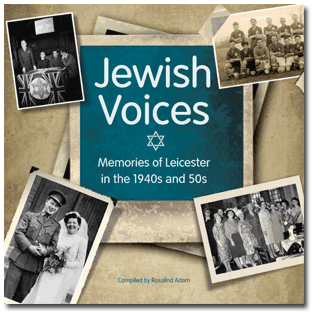
Launch of "Jewish Voices",
Brookfield Bowls & Social Club,
Kimberley Road, Leicester,
Wednesday 11 March 2009

For several months starting summer 2008, around 70 people who had been members of Leicester’s Jewish population in the 1940s and 50s contributed to a mixture of writing and photography workshops, oral recordings, emails, phone calls and letters. This provided raw material for a reminiscence writing project coordinated through Writing School Leicester, published as Jewish Voices. Having taught in the Writing School for the past five years or so, I was involved in the project, contributing editorial support. This launch event for book, touring exhibition and website brought this part of the project to a successful conclusion - and brought forth a great new set of resources at the same time. My work on this project was done in 2008 and my involvement in the launch was to sit at the back of the room, drink tea and eat cake. That might go some way to explaining why, as good as it was, this event didn't get into my top ten then.


Visit to Mosquée de Paris,
Monday 25 May 2009

The flavour of Islam on offer in this delightful mosque differs strongly from that with which we find in Leicester - or anywhere else in the UK for that matter: a clear and enjoyable illustration of the diversity of Islam. I know that's obvious to those who know this sort of thing, but it's still a point worth making. The Paris Mosque was built in 1922 to honour the North African countries that had helped France during World War I and closely resembles mosques to be found in Marrakesh, Morocco. A major renovation of the mosque was completed in 1992 (and there was considerable restoration work going on the day I was there). I spent a few hours at the mosque in a personal capacity on a very hot Monday morning. Being in the mosque was cool and soothing, as well as inspirational. This lovely experience left an impression on my mind and heart that remains strong and sweet - rather like the tea I had in the mosque's restaurant, where little birds with bejewelled anklets flitted around the tables.


National Meeting and AGM of the Inter Faith Network for the UK,
Leicestershire County Cricket Club, Grace Road, Leicester,
Monday 6 July 2009

We could say it was quite a coup to have this prestigious event in Leicester, but the Council of Faiths can't take any credit for it. In fact, we somehow caught wind of this rather late and didn't really make the most of the opportunities that this event presented. The Inter Faith Network for the UK chose Leicester for its major annual and national event. We had the luxury of joining in like other attendees despite the fact it was in our own back yard. We were able to showcase our work and resources to a good number of people from all over the UK. The conference theme was the engagement of young people in inter faith work; the Scottish Inter Faith Council sent a delegation to speak on this theme, made up of young people whom I'd met at the "Beyond Tolerance" event at Glasgow University in June (see number 6 in this list of my top ten for 2009). The Inter Faith Network of the UK published its report of this event online.


"Exploring the Diversity of Hinduism",
Christchurch, Clarendon Park Road, Leicester,
21 September - 30 November 2009

A ten-week course on Monday evenings, run by Christians Aware. Their courses are almost always attractive and thought-provoking, but I've not been able to commit to one before. I didn't get to every meeting of this course in the end, though I'd rather that I had. I've retained a lively interest and deep affection for many aspects of Hinduism, from my teen years when I read the Bhagavad Gita and Upanishads and listened to recorded recitation of the Vedas. My encounter with Hinduism influenced how I dressed, what I ate and drank, the music I listened to - and in those days I was able to devote a couple of hours a day to yoga and meditation. I found this course refreshing and inspirational. I felt like it put me back in touch with something that had once been central to my life, and has always provided something meaningful, even if it's been in the shadows. Several people whom I met on this course came forward to support the exhibition at Highcross during National Inter Faith Week and I'd like to express my thanks for that here (I have thanked them individually of course).


Climate Change Conference,
John Foster Hall, University of Leicester,
Saturday 24 October 2009

I'd been involved in planning this event for well over a year, part of a small group spearheaded by Rev Dr Alan Race. The event was originally planned to span three days in July, be much more international in scope, with speakers and attendees from different countries. It was also intended to be part of the centenary celebrations for St Philip's Church. However, publicity for the event was sent out around the time people started becoming seriously nervous about the recession, so the original plan had to be scaled down to this one-day event. I didn't actually get into any of the sessions, as I sat outside taking registration, pointing out the way to the loos, rustling up refreshments etc. I also had to dash back to the Welcome Centre late morning to pick up some paperwork that should have been on site, so I got to see virtually nothing of the conference itself and didn't hear the speakers or panels. I did these things on the day voluntarily, I should add - but for that reason it hasn't made it into my top ten proper. Those who did take part in the sessions and workshops seemed to feel the benefit tremendously though! A report of this event was published on the World Congress of Faiths website.


Apple Day,
Quaker Meeting House, Queens Road, Leicester,
Saturday 31 October 2009

This might seem out of place at first sight, but I surprise even myself sometimes at how much of my everyday experience can be relevant to my job. This event relates to a common and growing phenomenon that has interested me for a few years now: people who describe themselves as being "spiritual but not religious". There were many things about this celebration of Apple Day that illustrated this principle, in my opinion. It drew together a diversity of people (in terms of age, class, culture, educational attainment) welcomed them all and offered things for them to do appropriate to their needs and interests. On a more subtle level, it used an artifact that has long suffered a negative symbolic status and appropriated it for positive purposes. The use of the apple as something that not only binds us to nature, but also functions as a symbol of national pride, is quite a meaningful step. Over and above all that, there was plenty of apple-based food and drink on offer. A lovely slice of apple pie, combined with custard (surely another symbol of our national culture) was very welcome.

This was the first time I'd heard of Apple Day, but it's an annual celebration, normally held on October 21 each year, of apples and orchards. Apple Day was initiated by Common Ground in 1990 and has been celebrated in each subsequent year at hundreds of local events around Britain. Common Ground describe the day as a way of celebrating and demonstrating that variety and richness matter to a locality and that it is possible to effect change in your place. Common Ground has used the apple as a symbol of the physical, cultural and genetic diversity we should not let slip away. In linking particular apples with their place of origin, they hope that orchards will be recognized and conserved for their contribution to local distinctiveness, including the rich diversity of wildlife they support. More recently Apple Day has evolved into a weekend event, usually taking place on the Saturday and Sunday closest to 21 October. (thanks, Wikipedia!)

This particular celebration was arranged by Transition Leicester, and held at one of the city's most accessible and adaptable places of worship. I think that simply reproducing the programme here will be more effective than me chuntering on about it.
10.00-11.00 Apple music improvisation. Come and experiment with voices, instruments and sound on a theme of apples. All ages welcome. No experience needed. Bring instruments if you want to.
11.00-11.30 Low input apple growing talk. A short talk about growing apples in a time of climate change and peak oil with a chance to ask questions afterwards.
11.45-12.45 Storytelling. Listen to a storyteller bringing magical, fantastical, mythological and English apple and tree stories to life.
12.30-1.30 Apple rounds. Learn apple rounds to sing in unison and harmony. You don’t need to be able to read music or sing well to enjoy making fabulous music with other people.
1.30 – 4.30 Apple Impression print workshop. Use discarded apples and natural colours to print your own stunning patterns. Make a picture to hang up or a cover for your recycled notepaper. Anyone can drop in and out at any point. Children especially welcome.
1.30-2.00 Low input apple growing talk. A short talk about growing apples in a time of climate change and peak oil with a chance to ask questions afterwards.
2.00-3.00 Starting where North, South, East and West meet, apples are for everything not just to eat. A writing workshop for children aged 8-12. Use play, listening, feeling and guessing to bring words to life. Parents needed to support children who find writing hard.
2.30-3.30 Harvesting a crop of juicy words. Creative writing on a theme of apples for adults.
2.30-3.30 Biting the Apple. In this workshop for teenagers we will be looking at the symbolism of apples, playing collaborative automatic writing word games and coming up with individual takes on a crunchy theme.
4.00-5.00 Storytelling. More apple tree filled stories and worlds for you to enter with your storytelling guide.

Harry and Grace thoroughly enjoyed themselves; my abiding memory is of Harry peddling furiously on a stationary bike, the energy from which was being used to crush a bucket of apples. He ended up spattered with a lot of apple shrapnel!

I'd recommend a look at Common Ground, the organisation which founded Apple Day. They exist to promote local distinctiveness, have much to say about the "spirit of place" and encourage creation of "Local ABCs". In my mind, this could all be creatively applied to Leicester with great effect - since we're so proud of our diversity. That's work still to be done by someone or an interested group; I'm sure there are more people than just me who have an interest in this.