Showing posts with label Observer. Show all posts

Sunday, 31 July 2011

Nobel chairman warns Europe's leaders over 'inflaming far-right sentiment'

From today's edition of The Observer:


Nobel chairman warns Europe's leaders over 'inflaming far-right sentiment'
Thorbjørn Jagland says Europe's leaders are 'playing with fire' if they use right-wing rhetoric when discussing multiculturalism
By Mark Townsend, Home Affairs Editor
Europe's leaders, including David Cameron, have been warned to adopt a more "cautious" approach when discussing multiculturalism. The Norwegian chairman of the Nobel Peace Prize committee has told them they risk inflaming far-right and anti-Muslim sentiment.
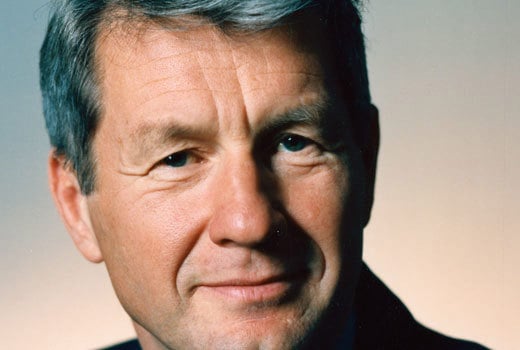
Thorbjørn Jagland, a former prime minister of his country, said leaders such as the British premier would be "playing with fire" if they continued to use rhetoric that could be exploited by extremists.
Four months ago in Munich, Cameron declared that state multiculturalism had failed in Britain, a view immediately praised by Nick Griffin, leader of the BNP, as "a further huge leap for our ideas into the political mainstream". Marine Le Pen, vice-president of the far-right National Front party in France, also endorsed Cameron's view of multiculturalism, claiming that it corroborated her own party's line.
Jagland's comments come in the wake of the Oslo bomb and the massacre on Utøya Island that left 77 people dead. The killer, Anders Behring Breivik, said he was inspired by the right-wing English Defence League. Breivik sent his manifesto, published online hours before the attacks, to about 250 British members of the BNP, the EDL and the Stop Islamisation of Europe group.
Jagland, who is also secretary general of the Council of Europe, told the Observer: "We have to be very careful how we are discussing these issues, what words are used.
"Political leaders have got to defend the fact that society has become more diverse. We have to defend the reality, otherwise we are going to get into a mess. I think political leaders have to send a clear message to embrace it and benefit from it.
"We should be very cautious now, we should not play with fire. Therefore I think the words we are using are very important because it can lead to much more."
Jagland has also urged leading politicians to change their terminology. He said the word "diversity" was better than multiculturalism because the latter had become defined in different ways by different groups. "We also need to stop using 'Islamic terrorism', which indicates that terrorism is about Islam. We should be saying that terrorism is terrorism and not linked to religion," said Jagland.
Over the years before his attacks, Breivik developed an ultra-radical stance that initially incorporated the forced repatriation of Muslims from Europe, but ultimately targeted Norway's centre-left government, which had encouraged multiculturalism. During his court appearance on terrorism charges, the 32-year-old said he had acted to prevent the "Muslim takeover" of Europe.
[...]
During Cameron's Munich speech, which combined a passage on terrorism with one on integration, the prime minister talked extensively about "Islamist extremism" as being the source of terrorism.
Breivik saw David Miliband, Gordon Brown and Tony Blair as worthy of assassination because, according to his 1,500-page manifesto, they had a "friendly attitude" to immigrants.
Jagland says he has sympathy with Cameron's attempt to robustly promote a shared set of British values as an alternative to multiculturalism, if not with his delivery. "We are not searching for a society where we have only different cultures. We also need to have something that holds us together, to respect common values," he said.
Jagland, who last year gave the Nobel peace prize to jailed Chinese dissident Liu Xiaobo, who was represented by an empty chair at the ceremony in Oslo, added that the immigration debate also needed to be less negative.

Sunday, 17 April 2011

What effect has the internet had on religion?


Here's a terrific article from The New Review with today's edition of The Observer.  It's in the "Discover Technology" section, part of a series entitled "Untangling the Web", written by Aleks Krotoski. Aleks Kroski presented an excellent four-part TV series on BBC2 entitled "The Virtual Revolution". She also hosts Tech Weekly, the Guardian's technology podcast.

What effect has the internet had on religion?
Online, God has been released from traditional doctrine to become everything to everybody
By Aleks Krotoski
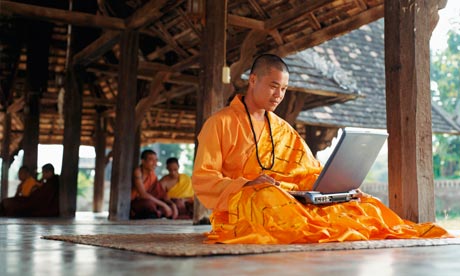
I  remember several years ago, when the virtual world Second Life was the thing on the web, wandering in the embodiment of my avatar through a most extraordinary representation of a cathedral. The frescoes, stained glass and flying buttresses were replicated to a degree that would make even the most cynical architect weep. Also enjoying the experience were 30 other virtual people from around the world, dressed in all manner of outerwear, from 1950s party dresses to slinky black outfits with impossible heels to squirrel costumes. They, as it turned out, were gathered in this cyber-place to celebrate a religious service.
I watched from the safe distance of a back-of-the-nave pew, listening to the officiant lead his digital flock through a very traditional Catholic ceremony. I left after transubstantiation, just as they were processing in a typically sombre way to receive the Eucharist.
The concept of religious ritual is so deeply embedded in our social fabric that it is natural for it to have made the leap to virtuality. And it hasn't just reared its head in worlds such as Second Life. Social networks, including Facebook, have active and close-knit communities of religious followers of all creeds, gathering in what science writer Margaret Wertheim described in her 1999 book, The Pearly Gates of Cyberspace, as "a new kind of realm for the mind". Perhaps, depending on your attitude to religion, it's more apt to describe these digital collectives in science fiction author William Gibson's words: a "consensual hallucination".
Online, contrary to Nietzsche's allegation, God is most certainly not dead. The web is littered with sacred spaces and, if anything, He (or She or It) has been released from traditional doctrine to become everything to everybody.
"On the web, you're more easily able to find your tribe," explains Professor Heidi Campbell, a researcher at Texas A&M University, whose most recent book, When Religion Meets New Media, looks at how Christian, Muslim, Hindu and Jewish communities engage with the web. "The distinctions and differences are amplified online."
The importance of the web in everyday life – from banking to shopping to socialising – means that religious organisations must migrate their churches and temples to virtual real estate in order to stay relevant and to be where the people are. Religious leaders have websites, blogs and Twitter feeds, there are email prayer lines and online confessionals, social networks for yogis and apps that call the faithful to prayer. "Being web-savvy should be a required skill for religious leaders in general," says Sister Catherine Wybourne, prioress of the Holy Trinity Monastery in Oxfordshire, and @Digitalnun on Twitter.
But, argues Dr Paul Teusner from RMIT University, Melbourne, the technology itself is not value-free. "It is presented to religious societies wrapped with cultural values that compliment, challenge or repel religious attitudes," he says. This has unsurprisingly affected how organised religion engages with the new "mission field", as the Vatican has described it. Evangelicals, who have historically been keen to get out their message via whatever communication conduit available, were the first organised religious groups to embrace the web, and non-traditional or sidelined religious movements made early moves online to get their version of "the word" out. In contrast, Islam and Catholicism, which both place an emphasis on shared place in their rituals and view the technology as a mode of logic that could take them in its value direction, have been the most hesitant. "The web may have encouraged a lowest-common-denominator eclecticism and turned us into consumers of religion," argues Wybourne.
There's another potentially destabilising force at work: what has traditionally been behind closed doors in ecclesiastical councils is now online, challenging the control that leaders once had over doctrine and their flocks. Just as the Reformation was ushered in by the printing press in the 16th century, allowing people to access the texts for themselves and distribute their interpretations widely, the web has helped proliferate different interpretations and articulations of religions and we have witnessed the emergence of new communities and faiths. Individuals now have a much more autonomous role in deciding whom to approach as a source. "Those people may have official, traditional credentials or they may be Rabbi Google," says Prof Campbell.
"Religious leaders will have to get used to the idea of being more accountable and transparent in their dealings and of having to engage, on equal terms, with those who stand outside the traditional hierarchies," says Wybourne.
Yet the web has not de facto increased inter-faith communication. Campbell has observed that the internet is not being used for inter-religious dialogue or diversity. "If you want to do that, you need intensively to create that community." The impulse to specialise because of the volume of information online means that people seeking answers are drawn to flocks of birds that match their feathers. "Unless you're looking for diversity, you're not going to find it online," says Campbell.

Read this article, along with reader comments (and the opportunity to make your own) on the website of The Guardian & The Observer. Interestingly, almost all the comments there are anti-religion, lauding the internet for how it has helped oppose, expose and depose religion in general and certain religious institutions in particular. No one seems to have much to say about the many affordances of the internet and the potential boon it offers believers and practitioners: http://www.guardian.co.uk/technology/2011/apr/17/untangling-web-aleks-krotoski-religion

You can read and follow Heidi Campbell's fascinating and stimulating blog here: http://religionmeetsnewmedia.blogspot.com/

Visit the website of The Virtual Revolution: http://www.bbc.co.uk/virtualrevolution/

Photo: Corbis Flirt/Alamy

Sunday, 20 March 2011

I WANT TO BE MISS UNIVERSE. FOR THAT I GET DEATH THREATS


Interesting piece from  today's Observer. A surprising topic, perhaps, but it didn't take long to see that I should post it here. This one really comes out of left field - but I really like it when that happens. See how many equality and diversity issues are involved in this one, faithful reader.
"I want to be Miss Universe. For that I get death threats"

Shanna Bukhari was subjected to a tide of online hate after entering the British heats of the beauty contest. Now she fears her life could be in danger

By Mark Townsend

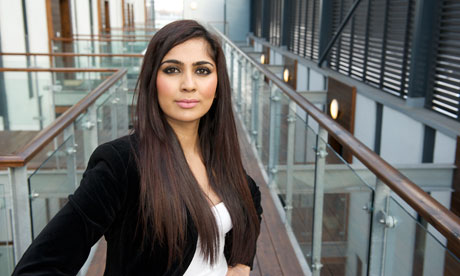
When Shanna Bukhari decided she wanted to be the first Muslim to represent Britain in a global beauty pageant, she suspected the road ahead might not be smooth, but nothing could have prepared her for the abuse she received.

"I have felt in fear for my life," said the 24-year-old Miss Universe contestant. The attacks escalated last week when Bukhari received her first death threat.

The censure has come from various quarters, ranging from Muslims who claim that she is denigrating the name of Islam, to white supremacists who say that an Asian cannot represent the UK, and to women who condemn beauty pageants as an affront to feminism.

Bukhari, born in Blackburn, grew up in Lancashire and is no stranger to intolerance. When she was nine, she ended up in hospital after a man screaming racist abuse had thrown a brick at her, causing so much damage to her stomach that she suffered a blood clot and had to undergo surgery.

But even she has been surprised by the furore that her participation in the British heats of Miss Universe has prompted. Rather than confirming her hopes that society had progressed since her childhood, the controversy has made her question the state of multiculturalism in modern Britain. "It has highlighted the divisions that exist, a lack of social integration, a lack of adhesion between white and coloured people, and this needs to be addressed," she said. "I thought my participation might be something that people did not agree with, but I never thought I'd get abused."

The attacks on the Manchester-based English literature graduate began after a local newspaper ran an article 10 days ago revealing her ambition to become the first Muslim to represent Great Britain at the beauty contest. Since then, she has received around 300 messages a day on her Facebook page, a handful of which are abusive. Most of the negative comments have come from a minority of Muslim men. "I get people saying, 'you're not a Muslim' and 'you're using religion to get attention'. I said they were the ones bringing religion into it. I'm not representing Islam; I just want to represent my country, and of that I am very proud. They are trying to control me, using religion as a tool to attack."

Bukhari accuses her abusers of having the same sort of mindset as those who support "honour" killings and beat women. Many of the comments are, she says, from individuals who want sharia law instead of a liberal democracy. "We simply live in a multicultural society where there are significant numbers of Muslims. Islam is about peace; abusing me is itself wrong in Islam."

Away from the religious-themed criticism, Bukhari detects a broader anti-female resentment from men who combine sleaze with slurs. "Maybe it's because I'm a woman saying to other women 'stand up for yourself, don't let anyone dictate what you can do or can't'. Some men don't like that," she said.

But not all the abuse is from men: Bukhari has also attracted opprobrium from feminists. "I've had a few girls saying 'shame on you' or 'rot in hell'. But I'd like to know what their real issues are, so we could have a constructive debate."

The abuse that truly shocked Bukhari arrived last Tuesday in the form of an online racist rant. Within hours she had shut down her Facebook fan page, but a friend was then sent a number of internet links to images of people murdered for standing up for their principles. "She rang up and said, 'Shanna, you need to be very careful because he's trying to make me aware that things will happen'. Not a direct death threat perhaps, but he was trying to say that something is going to happen to me."

Bukhari takes the threat of physical violence seriously. She makes sure she is never alone, both in her Manchester flat and on the city streets, and has contacted a private security firm for protection when attending charity events to raise money for the Joshua Foundation, a charity for terminally ill children. She fears that Britain's Miss Universe finals in Birmingham in May will also be a target: "It worries me that haters will turn up. I know what they are capable of."

One Facebook message calls her a "dirty Muslim" and asks why she is representing Britain "when you don't even fucking belong here". Bukhari said: "I actually replied to him in a very calm manner because I'm not one to retaliate, my family taught me to rationalise rather than react. Then I thought 'why can't I represent Britain?' I was born here and am proud to be British. My parents are from Pakistan but I am not going to represent Pakistan as this is my country."

Bukhari says the abuse has been disillusioning partly because she enjoyed a liberal upbringing; her parents sent her to a Catholic school in Blackburn where she was the only Muslim but was "completely accepted". It was only when she moved to Manchester in 2001, she said, that she became aware of segregation as an issue. She does not agree with David Cameron's speech last month in which he asserted that state multiculturalism in Britain had failed. She believes that more must be done to break down mistrust.

Bukhari cites the thousands who have offered their backing. Support has come from Spain, the Middle East, Pakistan, India and China. Most women supporters say she represents not just a role model for Muslim women, but all those who refuse to be cowed by bullies.

During last month's semi-final for Britain's Miss Universe candidate Bukhari received the most public votes. Britain has never won the title. It is increasingly possible that its first victor might also be its first Muslim representative.