Showing posts with label Interfaith Forum for Leics. Show all posts

Monday, 15 April 2013

INTERFAITH FORUM FOR LEICESTERSHIRE: HATE INCIDENT MONITORING; ENGAGEMENT & REPRESENTATION OF FAITH COMMUNITIES


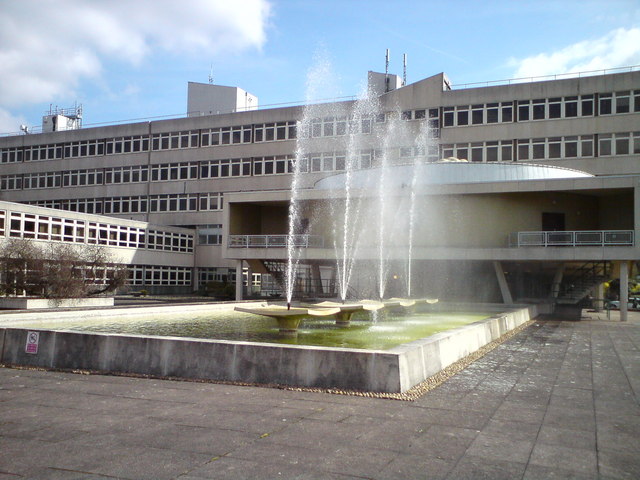
At County Hall, Glenfield (seat of Leicestershire County Council), for a meeting of the Interfaith Forum for Leicestershire.

The topic this evening is in two parts: Hate Incident Monitoring and Engagement and Representation of Faith Communities. The former is addressed by Sally Penney, Hate Incident Monitoring Project Co-ordinator at Leicestershire County Council), the latter by Chino Cabon (Senior Race Equality Officer at The Race Equality Centre).

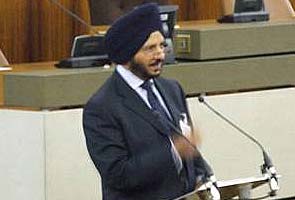
The meeting is opened by Peter Lewis (Chairman of Leicestershire County Council), Chaired by Suleman Nagdi (Spokeman for the Federation of Muslim Organisations) and wound up by Resham Singh Sandhu (Chair of the Sikh Cultural and Welfare Society).


The Interfaith Forum for Leicestershire is less formal in nature than Leicester Council of Faiths, which allows it to be free from the need for formal membership, more open to input from those attending its meetings and more amenable to suggestions from any interested party for future topics.


There are 30 attendees this evening - a decent number for early Monday evening. I can't help wondering, though, if the turnout will have been affected by the fact that the Council of Faiths held our most recent meeting on a very similar topic, less than six weeks back, on Hate Crime and the Criminal Justice System at the University of Leicester. One of this evening's speakers spoke then. It would be a pity if that were so, as the approach taken to the subject this time round could be considered complementary. Chino, who spoke at the earlier meeting, gives a distinctly different talk this evening. There are around 185 hate incidents (which are different in nature from hate crimes) related to religion or belief reported in Leicester, Leicestershire and Rutland. We should continue talking about this subject until that reduces to nothing.

Monday, 11 July 2011

EXPLORING FAITH AND THE JUSTICE SYSTEM


At County Hall, Glenfield (seat of Leicestershire County Council), for a meeting of the Interfaith Forum for Leicestershire. There's a good turnout, with over 40 attendees just about filling the Sparkenhoe Committee Room. There are people here from city and county groups - and from further afield.

This evening's topic is "Exploring Faith and the Justice System". The aims for the meeting (as stated in publicity circulated beforehand) are:

  • to explore faith/religious beliefs, in the context of the justice system/Rule of Law
  • to hear different perspectives around justice and the law, from a legal specialist, and also from faith perspectives
  • to explore faiths which provide separate systems of law for their followers, and if/how these can be reconciled at all with the UK legal system, or whether this brings followers into conflict with their faith
  • to get our members to think about what we agree as being morally/ethically right or wrong and to potentially explore issues around human rights.

Our speakers are:


Judge Simon Hammond started his talk with a list of qualities that are expected of a Judge (each one illustrd with a an amusing or instructive anecdote): honesty; patience; briskness; attentiveness; independence. He addresses two practical issues relted to faith identity and practice in the courtroom: Muslim women wearing veils when giving evidence and saccomodating breaks for observance of prayers at specific times. In more general terms, he considers the relationship between justice and forgiveness, darawing on experience and knowledge of cases related to domestic abuse and crimes of a sexual nature (such as the Ealing Vicarage Rape Case). He ended by reading a prayer for Judges of all faiths. He left us with a question: does the conventionally accepted Locke/Rousseau Social Contract compromise the integrity of people who want to live their lives in submission to the will of God?

Shaykh Faiz-Ul Aqtab Siddiqi describes how he helped found the Muslim Arbitration Council in 2007 as part of a process to help Muslims born into third and/or fourth generation families here feel equally at home in being British and Muslim. The Council is different from Sharia Courts inasmuch as they can go beyond the conventional areas in which sharia Courts are seen to bbe involved. He tells us how 98% of the Council's work is with young people and that around 15% of those who bring their issues to the Council are not Muslim - indeed there are a growing number of cases where neither partyis Muslim). Their goal is to deal with issues before they escalate to the level where they come to the attention of the authorities and have to be dealt with by the Law.

We also hear from two young Muslim women from Leicester, involved in the Interfaith Youth Hub run by St Philips Centre for Study and Engagement in a Multi-Faith Society, who tell us about their perspectives on Trade Justice. They had attended a meeting of the Christian-Muslim Youth Forum at Lambeth Palace, where they'd had the opportunity to meet the Archbishop of Catnerbury, Dr Rowan Williams. They pepper their brief presentation this evening with references from the Quar'an and Hadith to justice, fairness and honest dealing in trace and business. Given the strength of their conviction and the warmth of the reception from the audience, I have to say I'm glad I'm wearing my Ethletic trainers this evening!

There are some Bahá'ís heer this evening and, although it is not mentioned aloud, I am sure that they, like I, have in mind this verse from Bahá'u'lláh's Hidden Words:

The meeting is brought to a close by Noel Singh, Policy Officer at Leicestershire County Council, who organises these meetings (and more) from behind the scenes. He tells us that this is the last meeting of the Interfaith Forum for Leicestershire to be chaired by Resham Singh Sandhu, who has held the chair (which goes round members on an annual rotation) for the past twelve months. Noel also informs us of a memorial meeting for Rachel Carmichael, who passed away at the weekend. the memorial meeting will be held at the Quaker Meeting House, Queens Road, Leicester on Wed 28 July, 1430.
The best beloved of all things in My sight is Justice; turn not away therefrom if thou desirest Me, and neglect it not that I may confide in thee. By its aid thou shalt see with thine own eyes and not through the eyes of others, and shalt know of thine own knowledge and not through the knowledge of thy neighbor. Ponder this in thy heart; how it behooveth thee to be. Verily justice is My gift to thee and the sign of My loving-kindness. Set it then before thine eyes.

Saturday, 16 April 2011

Thousands due to join in parade


Nice piece in today's Leicester Mercury about the Vaisakhi parade that will take place in the city tomorrow. Over the past few years this has become a landmark in Leicester's calendar and it continues to go from strength to strength. This is a very positive article, with some helpful context and historical background: 

Thousands due to join in parade 
By Peter Squires & David Owen 

Up to 20,000 people are expected to take part in a parade through Leicester tomorrow to mark the Indian festival of Vaisakhi.

The colourful procession will wind its way through the centre of the city. 

It will be accompanied by devotional music, with spectators invited to join in with the festivities and share in traditional Indian delicacies. 

The Vaisakhi is an ancient harvest festival in the Punjab region and commemorates the founding of the Sikh nation in 1699. It also marks the Hindu solar new year and is observed by people of different faiths across the sub-continent. 

Visitors from across the country will swell the crowds, with up to 20,000 people expected on the day. 

Resham Singh Sandu, Leicestershire's first Sikh high sheriff and chairman of the county's Interfaith Forum, said: "Vaisakhi is a very special festival in the Sikh calendar – a time of fulfilment and giving thanks, and looking forward to the year ahead. 

"The procession will be a very lively and happy occasion, full of colour, music and dancing. 

"It's a chance for all the different cultures and faiths in Leicester and Leicestershire to come together. It's also a great showcase for the city." 

The three-hour parade will begin at about 11am at the Guru Nanak Gurdwara Sikh temple, in Holy Bones, off Vaughan Way. It will go through the city finishing at the Guru Bahadur Gurdwara temple, in East Park Road. 

Vaisakhi fell on Thursday, April 14, this year, but the procession has been held over until Sunday so as many people as possible can take part. 

Several hundred people gathered at the Holy Bones temple on Thursday – marking the end of six days of non-stop recitals from the Guru Granth Sahib, the Sikh holy book. 

Temple vice-chairman Sulakhal Singh Dard said: "From early in the morning, the hall was full of people celebrating and bringing respect to the temple. At one point in the day, we must have had more than 500 people." 

The parade will travel along Great Central Street, Vaughan Way, St Nicholas Circle, Peacock Lane, St Martins, Greyfriars, Berridge Street, Pocklingtons Walk and Welford Place, along King Street, Regent Road, Granville Road, Evington Road, into East Park Road.


Read the article on the Mercury website, along with reader comments: http://www.thisisleicestershire.co.uk/news/Thousands-join-parade/article-3454982-detail/article.html

Saturday, 19 March 2011

QUEEN CONFIRMS NEW HIGH SHERIFF AT PALACE CEREMONY


Today's Leicester Mercury carries an article about the official confirmation of Resham Singh Sandhu MBE (photo above)  in the post of High Sheriff of Leicestershire. Resham is a stalwart of Leicester Council of Faiths, having served for several years as its Chair. He continues to be one of the strongest supporters of its work and an influential figure in the city, the county and beyond on issues to do with community cohesion and  good relations. He is currently Chair of the Interfaith Forum for Leicestershrie and Chair of the Sikh Cultural and Welfare Society.

Queen confirms new High Sheriff at palace ceremony


Leicestershire's new High Sheriff has been officially confirmed by the Queen during an ancient ceremony at Buckingham Palace.


Last November, Resham Singh Sandhu, of Oadby, was nominated at London's High Court to take his place in history as one of the latest incumbents of the oldest secular office in Britain.


That nomination has now been officially confirmed by the Queen, when she used a silver bodkin to "prick" his name on a list of all new high sheriffs for England and Wales written on parchment.


Mr Singh Sandhu will take office in the next few weeks.

Monday, 31 January 2011

INTERFAITH FORUM FOR LEICESTERSHIRE: RELIGION & THE MEDIA


At County Hall, Glenfield (seat of Leicestershire County Council), for a meeting of the Interfaith Forum for Leicestershire. The topic this evening is "Religion and Media". I'm doing part of the presentation: one third of it, to be precise. First John Florance (BBC Radio Leicester) speaks on the topic in relation to broadcast media, then Nick Carter (Chair of Prospect Leicestershire and the Leicester Multicultural Advisory Group - LMAG) on print media. John (centre) and Nick (right) are in the photo above, with Resham Singh Sandhu, who chairs the meeting. I'm on last, speaking in relation to social media.

We have a good turnout (filling the Sparkenhoe Committee Room, with around 50 attendees) despite considerable competition this evening. Just a few doors away, top TV celebrity historian Michael Wood is giving a talk about his BBC series, The Story of England, which narrates the country's history through the story of Kibworth, a Leicestershire village that predates the Domesday Book. If I weren't in here speaking, I'd be in there listening to him!

Athea, from Faiths Forum for the East Midlands, brings the latest edition of their quarterly newsletter, Know Faith! issue 05, hot off the presses. It has good coverage of Inter Faith Week 2010, including our exhibition at Highcross and our feature in The Wave.

John Florance is Producer and Presenter of the Breakfast Show, on BBC Radio Leicester, Sunday mornings, 0600-0900. He gives a potted guide to the history of BBC Radio Leicester, including the birth of the BBC's Asian Network, which began in Leicester in the 1970s and still shares its premises. It's a statutory duty for local radio stations to have a programme on the topic of faith and ethics. John's show has a largely Christian audience, composed of older people up early to get to church. This doesn't stop the programme from carrying news and features about the diverse faith communities of Leicester. He lauds the good communication and positive relationship between the faith output and the newsroom. He is aware of the station's responsibility to promote good relations and better understanding among local faith communities. John also produces the "Thought for the Day" slot (he's asked me this evening if I would do a few of these - only 90 seconds long, thankfully!) He makes a few practical suggestions about getting heard on BBC Radio Leicester. Most importantly, tell him what's going on, rather than moan about it after it's over - and been missed. He also gives a few tips on how to write, submit and follow up on a good press release. He ends by acknowledging that those who genuinely know Leicester don't see it as a multicultural paradise - but one in which lively, courteous debate (some of which can - indeed should - be conducted on local radio) helps iron out the wrinkles among and between communities of differing background, practices and traditions in our city.

Nick Carter was editor of the Leicester Mercury for 16 years, having left the post two years ago in January 2009. During his tenure (says our Chair this evening), the paper covered faith community issues more sensitively and sympathetically than it does today. This evening he briefly considers how the place of faith in mainstream British society has changed radically, since he started as a junior reporter with an evening newspaper in Slough in 1975 (when religious news was made up of little more than church social events and traditional Christian festivals) and how the mainstream media has not kept pace with this change. He proposes that the media (especially local media) has a responsibility to dispel misinformation and lack of understanding. In this day and age, it's easier than ever for such opinion to find a platform, which makes the responsibility of "traditional" media all the more serious. The media as a whole has failed to understand the changing nature of religion, of communities and of their potential audience and customer base. They are now struggling to catch up - and for the most part, they have missed the boat as their audience has fragmented. Nick makes a plea for inclusion in the media of "soft news" - without setting the threshold too high, before faith issues are admitted into the mainstream as "hard news" when crises emerge. Without the background of "soft news" that would promote understanding and sympathetic coverage of faith and cultural issues. this is not as negative or pessimistic as it might first appear as he has a number of observations and suggestions for practical improvements.

My contribution is on social media, speaking about Leicester Council of Faiths' foray into Twitter, YouTube, Flickr, iPadio and - of course - blogging. I also give a puff to Amplified Leicester. I talk the audience through each of these (including my amusing anecdote about King Abdullah of Jordan reading my blog - unprovable either way, of course) and give a little live demo of a few in action. I come across like an enthusiastic twelve-year old at Show and Tell: "I've got a blog!" "We're on YouTube!" "Have you got as many facebooks fans as we have?" At the end of their presentations, John and Nick get a quarter of an hour of reflective, interesting questions; I get none. I think I've pummelled the audience into submission (but later this evening and early next morning, I get a lot of visitors to the blog).

I finish the evening here by recording half a dozen short video interviews with some of the attendees for our YouTube channel.

Monday, 24 January 2011

MINDFULNESS & MORALITY 2: PSYCHOLOGY OF MORAL DEVELOPMENT


To Christchurch, Clarendon Park Road, this evening for the second session in the course, "Mindfulness & Morality". It's the second of twelve sessions, part two of the "faith-neutral" introductory segment, before handing over to a different faith contributor each week.

Ian Grayling and Kevin Commons (from Leicester Serene Reflection Meditation Group) devised the course. They  deliver this session jointly, as they did last week. This session is entitled, "The Psychology of Moral Development". Ian and Kevin outline some of the biological, neurological and behavioural aspects of development of the mind and of our moral faculties.

Developmental psychology argues that development occurs in individuals as they interact with their environment. The sub-school of cognitive development involves a change of mental structure as individuals are exposed to a situation, or problem, that stretches their ability to find a satisfactory solution. This process generates cognitive conflict which individuals seek to resolve to restore their equilibrium. Having reached an understanding of the problem and worked out a strategy for its solution, individuals are able to apply the insight gained when similar problems arise, even if the content of the situation is different. this reinforces the new logical structure that has been acquired, or is in the process of acquisition.

Jean Piaget
During the first half of the twentieth century Jean Piaget, a Swiss psychologist described what he believed to be the first stages through which human beings develop cognitively. These are:

Stage: Sensory-motor (birth-2 years)
Characterised by: Differentiates self from objects; Self as agent of action (acts inentionally); Achieves object permanence.

Stage: Pre-operational (2-7 years)
Characterised by: Language (represent objects by images and words); Egocentric; Simple classification (single feature).
Stage: Concrete operational (7-11 years)
Characterised by: Thinks logically about objects and events; Conservation of number, mass and weight; classification by several features; Order (e.g. by size).

Stage: Formal operational (11 years and up)
Characterised by: Thinks logically about concepts/ideas; Test hypotheses systematically; Concerned with hypotheticals (future, ideology).

Lawrence Kohlberg
In the second half of the twentieth century Lawrence Kohlberg used Piaget's work as the basis for his own research which led to the construction of his six stage theory of moral development. On the basis of this research he asserted that:
  1. There are clearly defined stages.
  2. The stages are sequential and in an invariant order.
  3. There is a statistical tendency for stages to be related to age.
  4. People tend to prefer to make judgements at their highest level of attainment.
  5. There is a correspondence between cognitive development and development of moral judgment.
  6. The existence of formal operational thinking is a necessary but not sufficient precondition for the higher moral stage.
  7. Individuals can "role play" the stage below their level, but not above.
  8. Individuals have no comprehension of arguments that are two stages above their level.
  9. People can be pushed up by one stage at a time.

Kohlberg's six stages
The Pre-Conventional Level
Stage 1: Obedience and punishment orientation (How can I avoid punishment?)
Right is blind obedience to rules and authority, avoiding punishment and not doing physical harm
Stage 2: Self-interest orientation (What's in it for me?)
Right is serving one's own or others' needs and making fair deals in terms of concrete exchange.

The Conventional Level
Stage 3: Interpersonal accord and conformity (Social norms or the good boy/good girl attitude)
Right is playing a good (nice) role, being concerned about other people and their feelings, keeping loyalty and trust with partners and being motivated to follow rules and expectations.
Stage 4: Authority and social-order maintaining orientation (Law and order morality)
Right is doing one's duty in society, upholding the social order and welfare of society or the group.

The Post-Conventional Level
Stage 5: Right is upholding the basic rights, values and legal contracts of a society, even when they conflict with the concrete rules and laws of the group.
Stage 6: Universal ethical principles (Principled conscience)
Right is being guided by universal self-chosen ethical principles which all humanity should follow. the principles are justice, equality of human rights and respect for the dignity of human beings as individual persons.

James Rest and the Defining Issues Test (DIT)
The DIT uses a numerical scale to give quantitative rankings to a number of moral dilemmas, the data from which are then analysed to produce information about three areas of moral reasoning the Personal Interests Schema, the Maintaining Norms Schema and the post-conventional Schema. This test updates the original that was used to assess the transition of moral development from adolescence to adulthood. The new DIT has been dubbed "Neo-Kohlbergian" as it emphasises cognition, personal construction, development and post-conventional moral thinking, drawing on the work by Lawrence Kohlberg and his stages of moral development.

As was the case last week, we're given an activity in the second half of the session, to help us focus on relevant moral issues.

Andrew's Dilemma
Andrew worked in the development laboratories of a well known pharmaceutical company. The organisation was developing a pain-killing drug which would greatly improve the quality of life of chronic pain sufferers such as those suffering with arthritis and spinal complaints.

Andrew's job was to inject rats with a pain-inducing substance and then administer the pain-killing drug in controlled doses. He did not enjoy this aspect of his work, however, he felt that the expected end justified the means.

One day the head of Andrew's department informed him of the plan to accelerate the development by using chimpanzees for the tests. He promised Andrew a good increase in salary if he could conclude his testing programme on the apes within three months.

Andrew sat at his bench and loo0ked into the intelligent, accusing eyes of the chimps. He was saving up to get married and the final goal was a good one.

(Quoted from Assignments in Business Studies by Commons, Greensmith and Moore - McGraw-Hill Book Company (UK) Ltd, 1983)

Activities
In a small group you will be asked to address the following questions:
"What is the moral dilemma facing Andrew?"
"What should he do? Should he undertake the new programme?"
"Why, why not? Give your reactions and share your feelings about the case."
I won't be attending next week's session. I'm giving a presentation to the Interfaith Forum for Leicestershire at County Hall, Glenfield, on "Religion and the Media" with Nick Carter and John Florance. I've made a general appeal for guest blogging of next Monday's session here (which might be put together from notes taken by more than one person).

In the photo above: Barbara Butler and Beatta Dehner, two of the mainstays of Christians Aware, sponsors of this course.

CENTRE OF EXCELLENCE IN COMMUNITY COHESION (7)


At Prospect Leicestershire, Colton Square, this afternoon, for a meeting of our sub-group working on the proposed Centre of Excellence in Community Cohesion. Round the table today:
  • Nick Carter (Chair, Leicester Multicultural Advisory Group; Chair, Prospect LeicesterShire)
  • Dilwar Hussain (Head of the Policy Research Centre, based at the Islamic Foundation)
  • Jasbir Mann (Head of Service, Learning Transformation and Development, Leicester City Council)
  • Riaz Ravat (Training Development Manager, St Philip's Centre for Study and Engagement in a Multi-Faith Society)
  • Resham Singh Sandhu (Chair, Sikh Cultural and Welfare Society)

As we settle down to our business, I spy one of the Barry Naylors through a glass door, being greeted by someone in the next room. We exchange a wave. Our attention is drawn to a document in which Leicester City Council has outlined five outcomes it has set itself for the period 2010-11. Rather than set about reinventing the wheel, we consider how these outcomes fit with our project. They are laid out in the document as follows:
  1. Different communities get on well together.
  2. New communities bond together.
  3. Everyone in Leicester feels they belong.
  4. Young people understand and respect different communities, and adults and young people get on well together.
  5. There is freedom from tension.

These are not a million miles away from the old National Indicators (indeed, they'd have been set when they were still live). City Council is likely to have an abundance of information that we can draw on in relation mapping these themes, from the Total Place Survey and other such sources. of course, mapping gives us a picture of what's been going on up till now - but we can't rely on those models to carry us into the future.

With withdrawal of funding for our role as Host Organisation from 31 March, this is one of the activities we may not be able to continue after that date. Without presuming to speak on behalf of the other VCS bodies in the city who have functioned up till now as Host Organisations, I don't know what sort of support this project will get from any of them after 31 March - even in terms of doing the mapping exercise. I think I've made that loud and clear.

I have a brief chat with Resham about his appearance on The Big Questions which was broadcast live from Leicester recently. The producer had contacted the Council of Faiths and asked us to put forward someone who could contribute to the discussion on Islam as being a guide for daily living. This was Resham, but he wasn't called on to speak on the show itself. He tells me that he introduced himself to the production team on the day and said that he wasn't prepared to take issue or disagree with the Muslim women who would be speaking, just for the same of making "good television". So they didn't ask him.

More general chat around the table follows about this topic. We all seem in agreement: no one here likes The Big Questions or anything like it. We discuss other recent instances of Leicester having been covered in the media (such as  Hardeep Singh Kohli's Radio 2 documentary series, "The Great British Faith"). We're of one accord in saying that often we don't recognise Leicester as it's presented in these settings and are often baffled by the people who end up interviewed or speaking on them. Riaz mentions having been approached by someone in the media to provide a soundbite response to the comments by former Justice Secretary Jack Straw about Asian gangs grooming white girls. When he refused to say something inflammatory, he was dropped instantly. Nick is making a presentation to the Interfaith Forum for Leicestershire on Monday about faith and the media (jointly with John Florance and myself). What he says today is that the threshold is set too high in the media for stories about religion or belief. They're unwilling to publish anything about the everyday life of faith communities because it's deemed to be unnewsworthy, so for anything to get coverage it has to be something extraordinary - and that often means something negative.

Friday, 29 January 2010

My friend Flickr


This afternoon, Athea Ghani, Development Officer with Faiths Forum for the East Midlands calls, asking if she can have some photos of our National Inter Faith Week exhibition in Highcross to put into their quarterly newsletter. She needs these promptly; I'm able to direct her to our photostream on Flickr, where she can have her pick of more than 30 photos. That's one practical benefit of doing things this new way, with an enhanced electronic presence. I'm sure more benefits will become evident soon. Earlier today, I found photos from the launch event for National Inter Faith Week hosted by the Interfaith Forum for Leicestershre at County Hall. I've added those to our photostream now. Here's a photo of Athea on the podium, addressing that launch event at County Hall. She's much too modest to put this in her newsletter, so I've put it on here instead.

But seriously folks ... Athea paid me an unexpected compliment at that event, by mentioning, during her talk, the training I deliver on behalf of Leicester Council of Faiths. So I'm glad to acknowledge that here and give a little back.

Read FFEM's newsletter with our National Inter Faith Week photos (on p. 5):
http://www.ffem.org.uk/FFEMNewsletterIssue2March2010

Find out more about the Faiths Forum for the East Midlands:
http://www.ffem.org.uk/

Thursday, 28 January 2010

SACRE @ Friends Meeting House


To the Friends Meeting House, Queens Road this afternoon, for a meeting of Leicester SACRE (Standing Advisory Committee on Religious Education).

This is the second SACRE meeting I've attended on behalf of Leicester Council of Faiths. The Inter Faith Network for the UK is encouraging local inter faith groups to become more closely involved with SACRE in their area. But SACREs have very particular functions and responsibilities and it can be difficult to see just how local inter faith groups fit in with that. But there's a good spirit of cooperation between the Council of Faiths and SACRE in Leicester and we're considering the best fit between us. SACRE is rewriting its constitution and an appropriate place for the Council of Faiths can be found within the new one.

This meeting is a good example of the kind of role we can play alongside or within SACRE. Leicester City Council has become concerned about the effect on school attendance of time taken off for religious observances. Such time taken off was not visible before because of the use of an "R" code in school registers. This marked days off for religious reasons and the school had discretion about whether this had to be included in the overall number of absences. In effect, a pupil could be off school for purposes of religious observance, but could be considered as being present on those days. Recent changes in recording absences in school have done away with the "R" code, so schools no longer have that discretion. Now if a pupil is off school for religious reasons, it must be shown as an absence - even if an authorised one, it still contributes to the school's record of total absences. So, all of a sudden, the number of absences has leapt for the city as a whole - from 15,858 sessions missed in 2007-08 to 45,453 session missed in 2008-09 (figures are for all schools, primary and secondary). That's a 300% increase in one year, all due to a new method of recording. The City Council is considering a range of options that would allow schools in Leicester to be more responsive to the pattern of life of the city's faith communities, thus ameliorating the effect on children’s education of missing so many sessions. Several practical (and a few impractical) options are discussed at this meeting today. One step that was agreed on was to engage leaders and representatives of the city's faith communities on this topic. The Council of Faiths recently hosted a focus group with representatives of the City Council on the current review of bereavement services (see blog entry, "staying in focus", below). We may be able to offer the City Council something similar on this issue. It's not my place to commit the Council of Faiths to doing such a thing on this occasion, but I will pass this on to our officers for them to make a decision. I gave my calling card to the two representatives of the City Council who brought their paper on this topic to this meeting and said we'd be in touch.

Noel Singh, Policy Officer with Leicestershire County Council, speaks about relations with Leicestershire SACRE and the Interfaith Forum for Leicestershire. It's gratifying to see that Noel's notes are written on REDP notepaper!

We also get an update from Jill Carr on the booklet series project, "Engaging with Faith Communities in Leicester", which I'm helping write, along with the Schools Development Support Agency (SDSA).

Find out more about Leicester SACRE:
http://www.leicester.gov.uk/your-council-services/education-lifelong-learning/school-staff/curriculum-subjects/religious-education/sacre/

Monday, 16 November 2009

INTER FAITH WEEK 2009: LAUNCH EVENT AT COUNTY HALL


This evening is the official launch of National Inter Faith Week for the city and county at County Hall, Glenfield (seat of Leicestershire County Council). Since I stayed at Highcross for the change of shifts at 1800, I arrive at County Hall after most of the food and drink has gone. Thanks to Sugra Ahmed, for guiding me to some vegetarian items that were left. Thankfully there aren't many vegetarian Muslims here this evening.

This is a well supported meeting, in the Council Chamber, in the presence of the Leader of the County Council, Councillor Roger Wilson, the Lord Mayor and Lady Mayoress of Leicester (for the second time today) and the Bishop of Leicester. It’s chaired by the Venerable Paul Hackwood, Archdeacon of Loughborough and Chair of the Interfaith Forum for Leicestershire. There’s an interesting mix of speakers and topics: Islam Awareness Week; Faiths Forum for the East Midlands; an “inter-faith recipe book”; an extract from a panto staged by Loughborough Council of Faiths; the signing of an “Inter-Faith Charter” by faith community leaders and representatives. Resham Singh Sandhu (Vice-Chair of Leicestershire Inter-Faith Forum and former Chair of Leicester Council of Faiths) delivers a typically rousing closing address. The evening concludes with a solo musical performance by Naim Cortazzi. I find out later that this was the first time a guitar had ever been wielded in the Council Chamber at County Hall!

Noel Singh gets a well-deserved ovation for his work in co-ordinating the week’s events and for being directly involved in organising this evening. In his own presentation, introducing the County Council’s small grants for community cohesion work, he's clearly conscious of the schedule running over by almost half an hour; I’ve never heard him speak so fast!

The keynote speaker is Dr Maureen Sier, Interfaith Development Officer for the Scottish Government. Scotland has had its own annual National Inter Faith Week for several years (theirs starts next week) and Maureen was speaking about the Scottish experience, how it has developed over the years and what we might learn from it as we hold the first such week nationally in England. I’ve known Maureen for over 30 years and I’m glad she was able to come down from Glasgow to speak at this event. She’s given me a lot of encouragement and support in the two-and-a-half years I’ve been at Leicester Council of Faiths and has been something of a touchstone to me in this important work that I'm fortunate enough to be doing.