Showing posts with label racism. Show all posts

Saturday, 4 August 2012

FORTY YEARS AGO TODAY: A TYRANT'S WHIM BOOSTED OUR CITY'S FORTUNES

This article appears in today's Leicester Mercury:
Forty years ago today: a tyrant's whim boosted our city's fortune
Forty years ago today, East African dictator Idi Amin made a decision that would change Leicester forever.
In August 1972, the leader of Uganda decided to expel all the Asians living in his country – most of whom held British passports and boarded planes for England.
Leicester City Council's reaction was to place an advert in the Uganda Argus warning that Leicester was full of immigrants already and that they should not move here. However, between 6,000 and 10,000 Ugandan Asians came to the city.
They brought with them a wealth of skills and business know-how that would boost Leicester's fortunes.
The Asian families, many of whom owned Uganda's most successful businesses, had been given 90 days to leave the country and could only take their personal belongings and up to £55 in cash.
Among them were Praful Thakrar's family.
Praful, who is now 64, working as an accountant and living in Oadby, was 24 and studying accountancy in London when the announcement was made.
While watching the News at Ten he saw footage of his mother and eight brothers and sisters getting off a plane at Stansted Airport.
"I had been in England two weeks and I had no idea what my family were doing until I saw them on television," he said. "I rang ITN and found they had been taken to a camp in Devon."
After 47 years in Uganda, Praful's parents had built up a good life, living in a large house.
When they arrived in Leicester, the family of 11 all had to live in a terraced house, and had to start working and rebuilding their lives.
Praful said: "We had seen the advertisement in the newspaper asking us to not come to Leicester, but it backfired.
"Luckily, the job market in Leicester was very good at that time and within four months we were renting a second house as well. We were very lucky to come here. My own children both work in London now and have good lives."
Manu Madhani, who lives in Evington, Leicester, was 28 when the expulsion announcement was made.
He said: "The first thing I did was get all my money out of the bank and give it away to my African staff and get ready to leave. I felt hurt by what happened because I had worked hard on my export and import business in the past four years and put all my savings into it."I was born in Uganda and didn't want to leave."
Manu, now 68, runs Manu Export Services, in London Road, Leicester.He said the city council's warning to stay away had produced the opposite affect.
"Leicester City Council said the city was full of immigrants and that they didn't want any more.
"If we hadn't seen that advert we would have gone somewhere else."When we came to Leicester we were not using benefits and asking for aid – we were all business-minded people.
"The second day I was here I was out looking for work."
After working as a machinist at an engineering company in Abbey Lane, Leicester, Manu's employers discovered his business skills and promoted him to the export department.
He later spent 17 years working for a London export company before concentrating on his own business.
He said he had never experienced racist attitudes in Leicester and was happy to call it home.
He said: "I think about Uganda but I haven't been back. My two daughters and my son are all settled here and married.
"My mother, who is 89 now, is against me going back because she still has fears. This is our home now."

Friday, 8 June 2012

LESSONS FROM AUSCHWITZ

Euro 2012 kicks off today, jointly hosted by (and in) Poland and the Ukraine. There's been much media attention on the problems of neo-fascism and racism plaguing the Beautiful Game in those parts of the continent. Most of that attention has focused on a recent edition of BBC's Panorama entitled "Euro 2012: Stadiums of Hate" (broadcast Monday 28 May). By coincidence, my friend and colleague Suleman Nagdi has sent me a copy of a reflective piece he has written on a recent visit he made to Auschwitz. I think it appropriate to publish it here (with his consent of course).
Suleman Nagdi MBE DL of the Federation of Muslim Organisations reflects on the experience of visiting Auschwitz-Birkenau with young people from across the West Midlands, as part of the Holocaust Educational Trust's Lessons from Auschwitz Project
History is a topic that fascinates many of us and we choose to pursue this interest through reading about history. However, as deeply enriching as the reading of history is, the experience of visiting the scene of where history has been made is an altogether different experience as it imbues us with a sense of feeling and perspective that we may not always gain when reading history, no matter how well it is written.
I have had the fortune and privilege of visiting many places where history has been made. In particular, my visit to Robben Island in South Africa, where Nelson Mandela was imprisoned for 18 years, was truly awe-inspiring. But nothing could prepare me for the mental shock that was my visit to Auschwitz. I recently undertook a journey which brought me face to face with one of the most appalling human tragedies of the 20th century. I was invited to visit Auschwitz-Birkenau in Poland where a great many innocent Jewish men, women and children were murdered in cold blood during World War II. It was a journey that was marked with an awakening – the realisation of the depth of hatred that can infiltrate the human psyche. It left me filled with hopelessness and despair for those who suffered so tragically, and this was quickly followed by an absolute and resolute determination to play as great a part as I can in all social movements which oppose such harrowing divisions between people.
As soon as I stepped inside Auschwitz I suffered a great sense of hopelessness and despair. I kept thinking and asking myself "can such a place of evil have existed?"  My mind felt as empty as the desolate spaces within Auschwitz which were once filled with the screams of human agony.  It was the most humbling of experiences.
Everything in Auschwitz from the barracks, chimneys, and the crematorium that were the apparatus used to exterminate people, were a stark reminder of what man can do to his fellow man. The most heart-breaking aspect of the Jewish murders was the failure to allow them dignity in death. The victims received no funeral rights, and thus they were even denied their humanity in death.
Human hair, spectacles, artificial limbs, suitcases, baby clothing, thousands of shoes as well as countless other possessions snatched away still remain there, never to be reunited with their owners. The senseless human evil left me with the most absolute sense of emptiness and memories of the sheer size of these death camps will never leave me. The tragedy of the Holocaust led the United Nations to declare ‘never again’. Despairingly, we have not lived up to this and Bosnia, Rwanda and Cambodia again witnessed the genocide of millions. The Holocaust Educational Trust organises trips to Poland to keep the memory of what happened in Auschwitz alive, so that it may never again be repeated. At a time when we are seeing sectarian divisions on the rise even here in Britain, this work becomes all the more vital. We need not look far to be reminded of how these divisions can separate us. In Bosnia, the mere Southern tip of Europe, genocide occurred when society fell apart. Angelina Jolie’s latest film, In the Land of Blood and Honey, portrays the horror and loss suffered by people when their societies break down. Reminders like these are necessary for us to recognise the value of our common humanity over and above our superficial divisions. Before my trip to Auschwitz, the history of World War Two was rooted in text books. However, this visit enabled me to be transported into that history; leaving me with a depth of feeling and perspective on it that was previously missing. Nothing could prepare me for the mental shock that was awaiting me. On my return to Leicester, my feelings of sadness at the tragedies of Auschwitz have left me more determined to continue the work I have been engaged in most of my life. Looking after the social welfare of the whole community in which I have lived; so that all those living together may live together in peace and harmony. My journey to Auschwitz has left me with an understanding of what can happen in the world when we no longer see each other as human beings.

Wednesday, 2 May 2012

PHILOSOPHY IN PUBS


The Leicester chapter of Philosophy in Pubs (PIPS) meets on the first Wednesday of the month, upstairs in the Crumblin' Cookie on Leicester High Street. There’s a dozen of us around the table, including (as always) a few newcomers. Our stimulus this evening is an article from Metro about the student jailed for inciting racial hatred in his tweets about the footballer Fabrice Muamba.

When I've been talking about PIPS with various people, they usually ask what it's about and how it goes. I've copied this from the national PIPS website, which says it very well:
"The PIP's are a group of like-minded people searching for philosophical stimulation in a relaxed atmosphere (i.e. pubs, bistros, coffee shops, bookstores & community centres). [...]
"Everyone has Philosophical thoughts and as a group we would like to hear yours - whoever you are, wherever you're from and whatever they may be!"The enquiries are relaxed with groups large enough to enjoy a number of diverse opinions, yet small enough to allow each person time to put their views across. As a contributor you can schedule your own subjects for enquiry and debate. Alternatively, just turn up and listen to the thoughts of others.
"Respect for others and their opinions are a fundamental requirement of the group as it encourages people to put forward their views without fear of ridicule or intimidation.
"No academic or philosophical background is necessary, only a passion for enquiry. Just turn up and enjoy."

Check out the Facebook page for Philosophy in Pubs Leicester.

Follow the Crumblin' Cookie on Twitter: @Crumblin_Cookie

The photo above features the mosaic created for the Crumblin' Cookie earlier this year by Laura Hadland and is taken from her blog, Ray Mears Extreme Housewifery. Normally, I'd vary the photo used on a blog entry like this, which recurs regualry on the first Wednesday of each month. But I really like this picture and am happy to keep rolling it out for a while longer. Follow Laura on twitter: @Morrighani 

Sunday, 20 March 2011

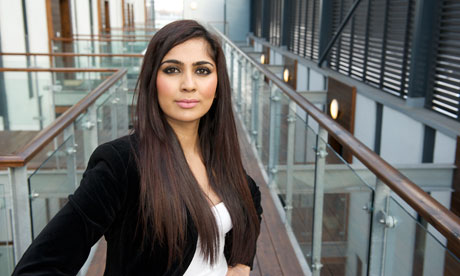
I WANT TO BE MISS UNIVERSE. FOR THAT I GET DEATH THREATS


Interesting piece from  today's Observer. A surprising topic, perhaps, but it didn't take long to see that I should post it here. This one really comes out of left field - but I really like it when that happens. See how many equality and diversity issues are involved in this one, faithful reader.
"I want to be Miss Universe. For that I get death threats"

Shanna Bukhari was subjected to a tide of online hate after entering the British heats of the beauty contest. Now she fears her life could be in danger

By Mark Townsend

When Shanna Bukhari decided she wanted to be the first Muslim to represent Britain in a global beauty pageant, she suspected the road ahead might not be smooth, but nothing could have prepared her for the abuse she received.

"I have felt in fear for my life," said the 24-year-old Miss Universe contestant. The attacks escalated last week when Bukhari received her first death threat.

The censure has come from various quarters, ranging from Muslims who claim that she is denigrating the name of Islam, to white supremacists who say that an Asian cannot represent the UK, and to women who condemn beauty pageants as an affront to feminism.

Bukhari, born in Blackburn, grew up in Lancashire and is no stranger to intolerance. When she was nine, she ended up in hospital after a man screaming racist abuse had thrown a brick at her, causing so much damage to her stomach that she suffered a blood clot and had to undergo surgery.

But even she has been surprised by the furore that her participation in the British heats of Miss Universe has prompted. Rather than confirming her hopes that society had progressed since her childhood, the controversy has made her question the state of multiculturalism in modern Britain. "It has highlighted the divisions that exist, a lack of social integration, a lack of adhesion between white and coloured people, and this needs to be addressed," she said. "I thought my participation might be something that people did not agree with, but I never thought I'd get abused."

The attacks on the Manchester-based English literature graduate began after a local newspaper ran an article 10 days ago revealing her ambition to become the first Muslim to represent Great Britain at the beauty contest. Since then, she has received around 300 messages a day on her Facebook page, a handful of which are abusive. Most of the negative comments have come from a minority of Muslim men. "I get people saying, 'you're not a Muslim' and 'you're using religion to get attention'. I said they were the ones bringing religion into it. I'm not representing Islam; I just want to represent my country, and of that I am very proud. They are trying to control me, using religion as a tool to attack."

Bukhari accuses her abusers of having the same sort of mindset as those who support "honour" killings and beat women. Many of the comments are, she says, from individuals who want sharia law instead of a liberal democracy. "We simply live in a multicultural society where there are significant numbers of Muslims. Islam is about peace; abusing me is itself wrong in Islam."

Away from the religious-themed criticism, Bukhari detects a broader anti-female resentment from men who combine sleaze with slurs. "Maybe it's because I'm a woman saying to other women 'stand up for yourself, don't let anyone dictate what you can do or can't'. Some men don't like that," she said.

But not all the abuse is from men: Bukhari has also attracted opprobrium from feminists. "I've had a few girls saying 'shame on you' or 'rot in hell'. But I'd like to know what their real issues are, so we could have a constructive debate."

The abuse that truly shocked Bukhari arrived last Tuesday in the form of an online racist rant. Within hours she had shut down her Facebook fan page, but a friend was then sent a number of internet links to images of people murdered for standing up for their principles. "She rang up and said, 'Shanna, you need to be very careful because he's trying to make me aware that things will happen'. Not a direct death threat perhaps, but he was trying to say that something is going to happen to me."

Bukhari takes the threat of physical violence seriously. She makes sure she is never alone, both in her Manchester flat and on the city streets, and has contacted a private security firm for protection when attending charity events to raise money for the Joshua Foundation, a charity for terminally ill children. She fears that Britain's Miss Universe finals in Birmingham in May will also be a target: "It worries me that haters will turn up. I know what they are capable of."

One Facebook message calls her a "dirty Muslim" and asks why she is representing Britain "when you don't even fucking belong here". Bukhari said: "I actually replied to him in a very calm manner because I'm not one to retaliate, my family taught me to rationalise rather than react. Then I thought 'why can't I represent Britain?' I was born here and am proud to be British. My parents are from Pakistan but I am not going to represent Pakistan as this is my country."

Bukhari says the abuse has been disillusioning partly because she enjoyed a liberal upbringing; her parents sent her to a Catholic school in Blackburn where she was the only Muslim but was "completely accepted". It was only when she moved to Manchester in 2001, she said, that she became aware of segregation as an issue. She does not agree with David Cameron's speech last month in which he asserted that state multiculturalism in Britain had failed. She believes that more must be done to break down mistrust.

Bukhari cites the thousands who have offered their backing. Support has come from Spain, the Middle East, Pakistan, India and China. Most women supporters say she represents not just a role model for Muslim women, but all those who refuse to be cowed by bullies.

During last month's semi-final for Britain's Miss Universe candidate Bukhari received the most public votes. Britain has never won the title. It is increasingly possible that its first victor might also be its first Muslim representative.

Thursday, 17 February 2011

TOLERACE (CAN YOU SEE WHAT THEY DID THERE?)


Dr Katie Sian (photo above) is a Research Fellow at the Centre for Ethnicity & Racial Studies, University of Leeds. Research into ethnicity and racism is an interdisciplinary field which does not fall neatly into the orbit of one particular department or school. This centre comprises a network of over fifty active research individuals from across the University including Sociology and Social Policy, English, Law, Geography, Politics, Adult and Continuing Education, French, European Studies, Healthcare Studies, Dentistry, Primary Care, Theology and Jewish Studies. The Centre is primarily a vehicle for building interdisciplinary and regional collaboration in this field in order to develop research interests and ideas, generate joint research activities and projects and attract research funds and graduate students. It brings researchers with shared interests together, and enables and facilitates regular contact through seminars, postgraduate forums, workshops and bulletins.

Katie has arranged to interview me this morning at the Welcome Centre in connection with a pen-European project called Tolerace (can you see what they did there?). She's been to see Chino Cabon at The Race Equality Centre before our meeting and she's going to interview Suleman Nagdi and others at the Federation of Muslim Organisations after seeing me. The nature of the project is described below.
TOLERACE
The semantics of tolerance and (anti-)racism in Europe: Public bodies and civil society in comparative perspective
Tolerace starts from the assumption that public policies in Europe do not adequately take into account racism, resulting in precarious anti-racist measures. The project proposes a comparative analysis that explores how the different meanings of racism/anti-racism and tolerance/intolerance have been historically embedded in wider ideas and discourses on citizenship and identity in different European contexts (Portugal, Spain, France, Italy, Germany, Denmark and UK). We defend that a historically informed approach is required to question widespread views of racism as a matter of beliefs or attitudes arising from specific (extremist) ideologies and that fail to challenged discriminatory social structures. The project focuses on two key life spheres with a strong level of regulation concerning the processes of social integration  and where denunciations and public issues often emerge: employment and education.
Who Tolerace addresses
National policy-makers from public institutions focusing specifically on integration and anti-discrimination practices.
Mediation agents networking on local and regional levels: local public servants, NGOs, anti-racis activists, religious organisations, immigrant grassroots organisations.
European policy-makers and policy practitioners, particularly those working on justice and citizenship, education and culture, employment and social affairs.
European monitoring bodies: the Fundamental Rights Agency (FRA) and the European Commission Against Racism and Intolerance (ECRI).

The media: journalists specialised on issues concerning racism and discrimination, religious and cultural diversity and immigration policies.

European added value

The Tolerace project aims at:

Developing an interdisciplinary and comparative approach for the understanding of contemporary racism/anti-racism that it is grounded in the specific cases under study and that takes into account the relevance of racism within the historical formation of the European national states.

Exploring the extent to which the idea of tolerance/intolerance in European public political cultures is related to anti-racism/racism.

Adding relevant knowledge both to public bodies and grassroots organisations committed to anti-racism.

Elaborating proposals regarding anti-racism policies within a multiple discrimination approach, jointly with public bodies and civil society representatives working at local and regional level.
Thematic research fields

Academic narratives, public discourse3s and polices on racism/anti-racism and tolerance/intolerance. The analysis of the different meanings of these concepts and political processes within the academic production (e.g. history, sociology, political theory, anthropology and social psychology), and its interrelations to current public discourses and polices in the national and wider European context under study.

Local policy responses, discrimination and employment. The empirical study of cases regarding employment, to analyse the role and effectiveness of local mediation agents (e.g. city council, grassroots organisations) and to examine how the localisation of (anti-)racist measures is shaping conception of racism and related discriminations.

Difference and integration in education. The analysis of official policies and school responses to situation of complex cultural diversity (particularly, linguistic and religious). The empirical study of cases will be used to understand how questions of tolerance, integration and (anti-)racism are deployed in everyday discourses and practices.

Public issues and denunciations. To examine the role of the media in the construction of racism as a public issues and thus as a key social and political problem. This will be achieved through the analysis of the framing of cases in each national/regional context.

Expected results

A toolkit for the analysis of racism and related discrimination and institutional response, with a specific emphasis on education and employment. A web-based resource aimed at promoting and informing the development of anti-racist policies, illustrated with examples from the Tolerace case studies.

An online database with the most representative mass-media coverage of the cases selected for the study of public issues and denunciations in each European context.

Scientific publications in national and international social sciences journals, and in different languages, making available the main findings to wider academic audiences.

Policy briefs that will emphasise the key policy messages that emerge from both the analysis of public bodies and empirical case studies.

Participatory workshops, to promote discussions between state-endorsed institutions and civil society representatives and academics. These policy dialogues will focus both on provisional research findings and on measures being proposed by public policies regarding racism and related discriminations.