Showing posts with label Census 2001. Show all posts

Saturday, 11 August 2012

CROWDS JOIN CELEBRATIONS FOR KRISHNA

This article appears in today's Leicester Mercury:

Crowds join celebrations for Krishna
Chanting and dancing marked the birthday of supreme Hindu god Lord Krishna.
The birth of the deity, who lived about 5,000 years ago, was celebrated in dozens of temples and homes across the county at midnight last night.
At the new Shreeji Dham Haveli temple in Rushey Mead, Leicester, devotees prayed and fasted all day and then broke open a "matki" containing butter and milk as an offering to the god before breaking their fast with a feast.
Six-year-old Nandani Kachela, from the Belgrave area of Leicester, was among about 900 people who visited the temple yesterday.
She said: "The birthday of Lord Krishna is always fun and people chant and later we all go outside and have lots of nice food."
Kirit Shah, 54, of Stoneygate, Leicester, said: "It's the biggest day for us and it is very special to know this day is being celebrated all over the world and to feel part of such an important event."
Kalpna Gokani, 37, from Wigston, was at the temple with her three-year-old son, Rian, and her mother and aunt.
She said: "I come here often because there's lots going on and my mother and aunt practically live here. Last year, I celebrated this day at home, but it's lovely to be able to come here this year because it's a wonderful new temple. It's a place where you can feel at peace and a lovely space to come and celebrate this fun occasion."My son is very excited and it's a wonderful time for us – it is a very colourful and enjoyable celebration."
Nitin Saujani, a trustee of the temple, said Lord Krishna's birthday would be celebrated at temples and homes across Leicester.
He said: "This is the biggest day for us. Krishna is the supreme god in Hinduism.
"There are hundreds of gods but Krishna is the main one.
"Diwali is like our Christmas – it's the festival of light and a very big celebration – but this is the most important religious day."
The Shreeji Dham Haveli temple in Leicester is the biggest temple of the Haveli sect of Hinduism in Europe.
The differences between the Haveli sect and mainstream Hindus are so slight many who are not members of the sect still worship at the Rushey Mead temple.
The Haveli sect focus more on certain writings than other Hindus.
The temple, in Melton Road, Rushey Mead, used to be the Royale Cars showroom and the trust that now owns the building plans to add a library, computer room and dining area.
The latest census figures available show there were 41,000 Hindus living in Leicester in 2001.

Thursday, 29 September 2011

KILL LIST


Saw Kill List this evening at Phoenix Square. I've knocked myself out with the job over the past while and thought I could really do with something to blow away the cobwebs.

I've thought a lot about this film since seeing it and have much to say about it, in my alternate life as the (very) poor man's Mark Kermode - but not here. Let me put it this way. If we do the Faiths Film Festival next year and we want to put on something for the Satanists (of which there were just under 1,000 recorded in Britain in the 2001 Census) ...

Monday, 14 March 2011

RELIGION, BELIEF, DISCRIMINATION & EQUALITY PROJECT


A meeting in the Welcome Centre this morning with Dr Sariya Contractor (photo above), Project Researcher from the University of Derby on the Religion, Belief, Discrimination and Equality Project, which is being conducted there. She's focusing on Leicester for the next four weeks, at the start of this project. The project is explained in the text below, which is copied from a news release sent out by the university.
Religion, Belief, Discrimination & Equality in England and Wales: Theory, Policy and Practice (2000-2010)
The experiences and views of communities and individuals in Leicester about religion and belief, discrimination and equality are being sought as part of a national research project.
The University of Derby is leading a three-year academic study investigating how attitudes and experiences of different religious and belief groups in England and Wales have evolved since 2000 in the light of changes that have taken place during this period in the law, among religions and in society.
It is working with academics from the University of Oxford and the University of Manchester on the three-year study entitled: Religion and Belief, Discrimination and Equality in England and Wales, Theory, Policy and Practice, 2000-2010.
Paul Weller, Professor of Inter-Religious Relations at the University of Derby, is the Principal Investigator for the study. The study has been funded by the Arts and Humanities Research Council (AHRC) and the Economic and Social Research Council (ESRC) and is part of the joint Religion and Society research programme.
University of Derby researcher and colleague, Dr Sariya Contractor, is preparing to visit the neighbourhoods, streets and suburbs of Leicester this month (March). She seek to build up as detailed a picture as possible of local people's experiences and understanding of issues to do with equality and discrimination on the basis of religion or belief to feed into the overall study.
Leicester is the first location in a series of qualitative research studies to take place in key geographic areas. Later in the year, Sariya will visit Cardiff, Blackburn, Newham in London and Norwich.
Sariya said: "This is a major national research project and I will be looking to capture the experiences, views and feelings of a wide range of groups and individuals as part of the work. I will be involved within the community, gauging views and building as comprehensive a picture as is possible."
As well as talking with people from a wide range of religious traditions, communities and groups Sariya will, in each location, be organising a focus group with around a dozen participants who understand themselves to be 'non-religious'. She will also conduct interviews with participants from a variety of civil society, public, private and voluntary sector organisations.
Sariya will be identifying a range of organisations to seek out participants to take part in the research. She is also willing to hear from people living and/or working in Leicester who may themselves be interested in taking part. She can be contacted in Leicester during March, via her email which is S.Contractor@derby.ac.uk
Sariya joined the University of Derby having completed a PhD at the University of Gloucestershire, related to Muslim women being given the opportunity to tell their stories and how these could facilitate inter-community dialogue and social cohesion.
The latest study will build on previous Home Office commissioned research led by Derby (1999-2001) entitled Religious Discrimination in England and Wales which found evidence of unfair treatment especially in education, employment and media, particularly as reported by Muslims, Sikhs and Hindus.
The Religion and Society research programme has been supported by the two research councils (AHRC and ESRC) with a contribution over five years of £12.3m to fund research of the highest quality on the interrelationships between religion and society.
The Religion and Society Programme aims to foster collaborative research across the arts, humanities and social sciences; to build capacity in the study of religion; to engage interested parties in academia and beyond; to further understanding of religion in a complex world. The programme started in January 2007 and will end in December 2012.
AHRC Chief Executive Professor Rick Rylance said: "This is a great opportunity to embark on what promises to be a remarkable and illuminating project - and one that is very timely."
Other research approaches being used in the study include a postal questionnaire; a comprehensive review of relevant data from various sources such as the 2001 Census and the Home Office Citizenship Survey; and a series of national seminars to take place next year with key individuals from religion and belief organisations, the law, and the public, private and voluntary sectors.

Friday, 4 March 2011

Answering "no religion" won't change government policy

The Guardian runs a question of the week in its "Comment is Free: Belief" online section. This week's question is: "What should we tell the census about our religious affiliation?" There have been responses on Monday and Wednesday. Here's today's response, by Church Mouse - an Anglican blogger, ranked top of the Wikio blog listings in the category of religion and belief. Church Mouse states that what interests him most is how badly people in church are able to relate to people outside church.
Answering "no religion" won't change government policy

The humanist campaign supposes a link between census responses and public policy that does not exist

The religion question in the census seems to be getting far more than its fair share of attention. This year will see campaigns to write "mind your own" in response, to state your religion as "Dudeist" (followers of the Dude from The Big Lebowski) or pagan, and of course the Jedis are still after your support. The biggest campaign, however, comes from the British Humanist Association (BHA), who want you to say that you have no religion, in line with similar campaigns in Ireland, Australia and elsewhere.

In Monday's response to the question Andrew Copson from the BHA argued that if you are not religious, you should say so. And, of course, he is right. Mouse offers his support to all of these campaigns. If you are a Dudeist, pagan, atheist or a privacy advocate, then you should act as your conscience dictates, and accurately state your convictions.

Copson's main concern is that people who aren't "proper" Christians may say that they are due to a vague cultural association with Christianity, rather than any real belief. However, let's not quite write off the "weak cultural affiliation" that Copson is campaigning against. If you think you are a Christian, don't let him tell you that you are not.

There are generally three aspects to religiosity measured by surveys and statistics: religious identity, religious belief and religious behaviour. These three dynamics operate independently – some believe with all their heart but do not go to church, whilst others go to church every week and don't believe a word of it. Still others consider they belong to a religious group but are not sure what they believe. The census question does not try to untangle this knot, but aims to measure religious identity.

Far from being "ridiculous" and "aberrant", as Copson claims, the 2001 census result on religion was very much in line with the ONS's yearly Integrated Household Survey. Last year, yet again, it showed that over 70% consider themselves Christian when asked the question "what is your religion, even if you are not currently practising". This question is deliberately designed to measure religious affiliation, and not belief or practice. Of course, measures of the other factors do show different results.

However, while Mouse supports the general call to fill in the census form accurately, he does take issue with the claim that "major public policy developments have occurred and resources allocated on the back of these erroneous numbers". The BHA campaign website provides a long list of policies which have been linked to the 2001 census question, from the growth of faith schools to the presence of bishops in the House of Lords.

Yet the underlying evidence provided to substantiate a direct link is rather flimsy. It includes quotes from non-policy reference documents, such as the Faith in the system educcation report and verbal comments from bishops in the House of Lords, which clearly were not part of the policymaking process. Both faith schools and Lords Spiritual, for example, existed long before the religion question was asked in the 2001 census and to draw a causal link between the two is spurious.

So if you are going to say that you have no religion, Mouse suggests you do so because it is true, not because you think that will change government policy.

Read this article on The Guardian's website, along with reader comments: http://www.guardian.co.uk/commentisfree/belief/2011/mar/04/census-religion-humanist-policy

Follow Church Mouse's blog (if you aren't put off by his habit of referring to himself by his nomme de plume, informally and in the third person): http://churchmousepublishing.blogspot.com/

Wednesday, 2 March 2011

Spiritual but not religious? Put "holistic" on your census form

Here's the response of William Bloom (co-director of the Foundation for Holistic Spirituality and author of Solution: the Holistic Manifesto and the forthcoming The Power of Modern Spirituality) to The Guardian's question of the week in its "Comment is Free: Belief" online section: "What should we tell the census about our religious affiliation?"
Spiritual but not religious? Put "holistic" on your census form

An awareness of life's magic benefits physical and mental health – those who feel this way should speak with a coherent voice

The debate between secularists and religious believers is now hopelessly out of date and obscures a much more important perspective in contemporary religious culture. This new perspective is best described as "spiritual but not religious", or holistic.

At the heart of this approach is an instinctive appreciation that it is normal and healthy to experience and be moved by the wonder and vitality of nature and all creation. This fundamental human experience of awe and joie de vivre is both compatible with a scientific world view and also underpins the personal experience in religion. In many ways it was oppressed or disguised by traditional religions, because it was too individualistic to fit the authority structures of church and temple.

Secularists too recognise this experience of wonder. In fact, one of Richard Dawkins's gurus, EO Wilson, the father of sociobiology, tagged it "biophilia" and suggested that it is the primary source of the religious instinct.

It is important that this perspective is democratically recognised by the census because it has many important implications for education and health, religious studies curriculums and pastoral care, conflict resolution and communal wellbeing.

At the moment this world view has no coherent voice and no representation on all those decision-making and consultative bodies where the traditional faith communities sit. Because of this, I have allied myself with the movement to put "holistic" in the census religion box and create a platform.

The number of people who hold this perspective is debatable, but the authoritative World Values Survey, a research project conducted internationally over decades and based in the University of Michigan, suggests that in societies that are educated and democratic, up to 70% of the population has moved on from traditional faith to this more "generalised spirituality".

In the media, this approach is already an accepted part of culture under the mind-body-spirit banner. The education acts, Ofsted and the NHS, including the Royal College of Psychiatrists, all use the word "spirituality' as distinct from religion and assert that best practice must include it.

If we appreciate that an awareness of life's magic is good for our physical and psychological health, and can also motivate us to better citizenship and a more harmonious life style, then a careful exploration is sensible and necessary. This is a mature approach to spirituality that has learned the lessons of the enlightenment, can avoid superstition and patriarchal hierarchies, and is grounded in a normal and populist experience. It merits serious attention and research.

But our nation's wellbeing agenda and the resources to support it are guided by political realities. So the census provides an opportunity for the spiritual-but-not-religious to demonstrate their numbers and influence policymaking. At the last census there was a good-humoured protest gesture of almost 400,000 people writing Jedi into the religion box, but that was a wasted opportunity because there was no coherent thinking behind it.

Society has moved forward. Traditional loyalties to single faiths are dissolving as, informed by multiculturalism and global awareness, people respect the positive essence of religion but want to avoid the conflict-ridden and confining superstructures.

For want of a better term, putting "holistic" in the religion box may be the best and most hopeful signal for this census.

Read this article on The Guardian's website, along with reader comments: http://www.guardian.co.uk/commentisfree/belief/2011/mar/02/holistic-religious-atheist-census

The Foundation for Holistic Spirituality is a campaigning and educational body working in the emerging culture where spirituality, education, healthcare and citizenship converge. Find out more about it here: http://www.f4hs.org/

Monday, 28 February 2011

If you're not religious, tell the census so

Here's the response of Andrew Copson (Chief Executive of the British Humanist Association) to The Guardian's question of the week in its "Comment is Free: Belief" online section: "What should we tell the census about our religious affiliation?" There will be other responses later in the week.
If you're not religious, tell the census so

The leading question on the 2001 census led to policies being made on the basis of an over-counting of religious Britons

When the results of the 2001 census were published, we were asked to believe that 72% of people in England and Wales were Christians. But in the same year, the British Social Attitudes (BSA) survey measured only 51.2% of the population as Christian: a difference of a fifth of the population. Subsequent surveys agree with the BSA, and its 2009 survey indicated that more than 50% of the population are now in fact non-religious.

Those who take the time to investigate the census results see clearly that they are ridiculous. If we believed them, we would believe that there are more Jedis in England and Wales than Jews, Buddhists or Sikhs. We would believe – contrary to government research that showed 65% of 12 to 18-year olds were not religious – that in fact 62% of them (along with 58% of under-4-year-olds) were Christian.

The reasons why the data from the 2001 census was so aberrant are simple and well known. They mostly have to do with the fact that the question is a closed and leading one: "What is your religion?" This question is demonstrated to produce a much higher number of "religious" responses than non-presumptuous questions such as: "Do you have a religion?" and much higher than questions that ask about belief or practice. Faced with the closed and leading census question, people who do not believe in God, and who, if asked: "Are you religious?" would say "No", nonetheless tick "Christian" or "Sikh" or whatever.

Perhaps this would be tolerable if the census data on religion was accepted as measuring nothing more than a weak form of cultural affiliation rather than as a proxy for strong religious belief, and only used with this in mind. But the results from the forthcoming census will not just give us an interesting overview of the demographic of England and Wales for academics to critique when the results are released and for our descendants to pick over in future centuries. They will constitute a basis for policymaking over the coming years. Over the past decade the census data has been repeatedly misused. Its figures have been cited in parliament as evidence that faith is on the increase; that greater public resources should be granted to religious organisations; that the state should fund yet more faith schools. Major public policy developments have occurred and resources allocated on the back of these erroneous numbers.

The British Humanist Association worked with the Office for National Statistics for more than two years trying to secure a question in the 2011 census that would give more meaningful data. The ONS refused to change the question (though it did pledge to give guidance after the census on the ways in which data should and should not be used) and so we shifted the focus of our activity.

Now, our census campaign is using local leafleting, advertising and online activity to raise awareness of the issues surrounding the census and encourage people who have thought about the issues and who are not religious to declare that fact. Whether we like it or not, whether we approve of the question or not, how we answer the religion question in this year's census will have profound consequences for our future and we should all answer it with great thought and care.

Read this article on The Guardian's website, along with reader comments:
http://www.guardian.co.uk/commentisfree/belief/2011/feb/28/census-religion-question

Find out more about the British Humanist Association:
http://www.humanism.org.uk/

Friday, 28 January 2011

2011 CENSUS: WHAT IS YOUR RELIGION?

I wrote about someone from the 2011 Census being involved in our REDP Equality Update Event in Nottingham on Thursday 27th (see blog entry). I thought it would be helpful to put in a bit more about the census - especially its religious dimension. So here's the relevant text:
2011 Census - register your religion
Providing information about your faith


In 2001 over 37 million individuals registered themselves as Christian on the census questionnaire, with the majority recorded in the South East of England. Although the census has been around since 1801, the religion question has only been asked twice before, once in 1851 then again 150 years later in 2001, and remains the only voluntary question in the entire questionnaire, simply asking: What is your religion.


The information gained from the religion question helps improve understanding of local populations, and helps to promote equality legislation, in order to prevent religious discrimination.


The next census takes place on 27 March 2011 and can be completed online for the first time in census history, at http://www.census.gov.uk/


Due to space constraints Christian denominations have not been separated into their own categories on the census questionnaire. If you'd like to write in your particular denomination you can do so by ticking the "Any other religion" category and entering your denomination in the space provided.


Genealogists use census data for historical research, academics use statistics for their studies and businesses and local authorities use the information to cater for an ever changing society; this could include identifying the need to build new schools, care homes or leisure centres, or catering for religious groups.


I am sure, faithful reader, you can see why Leicester Council of Faiths is keen to ensure that as many people as possible fully in the census this year (if only so we can update the figures on our leaflets). The city's Asian community didn't respond strongly to the 2001 Census, which has led to some dispute over the relative size of some of the faith groups - for instance, I've heard it said on good authority that there are actually twice as many Sikhs in Leicester as are shown in the official record.

Wednesday, 27 October 2010

Humanists launch "no religion" census campaign


It's a while yet till the 2011 Census, but the religion question will be the most important issue related to it for Leicester Council of Faiths (as you can imagine). Large scale public debate has already begun about how respondents should complete that question (which is the only one in the Census that is voluntary - meaning it's the only one that can't be left unanswered). While I wouldn't go so far as to say that battle lines have been drawn, there can be little doubt that things will get a bit heated before this is over.

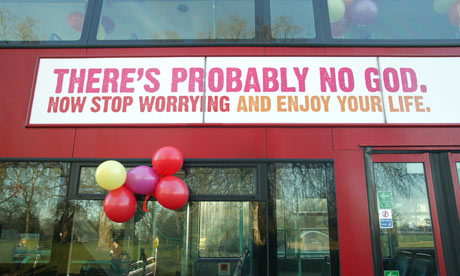
Here's a piece on that very topic from The Guardian's News Blog, posted there today by the paper's Religious Affairs Correspondent, Riazat Butt (photo of the Atheist Bus by Frank Baron). I imagine that this one's going to run and run ...
Humanists launch "no religion" census campaign

The British Humanist Association wants non-believers and the seriously lapsed to stop ticking the Christian box

The British Humanist Association has launched a campaign to encourage non-believers and the seriously lapsed to tick the "no religion" box on the 2011 census with the aim of challenging religious privilege in Britain.

According to the organisation, public figures have spent the last 10 years claiming that most people in this country are religious to justify the money or attention spent on these communities.

While the statistics show that 37.3m people stated their religion as Christian, these figures are not reflected in church attendance.

The beef the BHA has with the census is manifold but, principally, it is that it underestimates the number of non-religious people and inflates the Christian population. The official figures show that in 2001 15.1% of respondents did not answer the religion question (which was voluntary) and 7.8% of the people who did said they had no religion.

That equates to 22.9% of respondents – approximately 13 million people – who were either non-religious, did not want to answer the question or failed to spot it. The no-religion group exceeded the Muslim, Jewish, Sikh and Hindu populations combined.

Since the last census was carried out, the BHA believes the numbers of the non-religious have increased. And there have been high-profile campaigns by atheists such as Richard Dawkins and the group behind the Atheist bus.

The BHA says it is time for people who never go to church or who never think about religion to 'fess up: " ... what people do not realise is that by ticking the 'Christian' box rather than the 'no religion' box – which would more accurately reflect their identity – they have contributed to data used to justify an increase in the number of 'faith' schools, the public funding of religious groups, keeping Bishops in the House of Lords as of right, and the continuation of compulsory worship in schools." Yes you fickle and lazy lot, the humanists blame you for all that.

While some might argue that humanists have no more place to tell you what to do than religious institutions, it will be interesting to see what difference a decade of high profile campaigning and posturing front has done to the thorny question of religious belief in Britain.

Read this story on The Guardian's website, along with a number of reader comments:
http://www.guardian.co.uk/world/blog/2010/oct/27/humanists-no-religion-census-campaign?INTCMP=ILCNETTXT3487

Wednesday, 6 October 2010

the next (and final?) Census


Meeting this afternoon at the Welcome Centre with Khudeja Amer-Sharif (photo above), 2011 Census Community Advisor. The next national Census will be held on Sunday 27 March 2011 - and there's talk that it might be the last of its kind. The Coalition Government has floated the prospect of killing off the Census and obtaining information it needs from existing agencies and databases, such as credit rating agencies. The first Census in this country was carried out in 1801 and since then has been held at regular ten-yearly (decennial) intervals. The only exception to this was in 1941, when it was abandoned due to World War II.

Khudeja has been commissioned to find ways of improving the response of the Indian community in Leicester and Leicestershire to the Census when it comes round again. In 2001, this community was one which didn't participate in the Census to its fullest extent (so much so that I've heard it said that one segment within the Indian community in the city might be as much as twice the size recorded in the Census).

For the Council of Faiths in general - and for my post in particular - accurate, up-to-date information about the size, distribution and status of faith communities is essential for many reasons that I'm sure need no explanation.

As well as helping find ways for the Indian community to participate in the Census, we can find other ways for it to have a positive impact locally. The Census has created 35,000 temporary jobs nationally. There was an under-representation among those who filled these posts in 2001 of Indian people, so Khudeja wants to find ways to encourage the Indian community to apply for some of these. So we're looking for ways to publicise the importance of the Census and the availability of these jobs that come with it. Khudeja is interested in getting the chance to speak to our members, as well as organising such activities as "Completion Events" (for those who might be having difficulties filling out their Census forms) in places of worship and community centres for a week or so after the date of the Census.

I provide Khudeja with some contacts, including: Highcross; Oadby & Wigston Hindu Community; Oadby & Wigston Muslim Association; Wesley Hall. What she'd really like is a public endorsement from Leicester Council of Faiths, which would look good in the Mercury with a photograph featuring a Hindu, Muslim and Sikh face. Sounds like the kind of thing we'd be glad to arrange - but after 9 October, as much of our normal work is pretty much on hold till then!

Khudeja is featured on "Faces of the Census":
http://2011mc.census.gov.uk/Faces_of_the_Census.pdf

Friday, 10 September 2010

A NATION OF FUZZY DOUBTERS

Ahead of the visit to the UK of Pope Benedict next week, today's Guardian contains an interesting article about how religious adherence is measured.
A nation of fuzzy doubters 
"People cling to the idea of religion as a source of morality," says Terry Sanderson, president of the National Secular Society. "There is general apathy: people don't want to make a fuss."


Many Britons have at best a shallow belief in God: the most recent British Social Attitudes survey found that just a third of the population held firm religious beliefs, with another third deeply sceptical and the final third uncertain.


[...]


"People prefer to talk about spirituality rather than religion, which can mean anything you want it to," says Sanderson.


[...]


According to demographer David Voas at Manchester University: "The part of the population that is properly religious is a minority, but so is that part which is overtly secular. In the middle is an informal group of fuzzy people who don't really care."


Britain is not, as some think, the most secular nation in Europe; it is less so than Scandinavia and parts of the former Soviet bloc.


Migrant communities are the most committed - even long-standing ones, such as the Irish Catholics who dominate what Voas calls "the British bible belt running from Merseyside to Wigan pier."


Most other people are less engaged, although measuring belief is difficult and the data conflicting.


Much depends on how questions are asked and whether they refer to broad social identity or practical belief.


The census, which records the highest level of religious belief, assumes people are adherents of one religion or another and actively asks them to choose from a list.


In 2001, more than two-thirds selected Christian and well under a fifth no religion. that, says Voas, overstates the reality of British religious belief. Asked to choose Christian rather than Muslim or Hindu, people see it as an ethnic identity. Voas argues that the British Social Attitudes survey, which found over half the population holding no strong religious views, is a better measure.


Other polls go further. In a 2006 Guardian/ICM poll only 33% described themselves as religious, against 69% who said they were not - including a majority who described themselves as culturally Christian.


Women and older people were more likely than average to believe in a god, but overall only 13% said they went to a place of worship at least once a week. More people saw religion as a force for harm than for good.


That suggests a country where religion is on the retreat. "There is a huge change - the trend is toward secularism," says Sanderson.


Others, pointing to the impact of migration, from Catholic Poland as well as the Indian subcontinent, are less sure.


The country's religious makeup is fragmenting as the Church of England declines. "It is not the case that Britain is getting more religious," says Voas.

Friday, 23 April 2010

LEICESTER MUSLIMS FEEL "RIGHT AT HOME"

This article appears in today's Leicester Mercury:
Leicester Muslims feel "right at home"
Most Muslims who live in Leicester feel at home in the city, a new study has found.
Muslims in Leicester is the most detailed report on Muslim life in the city to date, and comes after researchers spent months questioning 300 people in Evington, Spinney Hills and Stoneygate.
The report, released yesterday, found the majority of Muslims possessed a strong British identity and a sense of belonging to the city.
Aamenah Mulla, 11, told the Leicester Mercury yesterday: "I really like it here. I feel part of the city."
The report by the Open Society Institute praised Leicester's vibrant faith communities and strong political participation by ethnic minorities – 17 of the city's 54 councillors are from an ethnic minority background.
It also praised the depiction of and reporting on Muslims by local media, including the Leicester Mercury, which it said was more positive than in the national press.
Co-author Nazia Hussain said: "Other cities in Europe have much to learn from Leicester. This city serves as a powerful example of how ethnic and cultural diversity can be managed well and, in fact, turned into an asset."
But he said key bodies, such as the city council, needed to keep working hard to encourage integration, and that Leicestershire police should recruit more Muslim officers.
Leicester was chosen for the study because of its high Muslim population. Of the 280,000 people on the 2001 census, 30,000 were Muslim.
Leicester will soon become the first city to have more non-whites than whites.
The findings of the study were backed by Muslim residents of Highfields.
Resident Farida Patel, 26, said: "There's a real community spirit in Leicester and I don't think life is the same elsewhere, from visiting Muslims living in Birmingham and London.
"We all feel part of the city. There are no problems with the police and the Leicester Mercury is brilliant at encouraging Muslims to participate. I've got high hopes for the future."
Mohammad Ismail, 24, said: "Leicester is a good place because here we are free to offer prayers and wear Muslim clothes. I don't think discrimination is a problem here."
The report looked at the way businesses, organisations and authorities worked to engage with the Muslim community.
It highlighted Jobcentre Plus's outings for employers to mosques and temples and the roadshow for new Highcross shops and restaurants that visited all of Leicester's communities to recruit staff.
Sheila Lock, chief executive of Leicester City Council, said: "The diversity in Leicester is one of our greatest assets."
Chief Inspector Bill Knopp, of Leicestershire police's community safety bureau, said the force hopes to increase recruitment of minority officers once its recruitment freeze ends.
The study used statistical research and interviews.

Thursday, 15 April 2010

profile of the non-religious


To Secular Hall, Humberstone Gate this evening, for a talk sponsored and hosted by Leicester Secular Society: "Profile of the Non-Religious" by Prof David Voas (photo above). Prof. Voas is Simon Professor of Population Studies at the Institute for Social Change, University of Manchester.

His theme this evening is "Who are the 'non-religious' in Britain and where do they come from?" His presentation is based on statistics obtained from the 2001 Census and from the British Social Attitudes survey. Consequently, he takes into account how factors such as age, education, ethnicity, gender, marital status, political affiliation, social attitude affect or reflect whether (and to what extent) individuals, families and groups are or are not "religious". Several of these aspects of personal and social identity seem to have unexpected and intriguing implications on this topic. He also looks at geographical breakdown of religious and non-religious respondents to these questionnaires. Apparently, Aberdeen has the biggest percentage of its population who declare themselves to be "non-religious" (but the census question in Scotland was slightly different from the in England and Wales and allowed one to identify oneself as "non-religious" more easily).

The presentations contains some interesting definitions of what it means to be "religious" and "non-religious", which will be of interest here. We're asked to consider whether religious identity comprises on dimension or many and depends on the nature of the question being asked. A question such as "Would you say that you think of yourself as a religious person?" is different from a tick-box exercise. Definitions and typologies are justified by utility, although the real goal of this kind of investigation is to understand the world. It may not matter a jot in the end where we locate someone (or where they locate themselves) on such a scale. We learn about "strong" and "weak" forms of being religious and non-religious:

  • attendance at services or prayers
  • participation in religious rites of passage
  • belief in God (with varying degrees of certitude or doubt)
  • identifying with, or accepting affiliation, to a particular religion
  • attitudes to religion range from hostility to indifference to support.

We also discuss distinctions between "secularity" (which is a descriptive term related to the absence of religious motivation or content) and "Secularism" (with a capital "S", being a particular ideology actively opposed to religious privilege).

From a personal point of view, I become more aware of  the difference between how the definitions of "religious" and "non-religious" are treated in England and in Scotland. For example, those who ticked "other religion" in the 2001 Census and wrote in "Jedi Knight" in England were put into the category of "no religion", while those who did the same in Scotland were classified as "another religion" alongside more recognised minority faith communities.

Dr Voas's conclusion this evening? That Britons are becoming secular without quite knowing it or knowing quite what it means.

Find out more about Prof. David Voas and his work:
http://www.ccsr.ac.uk/staff/voas.html

Find out more about Leicester Secular Society (the oldest secular society in the world - formed 1851):
http://www.leicestersecularsociety.org.uk/