Showing posts with label 'Abdu'l-Bahá. Show all posts

Monday, 5 August 2013

BBC RADIO LEICESTER, THOUGHT FOR THE DAY: BAHÁ'Í COMMENT ON ZERO HOURS CONTRACTS


I pop into BBC Radio Leicester this afternoon to record a Thought for the Day with Producer, Rebecca Bryers. This one's for broadcast on Jonathan Lampon's breakfast show, Wednesday 7 August - and here's how it sounded on the day:
JL: It's time for Thought for the Day, which comes today from George Ballentyne, a local Bahá'í.
GMB: Good morning
This week we learned that over a million UK workers are on zero hours contracts, a figure four times higher than previously thought.
If this way of working fits in with your way of living, it can be a perfectly good way of staying in gainful employment. But for some other workers, they are always on standby, without guarantee of any pay for any work in any period. They must turn up at their place of work if and when required, often at very short notice, with barely time to make arrangements for dependants.
For some, this can make it difficult to access the kind of financial services (credit, loans, mortgages and so on) on which our daily dealings depend.
In the words of 'Abdu'l-Bahá, one of the central figures of the Bahá'í Faith, "arts, sciences and all crafts are (counted as) worship. The man who makes a piece of notepaper to the best of his ability, conscientiously, concentrating all his forces on perfecting it, is giving praise to God. Briefly, all effort and exhertion put forth by man from the fulness of his heart is worship, if it is prompted by the highest motives and the will to do service to humanity. This is worship: to serve mankind and to minister to the needs of the people. Service is prayer."
As a Bahá'í, it's my hope that our society does not forget the dignity and nobility of good, productive work - and the dignity of the worker - even in these difficult times.
JL: Thought for the Day there, which came from George Ballentyne, a local Bahá'í.

I send the text to Becca a couple of hours before I go in to record it. She feels obliged to ask me to tone it down a bit - twice. I feel righteously indignant about this issue and have used a quotation from The Promise of World Peace to illustrate that, but it was all a little too hard-hitting as a Thought for the Day. I rewrite the piece on the hoof - literally - on the half hour walk from Christians Aware in Saxby Street down to St Nicholas Place (Well, not all that literally, since I don’t have hooves and even if I did, it would probably be quite hard to use them to type on an iPhone). Becca talks me down off my high horse and helps me deliver something more suited to the format and time slot.

Thursday, 9 May 2013

SACRE AT QUAKER MEETING HOUSE, MAY 2013


Leicester SACRE (Standing Advisory Council on Religious Education) meets this afternoon at Quaker Meeting House, Queens Road.

One of the main purposes of Leicester SACRE is to receive requests for "Determinations" from city schools. If the head teacher of a school feels that the provision of collective worship within the broadest interpretation of the law is not suitable for that particular school, then the head teacher should consider whether it might be appropriate to ask the SACRE to grant a "determination" in accordance with the law. A determination is the decision of the SACRE as to whether it is appropriate to lift the requirement for wholly or mainly broadly Christian collective worship to be provided for the school, or any class or description of pupils at the school, having regard to any circumstances relating to the family background of the pupils for which the determination is requested. The SACRE must review the determination if the school so requests and, in any event, within five years of the date when the determination was made or last reviewed. Members of SACRE discuss such requests in fixed blocks, reflecting their own interests and associations before voting on whether or not to grant the determination. Leicester Council of Faiths doesn't have voting rights at SACRE. We're involved as an invited observer; we have the right to speak and query, and can get involved in all sorts of activities and projects, but we don't vote on determinations or any other processes. Today we hear an application for a Determination from Abbey Community Primary and application for renewal of a Determination from Judgemeadow Community College.

A regular agenda item at SACRE meetings has one of the members make a presentation on their religion or belief. Today Stephanie Maude (immediate past Chair of Leicester SACRE) gives the presentation on the Bahá'í Faith. She does a great job, focusing on appropriate and relevant themes and topics (including the distinctive contribution that the Bahá'í Faith can make to Religious Education) with some nice supporting illustrations. Think of her offering a perfectly ade cake - to which I feel compelled to add a few sprinkles. I always like people to know that, before there was even one gurdwara, mosque or mandir in Leicester, there was a local Bahá'í Centre. This was in the house owned by John and Vera Long in New Walk, between 1957 and 1963, part of which was dedicated to meeting and worship. I also mention that 'Abdu'l-Bahá's visits to the west, during which he warned about the oncoming First World War, would be featured in Leicester's "fringe" commemoration of the Centenary of the Great War. (After today's meeting, I chat with Allan Hayes about the possibility of an unholy alliance between Leicester Council of Faiths, Christians Aware / Faith Awareness and Leicester Secular Society to create and promote this fringe.)

Under AOB I mention next week's meeting of the Christian-Muslim Dialogue Group week ("Learning for Life: How Islam is taught to children in a multi-faith society"), which has been arranged specially for members of Leicester SACRE. I'm surprised no one else has mentioned this; indeed, I expected to see it on today's agenda. To my further surprise, virtually no one here has heard of this and no invitation to the meeting has been received by SACRE. I'm able to call up the flier on my iPhone and pass it to Anne Fishenden, who is chairing the meeting, just to show I'm not making things up. Before leaving Quaker Meeting House this evening, I forward the flier with details of the meeting at Madani to SACRE's officers. It sounds like an interesting event and I hope that despite the glaring omission of inviting the very people for whom the meeting has been arranged, that it gets decent support come Wednesday.

Wednesday, 17 April 2013

OPEN MEETING: WEAPONS OF MASS DESTRUCTION


This evening the Council of Faiths co-hosts an open meeting on Weapons of Mass Destruction at St Philip's Church Hall, Evington. This meeting is being held in association with St Philip's Centre for Study and Engagement in a Multi-Faith Society and the Christian-Muslim Dialogue Group.

This is the fifth in a series of such meetings, on topics of interest to people from all sorts of communities across the city. I've posted on this blog about the three earlier meetings:
The speaker this evening is Bruce Kent, who is in Leicester today on the latest leg of his Scrap Trident Tour.

There are more than 60 people in attendance, though you could count those who are members of the Council of Faiths on the fingers of one hand. Most of the people here would appear to be drawn from local CND or Leicester Secular Society.

Bruce Kent (in that jumper) with Revd Sonya Brown
We are welcomed by Revd Sonya Brown, Curate at St Philips Parish Church. This is followed by an introduction by Revd Pete Hobson, Co-Chair of the Christian-Muslim Dialogue Group.

I've not attempted to make a full record of Bruce Kent's talk. His position on this topic is well known, to put it mildly. Here are a few points, however, that stuck out for me:
  • He emphasised that he is interested not so much in the elimination of nuclear weapons as in the elimination of war.
  • He discussed how the idea of Weapons of Mass Destruction have a history that goes much farther back than Hiroshima and Nagasaki
  • He asserted that the moral and religious arguments are barely worth discussing - self-evidently against weapons of mass destruction.
  • He posited that the argument carrying most weight at the moment is the economic one - as a country, we cannot afford these weapons.

Daud Sameja, Co-Chair of the Christian-Muslim Dialogue Group, invites questions and comments from the audience. This part of the session lasts more than 45 minutes.

Suleman Nagdi makes a contribution that brings to mind a speech given by 'Abdu'l-Bahá almost exactly 100 years ago. This is entitled, "The Cruel Indifference of the People Towards the Suffering of Foreign Races", published in Paris Talks.

The question of how to reach young people with this message comes up early. Amongst a flurry of comments about how young people are apathetic and not informed or interested in big issues such as nuclear disarmament, I ask how many of us had seen Doctor Who this weekend. "Cold War" was set on board a Soviet nuclear submarine in 1983. While not especially strong on historical veracity (with a Martian Ice Warrior on board, threatening to set off the submarine's arsenal) but it certainly would have foregrounded the subject in the minds of its more than six million viewers, by far the majority of whom will have been children and young people. Only two of those present has seen it (just Pete Hobson and me); there was a kind of positive bafflement on many faces, that something unexpected has happened to increase young people's awareness - and, potentially, their interest - in this issue.


When I get to the front and take the microphone in my own right, to ask Bruce Kent what single thing has give him the greatest personal satisfaction during more than 25 years of campaigning. He has to rack his brains for an answer and when he does come up with one, it would appear to be a surprise to most of us here. He picks the honour paid to Franz Jägerstätter (who refused to serve in the army under Nazi rule) recently in Linz Cathedral, Austria.

While at the microphone, I mention that the one previous occasion I had met the speaker was in 1984, when he undertook a peace march from Faslane to Aldermaston. This started off near where I lived at the time, in Dumbarton, and I walked with Bruce Kent on the first day, from the nuclear submarine base (and peace camp) at Faslane to the town hall in Dumbarton, where there was a small civic reception. On that occasion, I presented him with a copy of The Promise of World Peace, which was only recently published and which we had a good record of distributing around the town and district.

At the end of the meeting this evening, a couple came up to me and said that they had organised that walk in 1984 and had done the whole route themselves, so we must have met on that day, 29 years before. Unfortunately for me (and for you, faithful reader), they were whisked away when my back was turned, so I managed to get neither a photograph nor their names.

Sunday, 3 February 2013

THE BIG QUESTIONS, LIVE FROM LEICESTER


BBC One's The Big Questions is broadcast live from Samworth Enterprise Academy, Leicester, this morning. I've said before that I'm no fan of this kind of show and have turned down several invitations to appear on them over the years. While I’m all in favour of honest open discussion, I favour more the statement attributed to 'Abdu'l-Bahá, that “if two people quarrel over some religious subjects, both of them are wrong.” I make an exception for today’s broadcast and watch it for the sake of the blog. I wrote about a previous edition of the programme broadcast from the same venue. There's a change in the format this time in that there's no panel of experts out front (which I think is an improvement). Nicky Campbell hosts the programme, on which three "big questions" are discussed:
  1. "Is it time for the police to favour black candidates?"
  2. "Is criticism of Israel anti-Semitic?"
  3. "Should gay couples be allowed to marry?"

I recognise several members of the audience. Leicestershire Sikh Alliance was well represented by Raj Mann (who spoke on the first topic), Harjit Singh (who spoke on the second topic), Kartar Singh (who raises his hand to speak several times, but to no avail) and Jasdeep Singh Lamaar. Shaykh Ibrahim Mogra, Assiatant Secretary of the Muslim Council of Britain, spoke on the second and third topics. Revd Canon Dr David Jennings, Vicar of Burbage, spoke on all three topics. Also in the audience is Resham Singh Sandhu, former High Sheriff of Leicestershire and former Chair of Leicester Council of Faiths. Last time I watched this show, there were several members of Leicester Secular Society in the audience. This time round, though, I don't see anyone I recognise from the Secular Society.

I don't like how shouty and bad tempered these programmes can become. That's not the best way to address religious, ethical and moral issues in the public eye. A big part of the reason why I have generally negative feelings about The Big Questions is the fact that, while it is undoubtedly worthwhile for it to travel the country and come from a different locality each week, the people who make the major contributions to the discussion and the groups they represent are not from the area. That might be considered fair enough, since the topics discussed are national or international in nature. For instance, while discussing the first question, Nicky Campbell refers to the 2011 Census results for Leicester (admittedly, in a rather "off the cuff" manner) backing up the conventional and historical argument that it's important for the police force to be representative of the community they are policing. I would say it’s not right that there's no one in the studio from Leicestershire Police, nor any statement from them or any description of the nature of diversity within Leicestershire Police (figures for which are readily available; I've got them and so has just about everyone else in Leicester and Leicestershire who is interested). There’s no one from the Jewish communities of Leicester (nor anyone from Leicester involved in the Palestinian issue) to engage with the second question. A similar argument goes for the third topic. I can say that because I know the local scene well enough to be able to spot the “well kent faces” (or those conspicuous by their absence). But the casual viewer inside or outside Leicester might be led to the conclusion that they’re getting a sense or flavour of how these issues play in Leicester, when that’s not the case.

Thursday, 27 December 2012

A TRIBUTE TO THE POWER OF SHARED VALUES

Riaz Ravat's First Person column appears in today's Leicester Mercury (but not on the website):
A tribute to the power of shared values
Riaz Ravat looks back over an eventful year that has brought faith communities closer together
This year will surely go down as one of the most remarkable in the history of the UK. On a spring day in March , Leicester paid a colourful and vibrant tribute to the Queen on the first stop of her Diamond Jubilee tour. The royal party was treated to a show that will live long in the memory.
The Church of England is interwoven into the fabric of this country and the leadership shown by the Diocese of Leicester, with Leicester Cathedral as the centrepiece, enabled a mosaic of faith communities to join in the celebrations to show they too are firmly rooted in the identity of this country.
2012 as also marked as the Year of Service. Launched in January, the initiative encouraged faith communities to work collectively to deliver charity efforts to needy causes.
"Confirm us in service to the world of humanity so that we may become the servants of Thy servants, that we may love all they creatures and become compassionate to all thy people."
These words of 'Abdu'l-Bahá, the eldest son and successor of Bahá'u'lláh, the founder of the Bahá'í Faith, were delivered in 1912 and it was fitting the Bahá'í community was instrumental in launching a year of service.
One of the many points to note from the release of the 2011 Census is how the definition of "minority" is being redrawn locally.
The presence of smaller groups, such as the Bahá'í and Jewish communities, poses challenges to larger communities and defines the true meaning of a decent and progressive society. The challenge is how we enable these minorities to express their confidence and to contribute their fullest, to the life of the city, county and country.
Throughout the year, we witnessed Bahá'ís, Buddhists, Christians, Hindus, Jains, Jews, Muslims, Sikhs and those of no professed religions belief coming together for the selfless service of others.
Whether this motivation is inspired by God, political doctrine or human concern, we must begin to address what wee mean by  shared values, purposes and the nature of "good", not only for today's world, but for tomorrow's.
As we reflect on service, let us not forget the dedication and decency of the outgoing Archbishop of Canterbury, Dr Rowan Williams.
The impact of the General Synod voting against female Bishops is not restricted to the Church of England. Far from observing these developments, those from other persuasions must now take stock and ask, how much longer will we accept the gap between the principle and practice of equality?
The spiritual richness of service and compassion which faith communities possess, undergirded by their respective "golden rules", is all too often tainted by humanity's thirst for selective salvation.
Riaz Ravat is deputy director at St Philip's Centre, Leicester

Monday, 25 June 2012

CHRISTIANS AWARE: NEW COURSE ON COURSE

At lunchtime today there's a meeting at the offices of Christians Aware in Saxby Street, to progress plans for “Going on Beyond: Meditation and Mysticism in the World Faiths”, the Faith Awareness course to be held at Christchurch, Clarendon Park, January to March 2013.

We agree a draft timetable for the ten meetings, which will include an introductory session led by Ian Grayling and Kevin Commons; a session on "Mysticism Across the Centuries", led by Beate Dehnen; perspectives on the topic from, respectively, a Cistercian Monk; a Bahá'í (me, speaking about 'Abdu'l-Bahá); a Hindu (speaking about Ramakrishna); a Sikh; A Buddhist; a Jew; and a Pagan. The closing session will take an overview of the whole course and will invite attendees to participate in the interfaith meditation meetings hosted by the Buddhist group at Leicester University.

It's my responsibility to secure the involvement of the Pagan and Sikh speakers before we have our next planning meeting in September.

Saturday, 21 April 2012

LEICESTER BAHÁ'ÍS CELEBRATE FIRST DAY OF RIDVÁN


At Quaker Meeting House, Queens Road, this afternoon, where local Bahá'ís are gathering to celebrate the First Day of Ridván.

Ridván is designated the most sacred period in the Bahá'í year (21 April to 2 May inclusive). The first, ninth and twelfth days are Holy Days on which work and study should be suspended. Bahá'í communities usually hold events to celebrate one or more of these days.

We hear a brief account of the life of Bahá'u'lláh (1817-92), founder of the Bahá'í Faith, concentrating on the twelve days he spent in the Najibiyyih Garden on the banks of the Tigris, before he left Baghdad after ten years in that city, moving on to Constantinople, the next stage in his 40-year exile. This is the period that is commemorated in the Festival of Ridván. It is particularly significant for Bahá'ís as it was during this time that Bahá'u'lláh revealed to his closest family and friends his station as the Manifestation of God in our time. The site of this declaration is known among Bahá'ís as the Garden of Ridván (Paradise).

We share devotional readings from the writings of Bahá'u'lláh, many on the significance of his historic declaration and of the importance of this period in the Bahá'í year. In these writings, Bahá'u'lláh often refers to himself symbolically as a nightingale, his stream of revelation compared to the bird's song. During this devotional section, a recording of the nightingale's song is played in the background. Strange that no one has thought to have done that at any Bahá'í devotional gathering I've attended over more than 30 years!

At the same time, the Leicester Lodge of the Theosophical Society is holding its regular monthly meeting in the Library of the Quaker Meeting House. There's a friendly historical association between Bahá'ís and the Theosophical Society. When 'Abdu'l-Bahá (1844-1921) visited western countries a hundred years ago, the Theosophical Society hosted many of his public talks and published them in its journals. The motto of the Theosophical Society - "There is no religion higher than truth" - is of obvious appeal to Bahá'ís. Our two groups mix in the kitchen that we're both using this afternoon. I chat with a few of their members and give one of them my card so that I can be kept informed of future activities.

As evidence of how the Bahá'í Faith embraces the many cultures from which its followers are drawn, after the devotional part of the meeting we have a go at some Scottish country dancing! Rarely have the Military Two-Step and the Gay Gordons been subjected to such indignities! But we have a good laugh trying - or at least, trying not to injure oursleves and each other!

One of the friends reminds me that Vera Long, the first person in Leicester to accept the Bahá'í Faith, passed away during this Ridván period 20 years ago. I knew Vera and her husband John during the time I lived in Oakham, from 1987. They moved to Oakham from Leicester in 1963, to become the first Bahá'ís there. John outlived Vera by a year. They both did an enormous amont for the Bahá'í Faith throughout the world and it's fitting that they be remembered here.

We're pleased to welcome Cllr Manjula Sood, former Lord Mayor of Leicester, current Asssistant City Mayor and chair of Leicester Council of Faiths as our special guest in this meeting. Manjula is in the photo above, with a few of the friends who came today (the rest were in the tranquil garden of the Quaker Meeting House, enjoying tea and sunshine).

Wednesday, 25 January 2012

BURNS NIGHT 2012


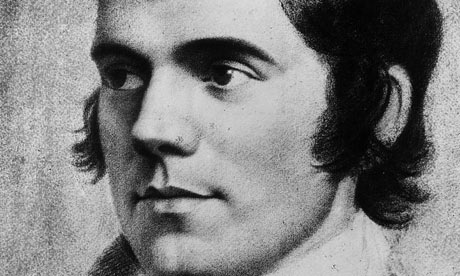
Today, 25 January, is the 253rd anniversary of the birth of Scotland's national poet, Robert Burns. Here in Leicester, as in innumerable places all over the world, people of all sorts (many of whom have never set foot in Scotland) will be celebrating Burns Night.

I've never been to a Burns Supper. But then, as a teetotal vegetarian who can't stomach neeps (as turnips are called for this purpose), I might be considered a bit picky over the fare on offer. And I've never worn a kilt; in fact the only way you've ever get me into a kilt is if I'm buried in one. But even though I've never bought into the memorabilia and paraphernalia that surround Robert Burns, still his poetry and songs hit home with me, for q variety of reasons. Back in 1979, when I was just 19, the Bahá'ís whom I first got to know in Glasgow often spoke about the perceived connection between the unity and solidarity of the whole human race that is expressed in Burns's poetry and the same core teaching of the Bahá'í Faith. Of course, all sorts of people and ideologies - religious, political, secular, social and more - claim ownership of Burns, or have hitched their waggon to his star, but I'd like to think that this instance was (and continues to be) more honest, insightful and sincere. It certainly worked for me and got me to appreciate and understand Burns in ways I never had before ... and it gave a route into the Bahá'í Faith that still illustrates its appeal and relevance to Scots.

Burns's universalism (which is, of course, but one facet of his writing) took on particular and personal significance for me when I was working on a book about 'Abdu'l-Bahá's 1913 visit to Edinburgh. The Seven Candles of Unity (1991) by Anjam Khursheed, acknowledges the resonance that Scots Bahá'ís feel with the spirit of Robert Burns. In that context, the book quotes his well-known words which foretell the inevitable overturning of prejudice and tyranny and the coming together of all the world's peoples:

Then let us pray that come it may,
As come it will for a' that
That Sense and Worth o'er a' the earth
Shall bear the gree an' a' that,
For a' that an' a' that,
It's comin' yet for a' that,
That man to man, the world o'er
Shall brithers be for a' that.

George Reid MSP & Carrie Varjavandi
Perhaps the single most significant occasion on which this connection with the legacy of Robert Burns was demonstrated was when Carrie Varjavandi, a member of the Dundee Baha'i community was invited to address the Scottish Parliament during its weekly short Time for Reflection session on 18 January 2006. Presiding Officer of the Scottish Parliament, George Reid MSP made a direct connection between the fundamental principles of the Bahá'í Faith and the words of Robert Burns:
The Bahá'í belief in the unity of mankind matches our commitment to build an inclusive society in Scotland. It recalls the words of Robert Burns [which were quoted] at the Opening of the Parliament in 1999: "That man to man, the world o'er, Shall brithers be for a' that."

Find out everything you wanted to know about Robert Burns (but were afraid to ask) on the Guardian Edinburgh website.

Monday, 16 January 2012

MAPPING FAITH & PLACE: 2nd SEMINAR


At St Philip's Parish Church, Evington this morning for the latest seminar in the University of Leicester's Mapping Faith and Place project. Mapping Faith and Place is funded by the Art and Humanities Research Council (AHRC) within their funding stream, "Care for the Future: Thinking Forward Through the Past".

The core aim of the project is explore the significance of South Asian religions and cultural heritage in Leicester's urban landscape. The wider context for this work, of course, includes the other aspects of religious and cultural identity and life in the city. There's more to the diversity of Leicester in terms of faith and belief than just the South Asian representation - as the project acknowledges, both in these workshops and in its print and online publications.

This is the second of three seminars for this project. You can read earlier blog posts for the first seminar (which I didn't attend) and the launch event (which I did), both of which took place in October last year. The third seminar will be held at the University of Leicester on a date yet to be decided, followed by a final conference in the summer (although it's hoped that the project will continue beyond that period of initial funding).

Leicester Council of Faiths lent a hand at various stages of this project (although if we'd grasped how significant Mapping Faith and Place is, we'd surely have done more to help). We borrowed the two pop-up banners for our display at Highcross during Inter Faith Week a couple of months ago, when we also distributed many copies of the Leicester Faith Trail booklet. Members of staff (Dr Deirdre O'Sullivan and Dr Ruth Young - both of whom are here today) and students from the School of Archaeology and Ancient History took part in that exhibition. I'm returning the banners today.

Jen Dickson (Lecturer in Geography at the University of Leicester) kicks off the day's proceedings, outlining some key academic ideas relating to this second seminar. Today we're considering how people develop a relationship with a place, a sense of belonging to a place (and of a place belonging to you). This sense of identity is complex and contested. It's no longer tenable to believe in a discreet, fixed, lifelong identity (which leads only to stereotyping). It's not simply a case of having a single identity, made up of different elements, more a case of multiple identities, which change in relation to space and time; not so much about possessing particular characteristics, more about how we perceive ourselves, especially in relation to others.

Our senses and emotions help determine whether we feel included or excluded in a place or a community associated with it, attached to or detached from them (applies to places and/or objects near and/or far). This brings to mind the particular example of RNIB College Loughborough's Faith and Reflection Room (see blog entry, Friday 16 December2011).

We discuss how contemporary politicians are co-opting debates about belonging, inclusion and exclusion, manipulating power and/or processes that permit inclusion or exclusion, in relation to Big Society, volunteering or where it is or isn't acceptable to dress or behave in certain ways (e.g. wearing the burka). We consider how individuals and groups resist such manipulation in modern society (e.g. Occupy movement)

There are 18 attendees here today, of mixed ages, backgrounds, cultures, faiths and traditions (though I'm sorry to note that there's no one from the Jain Centre or the Nagarjuna Kadampa Buddhist Centre, since they're both such prominent faith sites in the city centre). We’ve each been asked to bring an object with us that connects us to somewhere sacred. Now, I’m sure I don’t need to explain here that "sacred" means "set apart". This seminar is about sacred places, but it also helps shows us in what ways all sorts of things could be considered sacred. That can include things more abstract, including ways of being or doing, feeling, speaking and thinking. It could even be a narrative (I like that - it means even my blog could be considered sacred!)

The Leicester Bahá'í community has no public centre or place of worship these days, although I do mention on occasions such as this that the Bahá'ís had their own official meeting place in New Walk for several years from 1957, before there was a single gurdwara, mandir or mosque in Leicester. Despite this present lack (and without mentioning the historical anomaly) the Bahá'í Faith has its own page in the Leicester Faith Trail booklet published as one of the outcomes of this project.

Similarly, Bahá'ís tend to be "artifact-light" (I just made that up, but I'm sure you get my meaning) at least of the kind that fit into the typical resource boxes you might find in schools or museums. There's little to put in display cases in settings such as the St Mungo Museum of Religious Life and Art in Glasgow for example. There's irony here, inasmuch as the Bahá'ís were one of the most enthusiastic and supportive organisations behind the creation of the museum, but once the decision was made to concentrate on artifacts and objects, then it was a foregone conclusion that they'd be virtually excluded from representation in it.

Bahá'ís have always had a very rich historical self-awareness, consciously collecting, deliberately preserving and systematically archiving material items of all sorts. This is done nationally, internationally and locally, as anyone who has visited the International Archives at the Bahá'í World Centre on Mt Carmel, or has seen items from the British Bahá'í community's archives collection, such as those put on display at the National Bahá'í Centre in London during the recent celebration of the centenary of 'Abdu'l-Bahá's first visit Britain (see blog entry, Saturday 17 September 2011) will know.

But these are sacred items, relics, one-offs; they may amaze, inspire or thrill Bahá'ís but may appear trivial or incomprehensible to others. They aren't things used every day, nor are they everyday things that are used by Bahá'ís in their practice, individually or collectively.

So, within the parameters of the Mapping Faith and Place project, in what sense are the Bahá'ís a community when, for the most part, there are no physical centres, no meeting places for collective worship, when they gather in each others' homes or in rented or borrowed venues? I long ago understood (in my own limited capacity) what it means to be a community of common commitment, of ideas, of love for the same Beloved. We can be the exception that proves the rule here.

When I arrive this morning, Revd. John Hall has thoughtfully collected a small number of Bahá'í books and leaflets from the library in the St Philip's Centre next door and laid them out on display, in case I wanted to draw on them today. That's as close to artifacts as Bahá'ís ever get!

The kind of objects people have brought with them today include books, items of clothing, physical artifacts ancient and modern, original or replica, photos etc.

When we're called on to do pairs work about our object, I'm teamed with Surinder Pal Singh, General Secretary of Guru Tegh Bahadur Gurdwara, East Park Road. While he doesn't have any one particular object with him, he describes how the five Ks are the objects of belonging and identity, not attached to any particular place, but which he takes with him everywhere - which make his whole body a sacred site.

We're asked to consider the following questions in relation to the personal object we've brought with us today:
  1. How does it represent you?
  2. What aspects of your identity in particular does it highlight?
  3. What does it say about you personally and as a member of a community?
  4. How does it represent your relation to Leicester?
  5. How might it represent identity in the past, present and to future generations?
  6. If it does not represent past, present or future identities, why not? What object would?

I had no trouble choosing my object for this exercise today. When I asked Clare to guess what it would be, she said, "I bet it's your bloomin' iPhone!" And it is. Here are a few of the reasons why this is the object I've brought to this event today. I'm not expecting anyone else to agree with me (or even to understand my explanations):

  • Google Maps. I prefer to walk wherever I can in Leicester. Even if it takes an hour or more, I'd rather walk. I would describe myself as a flaneur. Baudelaire defines the flaneur as "someone who walks the city in order to experience it." This is definitely the case when going to (and often returning from) the 19 Day Feast. Beware any routes described by Google Maps as "beta versions". "Use with caution" indeed. First time I looked up the walking route to one venue for the 19 Day Feast and it sent me one way that took more than 45 minutes. Next time, it showed me a route that took 24!
  • Podcasts. I usually listen to podcasts of Astronomy Cast on my iPhone while on my way to the Feast. 'Abdu'l-Bahá instructs us that, "before entering [the Feast] free yourselves from all that you have in your heart, free your thoughts and your minds from all else save God, and speak to your heart". Odd as it may sound to you, faithful reader, listening to my favourite podcast, about the origin, history, present condition and future of the universe helps give me a sense of my place in the scheme of things. I don't see how anyone could attend to such matters and still consider themselves the centre of creation. It's like the Total Perspective Vortex from Hitchhikers Guide to the Galaxy (but in a good way!)
  • Twitter. I can connect with Bahá'ís in other places, who are similarly anticipating or preparing for their 19 Day Feast, or who may recently have held theirs. It's not just those Bahá'ís whom I follow on Twitter or who follow me; I find the unpredictability, the randomness, not knowing who will see or respond to the hashtags #Bahai or #19dayfeast while on my way to the Feast genuinely intriguing and connecting.

I'd like to think that this will connect with the topic of the next seminar, which will consider how new technologies can be used to represent place.

After lunch, we further explore the articulation of identities, specifically religious identities, through the mind, body and the senses. We ask:
  1. How are religious identities articulated in private home spaces through food and fasting; dress; music; dance; ritual practices?
  2. How can religious identities or belief systems be articulated though the body in public spaces?
  3. How can religious identities or belief systems be articulated through time and place in public and private spaces (e.g. birth; coming of age; marriage; death)?

It seems to be taken for granted by those participating in this part of the seminar that the challenge facing religious people today is that of maintaining practices or traditions exemplified and transmitted in the home and family, against the malign influence of a changing society, maintaining momentum gained over generations. There were fewer thinking of how many people, newly awakened to the religious life (or who switch religious affiliation) are challenged to establish new practices, for oneself and/or one's children, from a standing start. So I challenge that first assumption (in typically courteous fashion, of course).

In the photo above: Dr Chris King (who began the processes that have led to the Mapping Faith and Place project at the University of Leicester, but is now attached to the University of Nottingham); Dr Deirdre O'Sullivan; Jen Dickson; Dr Dr Viv Golden; Dr Ruth Young.

Saturday, 31 December 2011

FEAST OF HONOUR

I spend the afternoon with the local Bahá'í friends, celebrating the Feast of Sharaf (Honour).

Due to my irregular work schedule, commitments to the children and so on, I'm unable to attend as many Bahá'í community activities as I should. This is the first time I've been able to come to two consecutive Feasts since goodness knows when!

I think it appropriate to provide a short extract from the Bahá'í writings here, relevant to the name and theme of this Feast and of the month in the Bahá'í calendar that it begins:
“The Almighty hath not created in man the claws and teeth of ferocious animals, nay rather hath the human form been fashioned and set with the most comely attributes and adorned with the most perfect virtues. The honour of this creation and the worthiness of this garment therefore require man to have love and affinity for his own kind, nay rather, to act towards all living creatures with justice and equity.” ('Abdu'l-Bahá)

Following the devotional section which comes at the start of every 19 Day Feast, there’s the opportunity to share news, discuss the present state of the community and make suggestions regarding future opportunities.

There's an interesting report from some of the friends who attended a recent conference in Watford sponsored by the Persian Society for Art and Letters, on the subject of Modernity. Many of the talks, panels and workshops held there were recorded, and we hope that those of us who didn’t go will soon be able to watch or listen to these.

I say a bit about the three  community celebrations of Chanukah I've been able to attend this month and on the activities I was able to join in around Christmas, through supporting Harry singing with the choir at St Thomas the Apostle Parish Church.

We also discuss upcoming opportunities to get involved in an event for International Women's Day to be held at the University of Leicester on Thursday 8 March and to take part in an event (as yet ill-defined) being organised in Leicester by the Occupy movement on the weekend of Saturday 24 and Sunday 25 March. In connection with the latter, while we’d have to be assured of the political neutrality of any such event before committing a more formal Bahá'í involvement, there’s certainly a lot that Bahá'ís can say and do that would be relevant. One of the principles of Bahá'í life is that we must work toward eliminating  extremes of wealth and poverty. Our belief in economic and social justice depend on that central factor in the Bahá'í programme. The Bahá'í Faith is no "pie-in-the-sky" religion that preaches we should accept our lot on earth for the sake of gaining reward in heaven. While it recognises that there's more to life than merely material well-being, it pulls no punches in stating that inequality and injustice are simply wrong, from whatever perspective we might take. This can be seen in the following statement, from a talk given in Paris by 'Abdu'l-Bahá a century ago:
A financier with colossal wealth should not exist whilst near him is a poor man in dire necessity. When we see poverty allowed to reach a condition of starvation it is a sure sign that somewhere we shall find tyranny. Men must bestir themselves in this matter, and no longer delay in altering conditions which bring the misery of grinding poverty to a very large number of the people. The rich must give of their abundance, they must soften their hearts and cultivate a compassionate intelligence, taking thought for those sad ones who are suffering from lack of the very necessities of life. 
There must be special laws made, dealing with these extremes of riches and of want. The members of the Government should consider the laws of God when they are framing plans for the ruling of the people. The general rights of mankind mankind must be guarded and preserved. 
The government of the countries should conform to the Divine Law which gives  equal justice to all. This is the only way in which the deplorable superfluity of great wealth and miserable, demoralizing, degrading poverty can be abolished. Not until this is done will the Law of God be obeyed.

And this, from The Promise of World Peace, a statement by the Universal House of Justice "to the peoples of the world" made in 1984, coinciding with the United Nations International Year of Peace:
However vital a force religion has been in the history of mankind, and however dramatic the current resurgence of militant religious fanaticism, religion and religious institutions have, for many decades, been viewed by increasing numbers of people as irrelevant to the major concerns of the modern world. In its place they have turned either to the hedonistic pursuit of material satisfactions or to the following of man-made ideologies designed to rescue society from the evident evils under which it groans. All too many of these ideologies, alas, instead of embracing the concept of the oneness of mankind and promoting the increase of concord among different peoples, have tended to deify the state, to subordinate the rest of mankind to one nation, race or class, to attempt to suppress all discussion and interchange of ideas, or to callously abandon starving millions to the operations of a market system that all too clearly is aggravating the plight of the majority of mankind, while enabling small sections to live in a condition of affluence scarcely dreamed of by our forebears.

Now, of course Bahá'ís don't have the monopoly on caring about and acting on issues of social justice. Anyone with a working knowledge of the faith communities that flourish in Leicester will be able to come up with practices, principles and quotations aplenty from each of them in support of equity and fairness. Hopefully, that will make it easier to get a wide range of support and help make the contribution of the faith communities distinctive and unified. Both these upcoming opportunities are linked for Bahá'ís via another core principle of their beliefs: the equality of men and women. It’s become clear that women are bearing the brunt of austerity measures arising from the financial crisis. Working for the improved status of women and girls throughout the world can’t be divorced from the wider call for fairness in the management of the economy.

And if, for some legitimate reason, it’s not possible for the Bahá'í community to be formally involved in one or both of these events, there's nothing to stop individual Bahá'ís from taking part and bringing a Bahá'í sensibility to the table. Notes of our discussion are taken and will be passed on to the Spiritual Assembly of the Bahá'ís of Leicester for further consideration and a decision about the degree of involvement.

In the Bahá'í calendar, the day begins at sunset; the month of Sharaf (Honour), the start of which is celebrated with this Feast, begins at sunset on 30 December. When I was a young Bahá'í in Glasgow in the late 1970s and early 80s, we used to incorporate appropriate aspects of a traditional Scots celebration of Hogmanay into this Feast. I’ll leave it to you, faithful reader, to imagine which aspects they might have been. One of the things that makes the 19 Day Feast such a vibrant element of Bahá'í community life is its adaptability. The three-fold framework (devotional period, consultative period, social period) should always occur (in that order) and there’s guidance aplenty for how each of those sections should go and how they should relate to each other. But there’s also room for the Feast to breathe and expand, according to its national or cultural setting and the make-up of the community celebrating it. The Bahá'í community has always been awash with travellers’ tales of how the 19 Day Feast is celebrated variously in a rural Indian setting, among indigenous tribes people in North Africa or in an Inuit village above the Arctic Circle. But right from the start of my involvement in the Bahá'í community, I was with people who asked why that same variety shouldn’t be appreciated and encouraged here at home. It was things like holding the 19 Day Feast on Hogmanay, reading the poetry and singing the songs of Robert Burns at it and sharing black bun and ginger wine (that’s non-alcoholic of course) with friends of diverse origins and backgrounds that helped affirm my identity as a Bahá'í – indeed, as a Scottish Bahá'í. If truth be told, it was only by seeing those aspects of Scottishness through a Bahá'í lens that I learned how to love my own country and culture.

If you'd like to know more about the Bahá'í calendar and its pattern of Feasts and Holy Days, check out the excellent article on Wikipedia.

Sunday, 25 September 2011

SEWA DAY

Today is the second annual Sewa Day. Here's some information from the Sewa Day website. There's lots more of interest and inspiration to be found there.

Sewa is a universal concept, which involves performing an act of kindness without expectation of reward. It is performed selflessly and without ulterior motive.

As a concept, Sewa in embedded in Indian traditions, and is actively promoted by different cultures and faiths - as the core belief is the same - to sacrifice your time and resources for the benefit of others without wanting anything in return. 

On Sewa Day, thousands of good-hearted people across the world come together to perform Sewa and experience the joy of giving in its truest sense. By participating in this collective endeavour, we hope that the seeds of Sewa are watered so that acts of kindness and public service are performed more often. Sewa Day is a catalyst in making this happen. 

Previously, participating groups have organised Sewa Day volunteering projects in old people’s homes, homeless shelters, schools in disadvantaged areas, hospitals and hospices, country parks, conservation areas and city farms – all with an aim of making a positive difference to someone else’s happiness and prosperity. Join us this year to make our dream a reality.We’re all concerned about disadvantage, deprivation and ignorance. Sewa day provides an opportunity to do something positive that makes a meaningful difference to someone else’s quality of life. 

We discourage all projects that involve fund-raising; as the purpose is to give your time. So, let’s focus on that. 

It really doesn’t matter if you’re a pensioner or a young child, whether you’re physically able or not, or whether you black, brown or blue. 

All that matters is that you commit to doing a good deed on Sewa Day, which takes place on Sunday, 25th September 2011. 

Sewa UK is a secular, non-political UK registered charity.


While Leicester Council of Faiths is not, itself, participating in or promoting any particular activity for Sewa Day 2011, I couldn't let the occasion go by without reflecting on how selfless service is treated in the scripture or inspirational texts of our eight member faith communities.

In the extract from the Sewa Day website above, it states, "As a concept, Sewa in embedded in Indian traditions, and is actively promoted by different cultures and faiths - as the core belief is the same - to sacrifice your time and resources for the benefit of others without wanting anything in return." This does not suggest (indeed, it counters the suggestion) that such a concept and practice is the domain of the faiths, religions or philosophies of Indian origin alone. They can surely be said to be common to all religions, sometimes being expressed in more general terms as "The Golden Rule"). But whether it is called sewa, service, charity, caritas - or some other term - it is one of the core principles, central practices and essential virtues of the spiritual life. It may be expressed in a myriad forms and practices, but its presence enriches the world and its absence devalues religion itself.

Here are some quotations from each of our eight member faiths that I have found myself. No doubt you could come up with many more, faithful reader.

Bahá'í
"This is worship: to serve mankind and to minister to the needs of the people. Service is prayer." ('Abdu'l-Bahá)

Buddhist
"The greatest quality is seeking to serve others." (Atisha)

Christian
"Each of you should use whatever gift you have received to serve others, as faithful stewards of God’s grace in its various forms." (1 Peter 4:9-11)

Hindu
“Give. Give with faith. Do not give without faith. Give with sensitivity. Give with a feeling of abundance. Give with right understanding.” (Taittiriya Upanishad)

Jain
"In making a gift one gets over greed, which is a form of Himsa, and hence gifts made to the worthy recipients amount to a renunciation of Himsa (i.e., amount to observance of Ahimsa)." (Purusharthasiddhi-upaya)

Jewish
"He defends the cause of the fatherless and the widow, and loves the foreigner residing among you, giving them food and clothing." (Deuteronomy10:17-19)

Muslim
"Worship God, and join not aught with Him in worship. Be good to parents, and to kindred, and to orphans, and to the poor, and to a neighbour, whether kinsman or new-comer, and to a fellow traveller, and to the wayfarer, and to the slaves whom your right hands hold; verily, God loveth not the proud, the vain boaster" (Qur’án, 4:40)

Sikh
"A place in God's court can only be attained if we do service to others in this world." (Guru Granth Sahib)