Showing posts with label extremism. Show all posts

Tuesday, 28 May 2013

FIRST PERSON: WE MUST "BOX CLEVER" TO BEAT THE EXTREMISTS

Simon Bennett has written the First Person column in today's Leicester Mercury:

We must "box" clever to beat the extremists
Dr Simon Bennett, an expert in safety and security, examines the aftermath of Lee Rigby's murder
The murder last week of Drummer Lee Rigby shocked all right-minded people, whatever their faith or ethnicity. What impressed me was the country's determination not to be intimidated or demoralized by the misguided act of two disturbed individuals.
The public's response reminded me of a poster issued by the government in 1939: Keep Calm and Carry On. This is always the best response to threats and intimidation. By keeping calm and carrying on we prove terrorism doesn't work.
I'd like to make two comments: First, I believe ethnic, religious and cultural diversity is a strength, not a weakness.
As societies develop, the problems they face become ever-more complex and difficult to solve. Bringing a range of views and experiences to bear on problems improves our chances of solving them.
The Government has put its faith in the Big Society as a means of filling the gaps left by cuts. The social support offered by Britain's mosques, temples and cultural centres is an example of the Big Society in action.
I am old enough to remember Britain in the 1950s - a monochrome and stuff land of skiffle, football and fish and chips. Social diversity has made Britain a more enjoyable place to live.
Secondly,. the way to beat extremists is to "box" clever, by which I mean gather high quality intelligence and act on it in a timely manner in the context of laws that are fit for purpose.
After the September 11, 2001 attacks I wrote to the Prime Minster: I suggested he increase the budget for Britain's security services by one third.
In a 2006 article in Public Services Review, I suggested MI5 put more resources into recruiting members of extremist organisations, whether of the far-right, far-left or faith-based.
Needless to say, the Prime Minister did not respond to my letter. Nevertheless, in the years since 9/11 the Security and Intelligence Services (SIS) have put more resources into gathering intelligence organically.
Parachuting operatives into communities is a recipe for failure. Getting those communities to self-monitor is a recipe for success.
Last week, I met with a retired senior Metropolitan Police Service officer: We discussed the case of Mark Kennedy, the policeman who spent too long undercover.
The Kennedy case illustrates the difficulties of undercover work. While the murder of Lee Rigby was shocking we must remember how many plots have been foiled by the police with the support of SIS and the British public.
Intelligence gathering is not glamorous. It's dirty, dangerous and stressful. But it helps keep all of us safe.

Dr Simon Bennett is Director of Civil Safety and Security Unit at the University of Leicester

Thursday, 2 February 2012

WHY SHOULD WE BEAR THE COST OF THIS PROTEST?

This is Suleman Nagdi's First Person column, published in today's Leicester Mercury:
Why should we bear the cost of this protest? 
Suleman Nagdi says the EDL needs to clarify its motives on several serious issues
As the visit of the EDL to Leicester looms large, it is a convenient time for us to gain clarity with regards to the EDL's position on issues that are important to us as a society in this country. How does the EDL feel on the need to recognise that violent extremism comes from many sources and the obligation to condemn violent extremism in all its ugly guises, regardless of the identification of the perpetrators?
We have always been appalled at mindless acts of violent extremism and know the importance of guarding against complacency so as to prevent atrocities committed by those such as the nail bomber David Copeland, the architect of the Oslo massacre Anders Behring and the attacks in Northern Ireland.
Does the EDL recognise the numerous threats to British society and will it condemn all threats unequivocally?
How does the EDL feel about placing a substantial strain on the police's resources caused by their visit? Leicestershire Constabulary spent more than £700,000 to manage the EDL's last visit. With the police intending to station the same level of officers, a similar cost is likely.
At a time of public sector funding cuts, this spending is necessary but ultimately unsustainable and crippling to the taxpayer.
What link does a reprehensible attack by a group of girls on an innocent girl have to do with violent extremism? Will the EDL stage a protest for every single assault committed in this country? How does the EDL feel about how money spent on managing their march stretching the resources employed on everyday policing to keep our British citizens safe?
How does the EDL feel on the public disorder created by some of its membership on its visits to cities across the country, public disorder which costs the taxpayer millions in terms of damage and which also forces thousands of peace-loving British citizens to stay at home for fear of becoming victims of public disorder?
How does the EDL feel about the fact that taxpayers' money which is used to pay for damages are diverted from spending on many other important areas of public concern?
How does the EDL feel about airing their grievances in a manner that is not such a threat to public order, namely through legal and other political channels? We are privileged to live in a country where we all have the democratic right to express ourselves so long as this is done in a lawful manner. We are blessed to have a legal and political structure where we can campaign for change as long as this is pursued in a suitable non-violent fashion. Does this approach not appeal to the EDL?
For the sake of saving taxpayers' money and preserving public order we must know what the EDL feels about the issues outlined in this article at a time when many of us are suffering from the harsh economic climate.

Suleman Nagdi is spokesman for the Federation of Muslim Organisations

Saturday, 21 January 2012

IF THE EDL WANT TO SEE FAIR PLAY, THEY SHOULD CALL OFF THEIR MARCH

This article is published in today's Leicester Mercury:
If the EDL want to see fair play, they should call off their march
Leicester Mercury acting editor Richard Bettsworth on the distortions that will bring the English Defence League back to our city
The English Defence League is heading to Leicester in two weeks' time to protest against the UK's "two-tier justice system" which it claims treats Muslim offenders more leniently than others.
If this claim was true it would, of course, be utterly outrageous. Any justice system which operated such double-standards would be manifestly unfair and would quickly lose public trust.
So, what on Earth could the EDL possibly have in the way of evidence to back up such a serious claim?
This week's Insider seeks to examine that question and to sort out the truth from the hysteria.
The group's reason for coming to Leicester is the case of Rhea Page, a young woman who was subjected to a horrific attack in the street by four women.
The EDL suggests Rhea's attackers were dealt with leniently because they were Muslims and that if a white gang had launched an attack on a Muslim girl they would have been dealt with more severely.
There are two things about this case that are used to justify this claim.
The first is a suggestion that the attackers were spared prison because they were Somalian Muslims who were not used to alcohol. The second is that the victim was called a "white bitch" during the assault, but that the perpetrators were not charged with a racially aggravated offence.
Let's deal with the first point.
At this stage it is important to understand how this story emerged.
The Leicester Mercury was the only newspaper which covered the case and we carried a report on the proceedings on November 24.
The observation about the women not being used to alcohol was made by defence lawyer Gary Short. We quoted him on this point towards the end of our article but we did not suggest that this was the reason why the judge spared the attackers an immediate prison sentence.
On the contrary. We gave the actual reason earlier in the report which was that the judge, Robert Brown, said he accepted the women may have felt they were the victims of unreasonable force from the victim's partner (Rhea says her partner was only trying to protect her).
Since then, I have got hold of a transcript of the sentencing which clearly confirms this was the reason that the judge decided on a suspended sentence rather than sending the attackers to prison.
However, two weeks after our article, the story emerged in the national newspapers, where the line about the women being Muslims who were not used to alcohol was given much more prominence.
Most of these articles reported that the attackers were freed "after" the judge heard this evidence. Even though they used the word "after" instead of the word "because" these articles clearly implied that the two things were connected.
This was misleading and created a perception about this case which is at odds with the facts.
Let's have a look at the second point – the fact that the attackers were not charged with a racially aggravated offence. A video on YouTube promoting the EDL demonstration says: "This is an obvious racist attack on a white English female, yet it was dealt with quietly and as a drunken thuggish gang attack."
It goes on: "Unfortunately, many believe that it's not possible to be racist against white people."
This is what the Crown Prosecution Service says about its decision: "The CPS reviewed all the evidence in this case, including whether a racially aggravated offence should be brought on the basis that the comment 'white bitch' was reported to have been heard during the incident.
"However, this racist comment could not be attributed to any particular suspect and was not adopted by the group as a whole. There was therefore no realistic prospect of conviction for a racially aggravated offence."
So, clearly the CPS does consider that it is possible to be racist against white people. Its reason not to charge anybody with a racially aggravated offence was purely a legal one. It could not be sure of securing a conviction.
The EDL states its central aim is to combat "Islamic extremism".
However, the women involved in this attack were clearly not "Islamic extremists" and the incident has nothing whatsoever to do with that issue.
One can only conclude that the reason the EDL has leapt up on the misunderstandings about this case is because it actually has a much wider agenda. It is seeking to propagate a message that white English people are becoming second-class citizens in their own country and preferential treatment is given to Muslims.
That is, of course, deeply divisive and dangerous stuff which breeds resentment between communities. And, as we have seen, its argument crumbles as soon as one carries out a detailed examination of the facts.
At this point, I would add something of a footnote about the Rhea Page case.
Like Rhea, I did not agree with the judge's decision to suspend the sentences and I felt that the defendants should have been imprisoned.
It was an appalling attack and I think the justice system needs to send out a clear message in such cases that this sort of random, drunken violence will not be tolerated.
However, I have absolutely no doubt that the judge's decision was based on a proper and legitimate assessment of the case, and had nothing whatsoever to do with the religious persuasion of the defendants and their lack of tolerance to alcohol.
Unfortunately, nothing I have said will dissuade the EDL from carrying out their demonstration.
They will come to Leicester on February 4, in a protest which will cost huge amounts of public money to police and will probably hit trade in the city centre. And all of this disruption and potential discord will have been based on an entirely flawed premise. That's not fair on any of us, whatever our race or religion.

Wednesday, 18 January 2012

STREET ATTACK USED AS REASON FOR EDL DEMO IN LEICESTER

This article is published in today's Leicester Mercury:
Street attack used as reason for EDL demo in Leicester
A vicious street attack by a gang of young women in Leicester provoked the English Defence League's decision to protest in the city.
The EDL, which says it was formed to combat Islamic extremism, issued an online video last week to link its proposed protest on Saturday, February 4, with the case of 22-year-old Rhea Page.
The assault on Miss Page and her partner in the city centre in June 2010 was widely reported in several national newspapers and on a number of web sites.
It was claimed that the sentencing judge had decided not to send the women to prison after hearing that they had acted out of character because at least one of them had been drinking.
As Muslims, one of the defence lawyers told the court, they were not accustomed to alcohol.
The Leicester Mercury was the only news organisation in court for the hearing last November.
In sentencing the women, Judge Robert Brown made no reference to their drinking or their religion.
Instead, he decided to suspend the sentences because he said Miss Page's partner had possibly used unreasonable force in protecting her, although he was not charged with any offence.
The judge said: "I can see there's a context in which there's a sense you felt you were the victim of unreasonable force."
Miss Page later criticised the judge and said the women should have gone to prison because of the attack.
Some critics of the authorities' handling of the case have claimed the women should have been charged with racially aggravated assault because one of the Somali women reportedly called Miss Page a "white bitch" once during the attack.
The Crown Prosecution Service, which determines which charges are brought against offenders, has also clarified its handling of the case.It said: "The CPS reviewed all the evidence in this case, including whether a racially aggravated offence should be brought on the basis that the comment 'white bitch' was reported to have been heard during the incident.
"However, this racist comment could not be attributed to any particular suspect and was not adopted by the group as a whole. There was no realistic prospect of conviction for a racially aggravated offence."
The women – sisters Ambaro Maxamed (24), Ayaan Maxamed (28) and Hibo Maxamed (24), all from East Park Road, Leicester, and their cousin, Ifran Nur (28), of Gotham Street, in the city – all admitted actual bodily harm and got six-month sentences, suspended for 12 months.

Tuesday, 13 December 2011

UNDERSTANDING THE HISTORY OF RELIGIOUS CONFLICT

This is Manzoor Moghal's First Person column in today's Leicester Mercury:
Understanding the history of religious conflict 
A lack of knowledge will hinder peace efforts, believes Manzoor Moghal 
The extremists in the world of Islam spring from the school of thought that emerged in India after the Great Indian Mutiny of 1857 known to Indian Nationalists as the first war of Indian Independence. 
The Mughal Emperors of India who ruled for over 300 years mostly treated Hindus as equal partners in their governance of the country, which evolved a strong bond between their Hindu and Muslim subjects in their loyalty to the Emperors. 
The British systematically destroyed this pluralism and successfully used the strategy of divide and rule by pitching Muslims against Hindus and Sikhs and vice versa. 
After putting down the uprising they slaughtered thousands of Indian Muslims. As a consequence the Muslims became disillusioned with the whole concept of Pluralism and broadly divided into two groups. 
The Anglophile Sir Syed Ahmed Khan believed that the best way for the advancement of Muslims in India was for them to acquire Western education, and founded the Aligarh Anglo Mohammedan Oriental College later known as Aligarh Muslim University. 
The other group who were the followers of Shah Waliullah, a Wahabist founded the Deobandi school of thought in 1866 in Deoband. 
Their principle ethos was to create a pure Islamic society unadulterated by any Hindu and Western practices. They believed that it was the dilution of Islam with Hindu and Western values that had resulted in the demise of Muslim rule in India. 
It is from Deoband that Madrasahs across Pakistan and Afghanistan sprang up, teaching their extremist brand of Islam. From this erupted the repressive regime of the Taliban in 1996. Afghanistan then became the crucible for Al Qaeda who unleashed a most ferocious attack against the West in retaliation of their invasion of Muslim countries. 
Historically Islam and the West have been locked in conflict for centuries. The West continues its aggression by attacking and invading Muslim countries and treating Muslims as fiends because of the violent extremism from the likes of Al Qaida. Western foreign policy towards Muslim countries provides fertile breeding ground for violent Muslim extremism. American and European foreign policies in dealing with Muslim countries are seen by Muslims as deliberately provocative and anti-Islam. Unfortunately, Western actions backfire and continue to aggravate matters between the two opposing camps. 
Unless the phenomena of extremism is fully understood in its true historical contacts and genuine efforts are made for rapprochement between the two sides, there seems to be little hope of any solution.

Monday, 1 August 2011

Extremism isn't limited to one group in society

Today's First Person column in the Leicester Mercury is by my friend and colleague Suleman Nagdi:

  
Extremism isn't limited to one group in society
Spokesman for the Federation of Muslim Organisations Suleman Nagdi reflects on the Oslo massacre
Let us take a moment to pause in remembrance of the victims of the deplorable and utterly incomprehensible acts of terror that befell Oslo and the nearby island of Utoya on July 22. These acts of terror have left the most bitter and saddest of emotions, serving as the starkest reminder of the presence of evil in society. What this most incomprehensible of acts has shown us is that violent extremism exists and is a threat that we must work even harder to counter.
Governments including our own have put in place measures and strategies to counter the threat of violent extremism. Indeed, the Coalition Government has recently published the revised Prevent Strategy which has as its stated aim the desire to correct the perceived faults of the previous Prevent Strategy. Although the strategy does make mention of various sources of violent extremism, it only focuses in great detail on one particular source. This is dangerous.
By dedicating such an unbalanced attention on one potential source of violent extremism, the new policy has neglected to sufficiently focus on the dangers posed by others who also espouse views that seek to inflict physical harm upon others. Violent extremism is an unfortunate phenomenon that is a feature of various groups in society and not just limited to one community, therefore any counter-terrorism measures needs to take this into consideration.
Any neglect of this reality can have devastating consequences such as the one realised in Norway. The tragedy of the events in Norway serves as a grim reminder that it is up to governments and the media to recognise violent extremism in all its guises and develop policies which accurately reflect the threat posed by all these sources of violent extremism.
The Norway terrorist murders tell us once again that we need to focus on building and investing in community relations. Projects which bring together people from all backgrounds to do good are a start. Whether it is charity activity, fun events or sports, there are ways in which local and national government could work with communities to help bring this about as a long term-plan. On top of this, the only way we will defeat the seeds of extremism are more education and training for all our population. Tackling extremism requires some long-term objectives which may take years to realise.
This emphasis on community cohesion has seen Leicester serve as reference point for other cities across Europe in the stand against violent extremism. Leicester has dealt with the threat of violent extremism so that the threat posed by potential perpetrators has been wholly minimised. But we must not be daunted by the task ahead and remain steadfast in our commitment to work collaboratively with people from all backgrounds so that we may create safer communities for all to flourish in.

Saturday, 30 July 2011

MINORITIES MUST NEVER BE MADE THE SCAPEGOAT

Every Saturday, the Bishop of Leicester, The Rt Revd Tim Stevens, contributes the First Person column in the Leicester Mercury. Here's the one in today's paper.

The Bishop of Leicester is  Patron of Leicester Council of Faiths. Much of what he says in this column is clearly related to other recent pieces in this blog.
Minorities must never be made the scapegoat
The Bishop of Leicester says lessons can be learned from the appalling events seen in Norway
During the last week there has been much speculation about the events leading up to the appalling mass murder in Norway. The lawyers are now arguing about whether the alleged perpetrator is insane or not. It seems to me there is a danger of labelling someone as mad if it leads us to the conclusion that his views were completely detached from reality – that he was an isolated individual who came to bizarre conclusions as a result of mental disturbance.
This could be dangerous thinking if it allows the rest of us to come to the conclusion that the perpetrator was not connected to a wider context of opinion.
It is now emerging that Anders Breivik was in touch with a number of groups including the Islamaphobic English Defence League (EDL). While it is true that the EDL have distanced themselves from him and have renounced his kind of violence, nevertheless the EDL is typical of many groups which encourage hatred of Islam and of Muslims.
So events in Norway need to be a warning to all of us. Of course there can be a proper debate about multiculturalism and about the extent to which our communities have changed as a result of immigration over the last two generations. But where this spills over into incitement to hatred or extremism either in the press or through campaigning groups, we can now see how dangerous these views can become.
As the pressure on our economy tightens and the challenge to find jobs, housing and life opportunities increases, the temptation to scapegoat minority Muslim communities is likely to increase in many parts of Europe. In cities like Leicester it is vital that we hold on with confidence to the vision of a multicultural society which has served us so well and made us a beacon of hope for many visitors from around this country and beyond.
In the last decade, much has been written about the need to root out violent extremism from Muslim communities. But the events in Norway remind us that the overwhelming majority of terror attacks in Europe in recent times have been carried out by non-Muslims. And in Britain alone, a number of recent convictions of anti-Muslim extremists has underlined that Anders Breivik is far from being an isolated case or just a Norwegian phenomenon.
So we continue to be watchful here in Leicester. And we continue to hold on to a vision of a city which will not scapegoat or target minorities and which will resist all encouragements to take action against those who enrich our society and seek nothing more than to be accepted as British citizens and who make their vital contribution to the common good.

Wednesday, 15 June 2011

HIDEOUSLY DIVERSE BRITAIN: FIGHTING EXTREMISM MADE EASY

From Hugh Muir's weekly column, Hideously Diverse Britain (in which he looks at diversity and race in Britain today), published in The Guardian's G2 section today.
Hideously diverse Britain: fighting extremism made easy
People who feel as if they are valued by society are far less vulnerable to radicalisation – somebody should tell the government
One of my bosses took a brutalist view of journalism. He would sit in meetings, distracted, desperate for something eye-catching on the other side of the window. And then, when the intellectual ping pong was slowing down, he would say: "Why don't we just get the facts and put them in the paper. It's not rocket science, is it?"
And he came to mind the other day as I waded through the government's new Prevent strategy for fighting extremism. Greater surveillance of universities, more intrusive surveillance of the internet as accessed in schools, libraries and colleges. No public funds for those who embrace the peddlers of doctrines that conflict with British values. Get tough and prevent the messages of radicalisation getting through to those who might be radicalised. Which makes some sense, I suppose. But wouldn't it make a lot more sense to try to find out why they might be vulnerable to radicalisation in the first place?
Here's a bit tucked away in the Home Office material. It describes what was said by focus groups. "The public generally recognise that everyone in society has a role in challenging extremism through their perception that building tolerance and integration across UK society is central to Prevent work. However, this is not top of mind for the audiences and a conclusion that is reached after detailed discussion only."
So we know the key issue is combating the alienation that makes people vulnerable to the doctrines of swivel-eyed halfwits. We know that if someone feels a valued part of society, they are less likely to tuck bolts and batteries and fertiliser into a rucksack. And we know that all the guff that says this is purely a problem for British Muslim communities — the "Oi, you, sort it out" approach – is just guff because "everyone in society has a role in challenging extremism", just as everyone in society has a role trying to combat knife crime in Black British communities and heroin smuggling involving members of the Turkish communities and the white-collar crimes of white British bankers. It's not "top of mind" but we know these are whole society problems requiring whole society solutions. It's not rocket science, is it?

Friday, 29 April 2011

OUR MESSAGE IS ABOUT TRUE ISLAMIC VALUES

This is Dr Habib Akram's First Person column, published in today's Leicester Mercury:
Our message is about true Islamic values
Dr Habib Akram wants us all to get on board his community's bus peace campaign
Not a day goes by without some bad news relating to my faith. Atrocities and extremist actions "in the name of Islam" fill the national news pages. No good, it seems – if the media were to be believed – ever comes from Muslims. No wonder Islamaphobia is at such a high.
A recent survey has found that a total of 98 per cent of respondents gained information about Islam from the press and broadcast media. Islam was therefore associated with terrorism, extremism and repression of women. Decades ago, it was not Islam that was the menace (it was then an ally) when communism was the great threat and the West feared the "reds under beds". Prior to that, fascism too had wreaked havoc across Europe.
Ideologies – be they faith-based or political – taken to extreme threaten us all and the extremists' interpretation and expression of Islam that panders to the media is in fact anathema to Islam. This is why, in common with many Muslims across all walks of life, my community is driving home a message of peace through a nationwide peace campaign.
The Ahmadiyya Muslim Community, founded over a century ago on the basis of the peaceful practice of Islam, has placed banners proclaiming Loyalty, Freedom, Peace on 240 buses in British cities, including Leicester. From the end of this month and in May, a number of Leicester buses will display the values that Islam inculcates. This is part of an Affirmative Action campaign by the Ahmadiyya Muslim Community to send out a clear message to religious extremists as well as Islamaphobes about true Islamic values.
At the very heart of the campaign is the belief that it is not sufficient to simply declare that Islam is a religion of peace – one must live this belief by setting an example. The belief in peace stems from the very inception of the Ahmadiyya Muslim Community who have peace missions in towns and cities across the UK, including Leicester. My community is actively engaged in local and national fund-raising, volunteering, peace conferences, charity and interfaith work. The peace campaign comes as a national youth charity drive in the Midlands by Ahmadiyya Muslims aims to raise £225,000 for British charities.
The vast majority of Muslims live ordinary, decent lives and wish to contribute to the wellbeing of the country in which they live – it is where we and our children and their children will live. It is in all our interests – as well as an act of faith – to be good and loyal citizens and we must not allow extremist thinking and behaviour to destroy what we hold dear.
My community has launched a dedicated website for those who want to find out more about the peaceful message of Islam: www.loveforallhatredfornone.org
Dr Habib Akram is President of the Ahmadiyya Muslim Association Leicester

Thursday, 17 March 2011

Of Gods and Men - really, this time


A couple of months ago, I wrote a tongue-in-cheek piece about not being able to get into a screening of the movie, Of Gods and Men at Phoenix Square (see blog entry for 06 Jan 2011). We weren't the only ones who couldn't get in to see this film - it seemed that every showing was full. It's been brought back to Phoenix Square by popular demand for some extra screenings this week, so today we finally get in: and it's worth the wait. What a film. I can only urge you to see it for yourself, faithful reader.

Here's a review Of Gods and Men that was posted on Twitter some time ago and that I've kept squirrelled away for this occasion:

The monks in French director Xavier Beauvois' extraordinary Of Gods And Men have simple lives: They sell honey in the market, tend to the ailments of local peasants and mark the days with song and prayer. But simplicity can't prevent complications, especially in a country where some regard foreign faces and ideas as affronts.

It doesn't undermine this austere drama, which won the Grand Jury Prize at Cannes last year, to reveal that the story is loosely based on the case of seven French monks kidnapped and possibly killed by Islamist insurgents in Algeria in 1996. (The circumstances of their deaths are contested.) This is not a suspense film, but a meditation on how to live under the shadow of a violent end.

The Cistercian (or Trappist) monks attempt to reconcile their Christianity with their neighbors' Islam, rejecting martyrdom while fostering acceptance. A Buddhist might even call their outlook "non-attachment."
Algerian government officials order the gray-haired monks to return to France, and some of them welcome the command. But "wildflowers don't move to find the sun's rays," argues Christian (Lambert Wilson), the small cloister's Quran-reading abbot. Slowly, the more skeptical (or apprehensive) of the men come to agree.

The monks know they live in peril from extremists, who recently slit the throats of Croatian construction workers. The group's elderly physician, Luc (Michael Lonsdale), recalls a line from Pascal: "Men never do evil so completely and cheerfully as when they do it from a religious conviction."

With its stately tempo and its respect for the ascetic life, the movie recalls Into Great Silence, the 2005 documentary about a remote French monastery. Yet Beauvois' protagonists aren't really all that insulated from the world. They drive cars, attend local celebrations and, on special occasions, drink red wine and listen to Tchaikovsky on a battered cassette player. At one point, Luc even offers romantic advice to a woman who works at the cloister, sounding like any old man who remembers young love with pleasure.

Shot in widescreen format in Morocco, Of Gods And Men is beautifully composed by veteran cinematographer Caroline Champetier. The movie takes much of its power from its mountainous setting, which represents the closeness of both Earth and heaven. When Christian needs to contemplate the monastery's future, he doesn't go to the chapel but into the hills.

The other key to the film is music. Although the monks have divergent opinions and biographies, their unity is palpable whenever they come together in Gregorian chant. In one of the movie's most stirring moments, the men sing in response to the armed helicopter circling above their home.

It was during their singing lessons, Wilson recalls, that "the actors fused into a team and the community spirit began." That may give the music too much credit, but the ensemble cast's interplay does feel warm and unforced. Wilson himself (who's best known in the U.S. for the two Matrix sequels) seems far more serene than his usual cinematic self.

Although the monks don't seek death, Of Gods And Men can be seen as an ode to religiously motivated self-sacrifice. But Beauvois (who co-scripted the movie) deliberately leaves the story open-ended. The value of these men's lives, he's noting, is not defined by how they ended.

This review is taken from the website of National Public Radio in the USA. Read it in context here:
http://www.npr.org/2011/03/04/133959585/of-gods-and-men-faith-tested-faith-proved

Saturday, 5 February 2011

PM'S MULTICULTURALISM SPEECH IN FULL


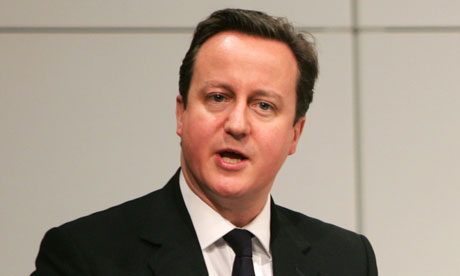
Here's the full text of Prime Minister David Cameron's speech on multiculturalism, delivered today at an international security conference in Munich. It's taken from Number10.gov.uk - the official site of the Prime Minister's Office.
"Today I want to focus my remarks on terrorism, but first let me address one point. Some have suggested that by holding a strategic defence and security review, Britain is somehow retreating from an activist role in the world. That is the opposite of the truth. Yes, we are dealing with our budget deficit, but we are also making sure our defences are strong. Britain will continue to meet the NATO 2% target for defence spending. We will still have the fourth largest military defence budget in the world. At the same time, we are putting that money to better use, focusing on conflict prevention and building a much more flexible army. That is not retreat; it is hard headed.

"Every decision we take has three aims in mind. First, to continue to support the NATO mission in Afghanistan. Second, to reinforce our actual military capability. As Chancellor Merkel’s government is showing right here in Germany, what matters is not bureaucracy, which frankly Europe needs a lot less of, but the political will to build military capability that we need as nations and allies, that we can deliver in the field. Third, we want to make sure that Britain is protected from the new and various threats that we face.  That is why we are investing in a national cyber security programme that I know William Hague talked about yesterday, and we are sharpening our readiness to act on counter-proliferation.

"But the biggest threat that we face comes from terrorist attacks, some of which are, sadly, carried out by our own citizens. It is important to stress that terrorism is not linked exclusively to any one religion or ethnic group. My country, the United Kingdom, still faces threats from dissident republicans in Northern Ireland. Anarchist attacks have occurred recently in Greece and in Italy, and of course, yourselves in Germany were long scarred by terrorism from the Red Army Faction. Nevertheless, we should acknowledge that this threat comes in Europe overwhelmingly from young men who follow a completely perverse, warped interpretation of Islam, and who are prepared to blow themselves up and kill their fellow citizens. Last week at Davos I rang the alarm bell for the urgent need for Europe to recover its economic dynamism, and today, though the subject is complex, my message on security is equally stark. We will not defeat terrorism simply by the action we take outside our borders. Europe needs to wake up to what is happening in our own countries. Of course, that means strengthening, as Angela has said, the security aspects of our response, on tracing plots, on stopping them, on counter-surveillance and intelligence gathering.

"But this is just part of the answer. We have got to get to the root of the problem, and we need to be absolutely clear on where the origins of these terrorist attacks lie. That is the existence of an ideology, Islamist extremism. We should be equally clear what we mean by this term, and we must distinguish it from Islam. Islam is a religion observed peacefully and devoutly by over a billion people. Islamist extremism is a political ideology supported by a minority. At the furthest end are those who back terrorism to promote their ultimate goal: an entire Islamist realm, governed by an interpretation of Sharia. Move along the spectrum, and you find people who may reject violence, but who accept various parts of the extremist worldview, including real hostility towards Western democracy and liberal values. It is vital that we make this distinction between religion on the one hand, and political ideology on the other. Time and again, people equate the two. They think whether someone is an extremist is dependent on how much they observe their religion. So, they talk about moderate Muslims as if all devout Muslims must be extremist. This is profoundly wrong. Someone can be a devout Muslim and not be an extremist. We need to be clear: Islamist extremism and Islam are not the same thing.

"This highlights, I think, a significant problem when discussing the terrorist threat that we face. There is so much muddled thinking about this whole issue. On the one hand, those on the hard right ignore this distinction between Islam and Islamist extremism, and just say that Islam and the West are irreconcilable–that there is a clash of civilizations. So, it follows: we should cut ourselves off from this religion, whether that is through forced repatriation, favoured by some fascists, or the banning of new mosques, as is suggested in some parts of Europe. These people fuel Islamophobia, and I completely reject their argument. If they want an example of how Western values and Islam can be entirely compatible, they should look at what’s happened in the past few weeks on the streets of Tunis and Cairo: hundreds of thousands of people demanding the universal right to free elections and democracy.

"The point is this: the ideology of extremism is the problem; Islam emphatically is not. Picking a fight with the latter will do nothing to help us to confront the former. On the other hand, there are those on the soft left who also ignore this distinction. They lump all Muslims together, compiling a list of grievances, and argue that if only governments addressed these grievances, the terrorism would stop. So, they point to the poverty that so many Muslims live in and say, ‘Get rid of this injustice and the terrorism will end.’ But this ignores the fact that many of those found guilty of terrorist offences in the UK and elsewhere have been graduates and often middle class. They point to grievances about Western foreign policy and say, ‘Stop riding roughshod over Muslim countries and the terrorism will end.’ But there are many people, Muslim and non-Muslim alike, who are angry about Western foreign policy, but who don’t resort to acts of terrorism.  They also point to the profusion of unelected leaders across the Middle East and say, ‘Stop propping these people up and you will stop creating the conditions for extremism to flourish.’ But this raises the question: if it’s the lack of democracy that is the problem, why are there so many extremists in free and open societies?

"Now, I’m not saying that these issues of poverty and grievance about foreign policy are not important. Yes, of course we must tackle them. Of course we must tackle poverty. Yes, we must resolve the sources of tension, not least in Palestine, and yes, we should be on the side of openness and political reform in the Middle East. On Egypt, our position should be clear. We want to see the transition to a more broadly-based government, with the proper building blocks of a free and democratic society. I simply don’t accept that there is somehow a dead end choice between a security state on the one hand, and an Islamist one on the other. But let us not fool ourselves. These are just contributory factors. Even if we sorted out all of the problems that I have mentioned, there would still be this terrorism. I believe the root lies in the existence of this extremist ideology. I would argue an important reason so many young Muslims are drawn to it comes down to a question of identity.

"What I am about to say is drawn from the British experience, but I believe there are general lessons for us all. In the UK, some young men find it hard to identify with the traditional Islam practised at home by their parents, whose customs can seem staid when transplanted to modern Western countries. But these young men also find it hard to identify with Britain too, because we have allowed the weakening of our collective identity. Under the doctrine of state multiculturalism, we have encouraged different cultures to live separate lives, apart from each other and apart from the mainstream. We’ve failed to provide a vision of society to which they feel they want to belong. We’ve even tolerated these segregated communities behaving in ways that run completely counter to our values.

"So, when a white person holds objectionable views, racist views for instance, we rightly condemn them. But when equally unacceptable views or practices come from someone who isn’t white, we’ve been too cautious frankly–frankly, even fearful–to stand up to them. The failure, for instance, of some to confront the horrors of forced marriage, the practice where some young girls are bullied and sometimes taken abroad to marry someone when they don’t want to, is a case in point. This hands-off tolerance has only served to reinforce the sense that not enough is shared. And this all leaves some young Muslims feeling rootless. And the search for something to belong to and something to believe in can lead them to this extremist ideology. Now for sure, they don’t turn into terrorists overnight, but what we see–and what we see in so many European countries–is a process of radicalisation.

"Internet chatrooms are virtual meeting places where attitudes are shared, strengthened and validated. In some mosques, preachers of hate can sow misinformation about the plight of Muslims elsewhere. In our communities, groups and organisations led by young, dynamic leaders promote separatism by encouraging Muslims to define themselves solely in terms of their religion. All these interactions can engender a sense of community, a substitute for what the wider society has failed to supply. Now, you might say, as long as they’re not hurting anyone, what is the problem with all this?

"Well, I’ll tell you why. As evidence emerges about the backgrounds of those convicted of terrorist offences, it is clear that many of them were initially influenced by what some have called ‘non-violent extremists’, and they then took those radical beliefs to the next level by embracing violence. And I say this is an indictment of our approach to these issues in the past. And if we are to defeat this threat, I believe it is time to turn the page on the failed policies of the past. So first, instead of ignoring this extremist ideology, we–as governments and as societies–have got to confront it, in all its forms. And second, instead of encouraging people to live apart, we need a clear sense of shared national identity that is open to everyone.

"Let me briefly take each in turn. First, confronting and undermining this ideology. Whether they are violent in their means or not, we must make it impossible for the extremists to succeed. Now, for governments, there are some obvious ways we can do this. We must ban preachers of hate from coming to our countries. We must also proscribe organisations that incite terrorism against people at home and abroad. Governments must also be shrewder in dealing with those that, while not violent, are in some cases part of the problem. We need to think much harder about who it’s in the public interest to work with. Some organisations that seek to present themselves as a gateway to the Muslim community are showered with public money despite doing little to combat extremism. As others have observed, this is like turning to a right-wing fascist party to fight a violent white supremacist movement. So we should properly judge these organisations: do they believe in universal human rights–including for women and people of other faiths? Do they believe in equality of all before the law? Do they believe in democracy and the right of people to elect their own government? Do they encourage integration or separation? These are the sorts of questions we need to ask. Fail these tests and the presumption should be not to engage with organisations–so, no public money, no sharing of platforms with ministers at home.
"At the same time, we must stop these groups from reaching people in publicly-funded institutions like universities or even, in the British case, prisons. Now, some say, this is not compatible with free speech and intellectual inquiry. Well, I say, would you take the same view if these were right-wing extremists recruiting on our campuses? Would you advocate inaction if Christian fundamentalists who believed that Muslims are the enemy were leading prayer groups in our prisons? And to those who say these non-violent extremists are actually helping to keep young, vulnerable men away from violence, I say nonsense.

"Would you allow the far right groups a share of public funds if they promise to help you lure young white men away from fascist terrorism? Of course not. But, at root, challenging this ideology means exposing its ideas for what they are, and that is completely unjustifiable. We need to argue that terrorism is wrong in all circumstances. We need to argue that prophecies of a global war of religion pitting Muslims against the rest of the world are nonsense.

"Now, governments cannot do this alone. The extremism we face is a distortion of Islam, so these arguments, in part, must be made by those within Islam. So let us give voice to those followers of Islam in our own countries–the vast, often unheard majority–who despise the extremists and their worldview. Let us engage groups that share our aspirations.

"Now, second, we must build stronger societies and stronger identities at home. Frankly, we need a lot less of the passive tolerance of recent years and a much more active, muscular liberalism. A passively tolerant society says to its citizens, as long as you obey the law we will just leave you alone. It stands neutral between different values. But I believe a genuinely liberal country does much more; it believes in certain values and actively promotes them.  Freedom of speech, freedom of worship, democracy, the rule of law, equal rights regardless of race, sex or sexuality. It says to its citizens, this is what defines us as a society: to belong here is to believe in these things. Now, each of us in our own countries, I believe, must be unambiguous and hard-nosed about this defence of our liberty.

"There are practical things that we can do as well. That includes making sure that immigrants speak the language of their new home and ensuring that people are educated in the elements of a common culture and curriculum. Back home, we’re introducing National Citizen Service: a two-month programme for sixteen-year-olds from different backgrounds to live and work together. I also believe we should encourage meaningful and active participation in society, by shifting the balance of power away from the state and towards the people. That way, common purpose can be formed as people come together and work together in their neighbourhoods. It will also help build stronger pride in local identity, so people feel free to say, ‘Yes, I am a Muslim, I am a Hindu, I am Christian, but I am also a Londonder or a Berliner too’. It’s that identity, that feeling of belonging in our countries, that I believe is the key to achieving true cohesion.

"So, let me end with this. This terrorism is completely indiscriminate and has been thrust upon us.  It cannot be ignored or contained; we have to confront it with confidence–confront the ideology that drives it by defeating the ideas that warp so many young minds at their root, and confront the issues of identity that sustain it by standing for a much broader and generous vision of citizenship in our countries. Now, none of this will be easy. We will need stamina, patience and endurance, and it won’t happen at all if we act alone. This ideology crosses not just our continent but all continents, and we are all in this together. At stake are not just lives, it is our way of life. That is why this is a challenge we cannot avoid; it is one we must rise to and overcome. Thank you."