Showing posts with label Face to Faith. Show all posts

Saturday, 22 October 2011

KANDINSKY IN GOVAN


Alastair McIntosh's Face to faith column from today's Guardian:


A century ago this month, Wassily Kandinsky finished a little book called Concerning the Spiritual in Art. Today in Govan, a hard-pressed part of Glasgow, we are celebrating the Russian artist's ideas in a conference on art, spirituality and the future.

What was Kandinsky then, and why is it as relevant as ever today? 

Born in 1866 and living until 1944, Kandinsky grew up in a Russia where the consequences of modernity and nihilistic thought were hotly debated. 

The old certainties of state, church and the soul in the human condition were in turmoil. At the same time, there was excited hope of a spiritual renaissance led by the influx of new ideas from the east. As Kandinsky said: "The nightmare of materialism, which has turned the life of the universe into an evil, useless game, is not yet past; it holds the awakening soul still in its grip." 

As if in anticipation of some of today's Britart, he deplored art that "becomes the satisfaction of vanity and greed … a scramble for good things … of excessive competition, of over-production … this aimless, materialist art". 

He denounced the narcissistic wallow of "art for art's sake" – "this neglect of inner meanings … this vain squandering of artistic power" with its consequence that "hungry souls go hungry away". 

Instead, he urged, art must "feed the spirit" by revealing "the internal truth of art, the soul". This is its prophetic calling in serving society. The artist must "be priest of beauty". Beauty itself is that "which springs from the soul", being anchored in the sacred. 

It was Kandinsky's friend Paul Klee who said that "art does not render the visible; it renders visible". But how? 

Kandinsky's answer was through abstraction. Here I find myself more critical of him. The role of the artist, he suggested, is to separate out the spiritual from the material. Art should be an "advance into the kingdom of the abstract". 

We see this in the geometric abstraction of his later work. Largely gone are the scintillating salsas of dancing colour that made his earlier paintings so magical. 

We might ask: can the spiritual be abstracted from the material? Kandinsky, to his enduring credit, affirms the spiritual on the artistic map, but did he, at the same time, lose the plot by going too far down the road of abstraction? 

Can the incarnate – the infusion of spirit and matter – really be rendered disincarnate? Or has the time come to move towards a new spiritual realism – to art that can represent the outer world (and be able to paint and draw!), but which simultaneously reveals its interiority, its spirituality? 

But why does this matter? There is a local saying that if you throw a stone over a wall in Govan you'll hit an artist. 

The most vulnerable to suffering and with it, to evasions like addiction, are often the sensitive souls, the canaries down the toxic coalmines of our society. 

Such people need art – not pretentious elite art that is up its own backside – but art that recovers meaning, that calls back the soul. 

When I ask hard-pressed folks what they want of art I don't hear calls for the likes of Damien Hirst's For the Love of God with 8,601 diamonds glued to a human skull as "bling on bone". 

I hear people yearning for what Kandinsky saw as prophetic art. Art that reveals hope. Art that breathes the flow of life into the veins.


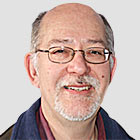
Alastair McIntosh (photo above) is a Quaker, writer and curator of Kandinsky in Govan.

Talk about bad timing, faithful reader! I have long loved Kandinsky and I used to live in Govan (it’s my ancestral homeland, if you like – as well as being the first place I lived in as a married man). I just came back from a week in Glasgow yesterday! I hadn't heard of this conference, nor had I heard of Govan Folk University, which is hosting it. Might have been a bit hard to persuad Harry (11) and Grace (9) to tag along though.

Saturday, 15 October 2011

SUKKOT INVITES US TO THINK OF THOSE FOR WHOM TRANSIENT LIVING IS IS THE NORM

This is Howard Cooper's Face to faith column in today's Guardian:


Sukkot invites us to think of those for whom transient living is the norm
Inviting guests into one's home is a habitual part of Jewish social living that receives a special emphasis at this time of year 
How much insecurity can you bear in your life? How much awareness of the randomness, the sheer contingency and unpredictability of life? How much do we want to be reminded of the fragility of our bodies, our minds, our social structures, the innate vulnerability grafted into the carefully constructed fabric of our daily lives? 
Religious traditions can seem to offer some respite from the unsettling reality of inhabiting bodies that gradually fail us, and societies where our sense of wellbeing is dependent on social, political and financial forces outside any individual's control. Religions attempt to create a meaningful world for believers to inhabit. They seek to keep existential terror at bay – the terrifying fear that life has no inherent meaning; that it is, in Thomas Hobbes's words, "solitary, poor, nasty, brutish and short"; and that we avoid this fate more by luck than our own good judgment. 
The week-long Jewish festival of Sukkot (Tabernacles), which started this week, offers a plangent perspective on the questions that surround the personal and collective need for security, and our fragmentary awareness that genuine security may not be achieved through attachment to the material world. The central symbol – the temporary shelter, the sukkah, constructed next to one's home, where one eats and sometimes sleeps for the duration of the festival – is an antidote to religious certainty. 
Made of organic materials, branches and leaves, its roof must be such that one can see through to the stars at night: as one looks up, and out, there is a dawning realisation of the impermanence of all we build and hold dear. We recall the origin of these "booths" in the mythic narrative of the Israelites' 40-year journey through the wilderness towards a distant "promised land". The biblical story describes the temporary homes the people built – sometimes for months, sometimes for years – and their education into the reality of following the peripatetic divine force that always moved on them in ways they could never predict or control. 
This annual festival is a reminder that permanence and certainty are antithetical to a spiritual sensibility. The great German-Jewish philosopher Franz Rosenzweig, scribbling a new theology on postcards in first world war trenches, saw the festival of Sukkot symbolising something vital for his diasporic people and something with a universal resonance: it "serves to remind the people that no matter how solid the house of today may seem, it is but a tent which permits only a pause in the long wanderings through the wilderness of centuries". 
In sensitising us to our transience, the festival invites us to think of those for whom transient living is the norm, not merely an annual religious ritual. The invitation of guests, strangers, "outsiders", into one's home is a habitual part of Jewish social living that receives a special emphasis at this time of the year. Hospitality as an everyday virtue takes on a deeper religious significance. My own synagogue is making itself available this winter, along with local churches, as a host venue for Homeless Action in Barnet, offering a cooked meal, a warm place to sleep, washing and toilet facilities, fresh clothes, conversation and breakfast for the area's homeless. 
Our guests will help us understand what George Steiner has called "an arduous truth" that emerges from the mystery of Jewish resilience – "that human beings must learn to be each other's guests on this small planet".

Howard Cooper is a rabbi and psychotherapist, and the author of The Alphabet of Paradiser: An A-Z of Spirituality for Everyday Life