Showing posts with label Glasgow. Show all posts

Sunday, 28 April 2013

BBC RADIO LECEISTER: FAITH COMMUNITIES & CITY OF CULTURE BID


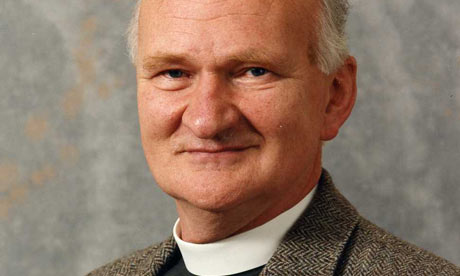
This morning I'm on BBC Radio Leicester, speaking with Monica Winfield (photo above) by phone about Leicester's faith communities and the bid to become UK City of Culture 2017. Here's a transcript of the interview.
MW: Now then, let’s have a look at Leicester’s bid to become the UK City of Culture for 2017. Next week the bid will be submitted to the Department for Culture, Media and Sport. Going up against ten other areas (including Chester, Hull and the combined forces of Portsmouth and Southampton), Leicester’s bidding team hopes that the city’s arts, ethnic diversity and of course archaeological assets (I think you know what I’m alluding to) will help us win the title. But how much might religion play a part and tip the odds in our favour? George Ballentyne is from the Leicester Council of Faiths and he joins me on the line now. George, good morning.
GMB: Good morning Monica.
MW: This is an incredible opportunity for Leicester but I just wonder, how big a part are we allowing the faith culture of Leicester to play in our kind of cultural culture – if you see what I mean.
GMB: Well it’s quite interesting you say how big a part are we allowing – I’d like to see what could be done to keep the faith communities and organisations out of the process, because it is something that Leicester is very well known for. There’s an upside and a downside to that and I hope that we get the chance to speak briefly about both of them. But I would also say that, you know, there’s more than one meaning of the word “culture” and sometimes people can get the wrong end of the stick about what culture would mean and what the City of Culture might mean. You know, there’s the kind of high culture aspect, which is about, you know, art and opera and exhibitions and the like and there’s a kind of pop culture version of it too. But you also think that, you know, people can use the word “culture” to mean a kind of messy laboratory set-up in which experimental things happen and unpredictable things and interesting, organic, lively things can be generated out of that. So I hope that all three of those meanings of the word are going to come up when we‘re talking about this over the next few weeks and months
MW: Absolutely. And I take it that the faith communities are absolutely on board with this and backing it to the hilt?
GMB: Well, we’d never presume to speak for absolutely every faith community and organisation in the city, but we really do feel confident that there’s a strong, solid backing for the bid.
MW: Now in what way will the backing – you know, are they kind of quietly backing it, or is it going to be part of the bid?
GMB: Well, I don’t need to tell you that Leicester has become well-known, or famous even, for its faith festivals, you know, we make such a big play of having the biggest Diwali event outside of India, there’s a huge Vaiskahi event that happened just last week and we have Christ in the Centre at Easter time. Per head of population, Leicester has more – and more varied – places of worship than any other city in Britain and these are facts about Leicester that would surely be used in support of the bid. But on the other hand – and I’m sure that you’ll know that I speak about this often enough, whenever I get the chance– there aren’t that many occasions when the people of Leicester see the faith communities in all their diversity standing together, out in public. So we’v e got things about the faith communities as individual groups and then we’re going to have to do some stuff about getting them together to do a kind of collective response to it and a collective presence.
MW: That will be a really exciting thing to do and a real purpose behind it, it’s not something you’re just doing for the sake of it, there’s a real aim behind it, isn’t there?
GMB: Yes, well all these festivals and these events will go on, whether we’re granted this City of Culture status or not but they’re part of the organic, regular life of the city, they really do have to feature quite prominently in any kind of attempt to get us into that position.
MW: Absolutely – and earlier on, when you were describing the different meanings of the word culture, I just think the religious aspect takes our bid to a deeper level, I think.
GMB: Yes, I think so. I don’t think that any of the other cities that are bidding have actually got this string to their bow like we have.
MW: Absolutely not. So, are you like me, are you holding out high hopes for Leicester to win the bid?
GMB: Well I should say that, you know, Glasgow was made European Capital of Culture (which is a different thing altogether, the Leicester bid is for UK City of Culture). But back in 1984, Glasgow was made the European Capital of Culture, which – that came to a city which was really on its last legs I think – and completely transformed its fortunes and it’s become a proper, European cultural city. I know that some of your listeners might find that hard to believe and I always fly the flag for Glasgow, but it really did make an incredible difference, not just to how other people saw the city but to how the people of Glasgow saw themselves. It just coincided with the year I left Glasgow [MW laughs] so I didn’t get all the benefit of all that, but t I’ve seen, first hand, what this kind of thing can do to a city. There’s some scepticism and cynicism about why are we doing this and why now, when there’s such pressure on funding, but if we get this I really think it will make a huge impact and 99% positive
MW: Absolutely. It’s interesting what you say about Glasgow because I don’t see it in the light of being run down any more. I see it as a very vibrant place, somewhere I would like to visit, so it’s almost like a vote of confidence isn’t it?
GMB: Yes it is, but what you’re talking about there is the impact of more than 20-odd years ago that that happened and it’s almost – well, 30 years ago actually – and it’s really had a fantastic positive effect on the people and the place - and we can get that.
MW: Absolutely - not that we haven’t got it already, [indeed] but it would take us up a notch won’t it? Have you been part of the bid at all? Has the Council of Faiths been involved?
GMB: Well, our Chair – Councillor Manjula Sood – she’s Assistant Mayor with responsibility for communities, cohesion and equalities so she’s very closely involved in the bid and some of our members (I always stress that I am an employee of the Council of Faiths, not a member) [right] we’ve taken part in the stakeholder bud events which the Mayor hosted at Curve about ten days ago and made contributions to them, and we’re soliciting suggestions  and ideas from our member communities and from prominent individuals in the Faith or religion sector (as it were) in the city. So yes, we are playing, I think,  a strong and positive role in what’s going on right now and we would like to, you know, If we get on the shortlist then we hope that that will increase and there will be more momentum from the faith communities behind the bid.
MW: Absolutely. It’s an exciting time to be in Leicester and it’s nice to know that so many people are on board and backing our bid. George, great to talk to you this morning
GMB: Okay, thanks Monica.
MW: Thank you [okay] George Ballentyne, from Leicester Council of Faiths. Next week it is, when Leicester will submit its initial bid to the Department of Culture, Media and Sport in a bud to become UK City of Culture for 2017 competing against ten other bidding areas for that title, which could bring massive benefits to the city not least of which economically – huge economic benefits  as well. So watch this space and you’ll hear more about that I’m sure, here on BBC Radio Leicester.

Follow Monica Winfield on Twitter: @MonWRL

Thursday, 18 April 2013

BACKING BID TO BE CULTURE CITY

This article appears in today's Leicester Mercury:
Backing bid to be culture city
by Alan Thompson
More than 150 people representing businesses and organisations answered mayor Sir Peter Soulsby's call to get behind Leicester's UK City of Culture bid.
In two briefing sessions at Curve this week, Sir Peter and his bid team told representatives of business, arts, faith and other organisations involved in the cultural life of the city about the latest stage of the bid.
Leicester is seeking to become the UK City of Culture in 2017.
The city's initial bid will be submitted on April 30 and the final entry in September.
At least £10 million will be needed to stage a UK City of Culture programme, according to the Government.
Leicester is one of 11 areas hoping to successfully bid for the title, held by Londonderry, in Northern Ireland.
Neil Peterson, one of the bid writers told the audience: "When Liverpool was European Capital of Culture, £120 million was spent over five years. It brought in £800 million in additional economic benefits.
"People go to places other than Leicester. It isn't as well known for its attributes as it should be. Overall, it has so much to offer. It has an outstanding cultural offer.
"A successful bid could offer significant long-term economic impact."
Artist Ashok Mistry said: "I am born and bred and work in the city. Whatever we put together needs to be artist-led – and from the heart."
George Ballentyne, of Leicester Council of Faiths, said: "I experienced Glasgow as the European City of Culture. It signalled a renaissance of the city which kick-started it as an ongoing city of culture."
Mr Ballentyne, who took his 11-year-old daughter Grace and son Harry, 12, to the meeting, said: "We need to engage people in this age group now and co-opt them in the creative processes. From now until 2017 is a huge gap in the life of a young person."
City councillor Ted Cassidy said: "There is a huge opportunity over the next five years, bringing together grassroots and young artists, people making things happen in the city. Don't let's wait until 2017."
City councillor Susan Barton said: "Leicester is already a city of culture.
"We need to make sure everyone outside Leicester knows about it as well."

Friday, 15 March 2013

MEET IAIN STEWART, GENERAL SECRETARY, EDINBURGH INTERFAITH ASSOCIATION


A lunchtime meeting in Brucciani's, Church Gate, with Iain Stewart, General Secretary of Edinburgh Interfaith Association. Iain is taking the MA in Inter Religious Relations at St Philip's Centre for Study and Engagement in a Multi-Faith Society and is down here for one of the course sessions tomorrow.

Iain and I met for the first time almost exactly a year ago at an  second Open Meeting sponsored by Leicester Council of Faiths. The topic was "God in My Faith" and the meeting was held in in the Parish Hall of Sacred Heart Roman Catholic Church, Mere Road, Highfields. At that time, Iain was in his previous post as Interfaith Worker for the Church of Scotland. On that occasion we had barely enough time to introduce ourselves one to the other and promise to make time to meet again later. So here we are!

We know many of the same people and places that feature strongly in the inter faith work in Scotland - although my experience there is mostly historical. It's good to hear about the current scene in my home country - and home town of Glasgow in particular.

At the end of our hour or so together, I take Iain into Highcross, to show him the site of our annual Inter Faith Week exhibition and the Faith Room nearby. I can tell he's impressed - I hoped he would be! 

Saturday, 3 March 2012

"MY PILGRIMAGE AROUND LEICESTER"

Cllr Sundip Meghani has today posted on his blog an entry entitled "My Pilgrimage Around Leicester". This recounts his visit in one day (the occasion of his 30th birthday) to a number of faith centres in the city:

Sundip did something similar shortly after his election as a City Councillor last year, tweeting as he went. I was in Glasgow on holiday at the time, but followed his progress that day via Twitter and made arrangements to meet him on my return to Leicester. You can read about our first meeting on my blog entry for Thursday 19 May 2011.

Saturday, 22 October 2011

KANDINSKY IN GOVAN


Alastair McIntosh's Face to faith column from today's Guardian:


A century ago this month, Wassily Kandinsky finished a little book called Concerning the Spiritual in Art. Today in Govan, a hard-pressed part of Glasgow, we are celebrating the Russian artist's ideas in a conference on art, spirituality and the future.

What was Kandinsky then, and why is it as relevant as ever today? 

Born in 1866 and living until 1944, Kandinsky grew up in a Russia where the consequences of modernity and nihilistic thought were hotly debated. 

The old certainties of state, church and the soul in the human condition were in turmoil. At the same time, there was excited hope of a spiritual renaissance led by the influx of new ideas from the east. As Kandinsky said: "The nightmare of materialism, which has turned the life of the universe into an evil, useless game, is not yet past; it holds the awakening soul still in its grip." 

As if in anticipation of some of today's Britart, he deplored art that "becomes the satisfaction of vanity and greed … a scramble for good things … of excessive competition, of over-production … this aimless, materialist art". 

He denounced the narcissistic wallow of "art for art's sake" – "this neglect of inner meanings … this vain squandering of artistic power" with its consequence that "hungry souls go hungry away". 

Instead, he urged, art must "feed the spirit" by revealing "the internal truth of art, the soul". This is its prophetic calling in serving society. The artist must "be priest of beauty". Beauty itself is that "which springs from the soul", being anchored in the sacred. 

It was Kandinsky's friend Paul Klee who said that "art does not render the visible; it renders visible". But how? 

Kandinsky's answer was through abstraction. Here I find myself more critical of him. The role of the artist, he suggested, is to separate out the spiritual from the material. Art should be an "advance into the kingdom of the abstract". 

We see this in the geometric abstraction of his later work. Largely gone are the scintillating salsas of dancing colour that made his earlier paintings so magical. 

We might ask: can the spiritual be abstracted from the material? Kandinsky, to his enduring credit, affirms the spiritual on the artistic map, but did he, at the same time, lose the plot by going too far down the road of abstraction? 

Can the incarnate – the infusion of spirit and matter – really be rendered disincarnate? Or has the time come to move towards a new spiritual realism – to art that can represent the outer world (and be able to paint and draw!), but which simultaneously reveals its interiority, its spirituality? 

But why does this matter? There is a local saying that if you throw a stone over a wall in Govan you'll hit an artist. 

The most vulnerable to suffering and with it, to evasions like addiction, are often the sensitive souls, the canaries down the toxic coalmines of our society. 

Such people need art – not pretentious elite art that is up its own backside – but art that recovers meaning, that calls back the soul. 

When I ask hard-pressed folks what they want of art I don't hear calls for the likes of Damien Hirst's For the Love of God with 8,601 diamonds glued to a human skull as "bling on bone". 

I hear people yearning for what Kandinsky saw as prophetic art. Art that reveals hope. Art that breathes the flow of life into the veins.


Alastair McIntosh (photo above) is a Quaker, writer and curator of Kandinsky in Govan.

Talk about bad timing, faithful reader! I have long loved Kandinsky and I used to live in Govan (it’s my ancestral homeland, if you like – as well as being the first place I lived in as a married man). I just came back from a week in Glasgow yesterday! I hadn't heard of this conference, nor had I heard of Govan Folk University, which is hosting it. Might have been a bit hard to persuad Harry (11) and Grace (9) to tag along though.

Saturday, 14 May 2011

KELVINGROVE: MIXED MEDIA BOXES ABOUT THE HOLOCAUST

This is part of an extensive exhibit about Jews who arrived in Glasgow in the early and mid-twentieth century, fleeing persecution of different forms in different parts of Europe. The exhibit is contained in a section on the upper floor entitled "Conflict and Consequence".

Asked in 1990 by a distant relative to help compile a family tree, I found the task impossible, as so many family members had disappeared in the Holocaust.

Instead, I spent the next five years researching and making Holocaust artworks in memory of the millions who perished.

Testimony by Myer Lacome, artist 


Arbeit Macht Frei (1996)
Myer Lacome, Mixed media box

“Arbeit Macht Frei” – work leads to freedom – were the deceptive words on the main gate at Auschwitz Camp. Auschwitz, near Krakow in Poland, was the largest concentration camp and killing complex. 


The Burning of the Books, Germany, 10 May 1933 (1999)
Myer Lacome, Mixed media box

In 1933 the Nazis publicly burnt books by those Jewish and non-Jewish authors they disapproved of. Jews were forced out of their jobs. Some academics, artists and writers were able to flee. 


Kristallnacht, Germany, 9 November 1938 (1998)
Myer Lacome, Mixed media box

The night of broken glass – Kristallnacht. During this terrifying Nazi anti-Jewish pogrom – organised massacre – 267 synagogues, 1,000 prayer halls and 7,500 businesses were destroyed. Ninety-one Jews were killed and 26,000 arrested.

SHARING OF FAITHS AT THE INTERNATIONAL FLAT


Here's the site of what use to be the International Flat: 20 Glasgow Street, Hillhead (first floor). This is where the Sharing of Faiths met, where I had my first taste of inter faith relations under the mentorship of Stella Reekie, from 1979, aged 19, representing Glasgow's Bahá'ís. From this place and that time runs an unbroken thread that connects to my work for Leicester Council of Faiths today.

Friday, 13 May 2011

KELVINGROVE: TAU-RAPA WAKA-TAUA


Many exhibits in Kelvingrove Art Gallery and Museum can't be squeezed into some narrow definition of culture, faith, religion or spirituality, but they still have much to show us and tell us about all those things. Certainly, Kelvingrove’s exhibits are not limited to those traditions or lifesyles which can be found in conspicuous numbers in Glasgow - as is demonstrated by this piece.

This elaborate wooden carving once decorated the back of a Maori war canoe. The details are symbols of the Maori creation story.

Stem of war canoe – Tau-rapa waka-taua – Maori, New Zealand

Thursday, 12 May 2011

KELVINGROVE: THE STORY OF VIDHURA-PANDITA


Now here's the sort of display item that might not be acquired today, no matter its cultural worth. Few people would see past the fact that this is made of ivory.

The carvings on this Burmese elephant tusk tell a story of the triumph of good over evil.

Vidhura-Pandita is the Buddha in the form of a wise man. He is chief adviser to King

Dhananjaya. King Dhananjaya is the good ruler of the city of Indapatta.


Other prominent characters from the story represented on the tusk include: the naga spirit king (all nagas wear a pointed snake headdress); Princess Irandati (the naga king’s daughter); Punnaka, a demon (he’s wearing a demon mask on top of his head).

KELVINGROVE: THE LION AND THE GAZELLE


The first blog entry from the treasure trove that is Kelvingrove Art Gallery and Museum is for an Islamic shield, 1750-1850, Indian or Iranian, metal inlaid with silver and brass. Here’s the copy on the card with the shield itself:

The animals on this shield are made of words. The four lions are symbols of courage and are protecting the gentle gazelles in the middle. A soldier carried the shield into battle as a symbol of his Islamic faith.


Alongside the shield is an interactive electronic book, which tells the story of the shield in eight pages or so. The following text is found on the last few pages of the interactive book:

To fully appreciate the cultural value of this Islamic shield, and after careful consideration, we have chosen to tell this shield’s story in a visual way by illustrating the lives of the characters represented on it, those of Prophet Muhammad, peace be upon him and his cousin Imam Ali.

 To aid us with this task we have selected a number of historical miniature paintings that have appeared in Islamic manuscript  books such as “Jami’ al-Tawarikh” by Rashid Al-Din, Tabiriz AD 1306; “Siyar-i-Nabi”, Istanbul, AD 1595; the “Khavarnama” by Ibn Husam, Punjab, AD 1686; and “Maktel-i-Ali Resul” by Lami’l Celebi, Turkey, early 17th century AD.

We are very aware of the tension that exists within Islamic cultures today with regards to figurative art in general, and the depiction of Prophet Muhammad and of his family in particular.

Some of this concern stems from theological arguments, but some stems from concern for misrepresentation and disrespectful depictions.

We would like to assure Muslims that in this interactive  we are following in the footsteps of respectable Medieval artists and their patrons who set precedence for the Islamic artistic tradition of illustrating the stories of the lives of Prophet Muhammad and his followers.

We have adhered to veiling the face of the Prophet and flames to emphasise his special position in his community.

The aim of this interactive is purely educational to introduce and explain the story of the gazelle and the lion in an accessible way to people who may not know of it.

None of the images that are meant to be a true likeness of any of the characters. They are merely illustrations to inspire and educate their audience.

KELVINGROVE ART GALLERY & MUSEUM


In my hometown of Glasgow for a few days, I have the pleasure of visiting Kelvingrove Art Gallery andMuseum, just a short step from the hotel in which I’m staying. There’s plenty in Kelvingrove that would merit inclusion in this blog, for all kinds of reasons. I’ve written about Kelvingrove before, especially in connection with the Salvador Dali painting, Christ of St John of the Cross, that is arguably its most famous exhibit.

Like many an art gallery or museum, of course, there’s a lot of stuff that takes religion or spirituality as its topic or in which religion can be identified as an underlying theme. It would be a difficult task to present any kind of historical or thematic survey of art (western or eastern) that didn’t engage with religion. 

I’m being rather unsubtle here in only highlighting those exhibits or displays that could be said explicitly to foreground the kind of themes and topics that often feature here. If I were not so choosy, I’d have to reproduce, describe and discuss just about everything there is to be seen there!

Text indented and in italic comes direct from the display cards that accompany these exhibits. There’s a lot more of that than there is of my own writing here. When it comes to describing a visit to Kelvingrove, that’s the way it should be, faithful reader.

The entries are in no particular order. I’ve tried to gather together different entries that relate to one religion or faith community, although that’s not always been possible. And there are going to be more pictures than usual.

Watch this space over the next few days for what I hope you'll consider some lovely stuff!

Wednesday, 9 February 2011

BAMPOT MAXIE


While doing some routine googling, I come across tributes to Maxwell Craig. Maxwell was Chair of Sharing of Faiths in Glasgow when I became involved in inter faith work there, aged 19. The last time I saw or heard anything of him was on a TV news bulletin at the time of the Dunblane shootings (1996), speaking on behalf of the Cathedral community in that smallest of Scottish cities, touched by an incomprehensible act of utter wickedness. I'd left Glasgow and its environs almost ten years before - but I remember thinking at the time that if anyone were to appear in public and say something meaningful, intelligent and comforting from a religious perspective about what had happened in Dunblane, it would be Maxwell Craig.

Ian Mellin, one of the friends who joined in the Sharing of Faiths activities (himself dead some 30 years now) dubbed Maxwell Craig, "Bampot Maxie". That name stuck and it's how many of the younger people who knew him in Glasgow referred to him. if that sounds insulting, believe me it wasn't. Yes, a "Bampot" is a headbanger, but ... Maxwell Craig was so full on, so front-and-centre of the whole inter faith "movement" (if there's any such thing, now or then) it was as if he was the front man, the virtuoso in the band, the one who could always be relied upon to step forward. We mimicked his distinctive way of speaking too (don't all clergymen have a distinctive way of speaking?). The tic we picked up on was how he would emphasise the last word or syllable of a key sentence by pausing, then leaning slightly forward, tapping his foot as the last bit came out, usually accompanied by lightly but firmly slapping a rolled-up programme or sheet of notes in his right hand into the open palm of his left. But there was no disrespect on our part; anything but, even from a bunch of us hardly out of our teens. If you find that hard to grasp, faithful reader, then all I can say is–that's Glasgow for you!

I recall vividly an occasion on which I saw Maxwell's tolerance – even indulgence – of our youthful capers. It was at the opening ceremony of the annual "Presentation of Faiths", held that summer in the splendid (if  rather inaccessible) setting of the City Chambers in George Square. In his opening speech, Maxwell drew on an analogy which had just become popular at the time: that the bumble bee, according to the laws of aerodynamics, shouldn't be able to fly - but that it could, because it knew nothing of the laws of aerodynamics. From his vantage point on the stage, I could see that Maxwell could see Big D mimicking the flight of the bumble bee which suddenly snaps to the command of the laws of aerodynamics and plunges from the sky in ever-decreasing circles, with little muted buzzing noises, sounding increasingly desperate, then resigned, then ... er, dead. Big D thought himself concealed by the display boards of the exhibition, hos performance just for the entertainment of the handful standing near him. But from my position, looking over his shoulder toward the stage, I could see how his performance had grabbed the attention of Maxwell Craig, as the next speaker took their turn. But nothing was made of the bumble bee performance and when Maxwell took the assembled dignitaries on a brief tour of the exhibition, he included Big D in his introductions as warmly as anyone else.


As an example of how he reacted to something that wasn't just youthful high spirits and the typically Scots working class puncturing of authority (which he surely understood and played along with, rather than opposed), I recall another occasion from that same event–the same day or a day or two later. We were delighted to have been invited to take our annual public event from the McClellan Galleries in Sauchiehall Street to the City Chambers. It was a sign of recognition and value from Glasgow City Council (and from the Lord Provost in particular). The down side, however, was that it took away the opportunity for yer punter to walk in off the streets and discover the Presentation of Faiths for themselves. This is just what I had done, just a few years before. To make up for us sitting in splendid isolation in the city chambers, at each lunchtime a small number of us went down into George Square below at noon, representing each of the faith communities involved, to read something appropriate and scriptural through a megaphone to the crowds who would pass through the square at lunchtime. After Maxwell gave a brief introduction, he handed the megaphone to one of the participants, who took a good few minutes to chant a passage in the original language. When he ended the recitation then said, "And now for the English translation," Maxwell stepped over and snatched the horn from him, handing it to the next in line. He believed in us all getting a fair crack of the whip.

As a young, and newly enrolled Bahá'í (I'd only joined the Glasgow Bahá'í community a couple of months before I was asked to represent them on the Sharing of Faiths committee), an enthusiastic promoter of a faith which itself eschews the institution of clergy, ministry or priesthood in any of its forms, it may have been more troubling than I realised at the time to encounter a man who so consummately filled this venerable office with his towering influence for good. As I settled into my newly adopted belief structure, it was a lazy option to think that, because we didn't have them, they were of no worth or importance anywhere. Of course that's not the true Bahá'í  position, as I came to understand later, when I became more familiar with the writings of Bahá’u’lláh and passages such as this:
Respect ye the divines and learned amongst you, they whose conduct accords with their professions, who transgress not the bounds which God hath fixed, whose judgments are in conformity with His behests as revealed in His Book. Know ye that they are the lamps of guidance unto them that are in the heavens and on the earth. They who disregard and neglect the divines and learned that live amongst them–these have truly changed the favour with which God hath favoured them.

I have Maxwell Craig to thank for helping me learn that lesson, as I saw in him a man whose actions spoke louder than words. I'd certainly never spent that much time in the company of any clergyman before. When I was a kid, my brother and I used to be sent scurrying into our bedroom when the local minister called round on a pastoral visit. Maxwell Craig was the first minister from whom I got a sense of what a clergyman could–indeed should–be. In many respects, he's remained my model of the good minister of the Kirk. Back then, he was someone I found awe-inspiring but not unapproachable. The older I get, the clearer it becomes to me that for a few years I had the privilege and honour of standing with someone who can now be seen as a great man in the life of my city and my country.

I didn't actually know that Maxwell had died until I stumbled across these tributes today. He wasn't all that old after all, at 77. I'm sad just now, feeling a real physical knot about this. I thought it right to share some important things about him with you, faithful reader.


Below is the text of the eulogy read at the Thanksgiving Service for Maxwell Craig's life and work, held on 7
 October 2009 at the Church of the Holy Rude, Stirling.
Maxwell Craig was a big man in every sense–big in stature, big in personality, big in the impact he had on other people’s lives, big in vision and intellect, big in compassion and generosity of spirit. No words of mine can adequately sum him up or do justice to his accomplishments. We have already heard movingly what he meant to his family. Each one of us here this morning has our own personal memories–vivid and precious–to cherish and recollect.
Maxwell was born on Christmas Day in 1931 in Halifax, West Yorkshire, the youngest of four children of a Scottish doctor who had moved south at a time when it was hard to get jobs in Scotland. He went to school at Bradford Grammar School and then Harrow; then on to Oriel College, Oxford to read classics. National Service for a couple of years mostly in Stirling and Berlin – with the Argylls, latterly commissioned as a 2nd Lieutenant. Two years in Sheffield with United Steel, four years in the fast stream of the civil service with the Ministry of Labour in London. And then the call to ministry–three years in Edinburgh at New College, a term in Germany at Tubingen, a subsequent year for an MTh in the United States at Princeton. His assistantship with Jack Orr at St John’s Oxgangs in Edinburgh; seven years at Grahamston, Falkirk including the creation of a united church, one of Scotland’s first ecumenical parishes; sixteen years at Wellington in the west end of Glasgow; two years at Bridge of Don, another ecumenical project; seven years as the first General Secretary of the new ecumenical body Action of Churches Together in Scotland, to which Alison has already referred.  And then, following his retirement in 1998, a succession of significant locum ministries – St Andrew’s, Jerusalem; Breich Valley in West Lothian; St Andrew’s, Rome; then four years at the priority area charge of St Mark’s, Raploch, here in Stirling.
These are some of the bare facts but of course there is so much more to tell, above all of course his family who meant so much to him–Janet whom he met at Oxford and married in 1957. They came from  remarkably similar backgrounds (Janet’s father was a Scottish doctor who had settled in Manchester); they shared so many interests, complemented each other so well and, although certainly both strong and independent personalities, like many of you, I’m sure, I’ve come, as it were, to think of them in a single breath!  And the family–in and from whom Maxwell took and derived such pride and joy–Margaret, Sarah, Lucy and Rob, their spouses, the grandchildren. It’s been said that to discern our real concerns and priorities we should look at what our children have done with their lives. The Craig family stand out in this respect–medicine, law, wind energy, health service, a commitment to serving those on the margins, an inherited love of the hills, the continuing regular family gatherings at Christmas and on other special occasions, the recollection of the ups and downs of family holidays in the north-west, a host of stories–memorable and often highly amusing.There was something of a paradox about Maxwell. He could perhaps be seen as a traditionally orthodox, unfailingly gracious, and respectable, even "establishment" figure–public school and Oxford, Argylls officer, 121 committee convener, Queen’s Chaplain. But alongside that there was the radical dimension – the strong commitment to social justice and to peace-making. And that stemmed from his Christian faith and from his compelling desire to share in the building of God’s kingdom. For Maxwell faith touched every aspect of life: one cannot separate religion from the world of politics. For him the life of faith was about encounter and engagement – about valuing human relationships, pursuing social concerns and trusting in God’s transforming grace. Janet suggested to me that his views were shaped by his early experience among poor families in Halifax where he earned pocket money by going round to collect fees due to his father before the National Health Service was in place. Out of these beginnings developed Maxwell the campaigner and activist on so many fronts over the years. In both Falkirk and Glasgow his involvement in children’s panel and Samaritans. The contribution he made in Glasgow to Stella Reekie’s work, the development of the International Flat and the Sharing of Faiths project, whose legacy continues to this day. His very effective and high-profile term as convener of the Church and Nation committee, to whose work he gave a real cutting-edge in the heady days of anti-Thatcherism–the miners’ strike and a visit to a Fife colliery to share in the early-morning shift; the march from Gartcosh to London when Ravenscraig first came under threat; his contribution to the Claim of Right that laid the foundation for the Scottish Constitutional Convention and the creation of the Scottish Parliament. Frequent visits to Faslane. His long-standing commitment to housing issues fulfilled most recently in his much appreciated term as chair of Scottish Churches Housing Action. Then his work as a director of the Scottish Refugee Council, membership of the visiting committee for Polmont Young Offenders  Institution. The catalogue goes on and on; and his latest campaign, as so often on the edge of controversy, and characteristically self-effacing, arguing in the public arena that, when health and social services resources are limited, funds should be diverted from the care of the elderly to other more pressing priorities with longer-term benefits.
Many of us will remember Maxwell the leader speaking out on public platforms and through the media on the issues of the day, always from the standpoint of faith. He was a powerful, passionate and persuasive speaker–and his prayers were memorable: they truly came from the heart; sometimes he almost seemed to be pleading with God. In his years at Wellington in particular–but in a sense this is the story of his life–his ministry is valued for the way in which he opened up fresh perspectives and new horizons in the congregation’s life–through the guest preachers who came, the inter-faith and ecumenical themes he introduced and developed, the early Easter morning service at the top of Dumgoyne, and other projects.  Sometimes people’s feathers were a little ruffled–for instance, there was the "vote Labour" poster in the manse window!  But he was also a sensitive and capable pastor; he was a good listener and had a great capacity for getting alongside people, relating to them, caring for them, giving them his time and full attention; he had the knack of encouraging and empowering people and making wise choices as to leaders of congregational activities; and with his breadth of vision, intellectual ability and charm he was able to hold together in unity people with a diversity of opinions.
Maxwell’s membership of the Iona Community was important to him and underpinned so many of his concerns. He was impressed when George MacLeod came to speak at Oxford and, with Janet, was a member of the Iona Society there and attended St Columba’s church where a Community member, Raymond Bailey was minister. The Iona connection continued when Maxwell and Janet moved to live in London and worshipped at the Presbyterian church where another Community member Ian Renton was minister. He joined the Community in 1964 and served it in many ways over the years.  He valued especially the monthly meetings of the local Family Group to which Janet and he belonged–the worship, the exploring of issues, the deep sharing of concerns.
I suspect that Maxwell was not always easy to live with, but he was almost impossible not to love. There was that expansive smile, and an immense grace about him – a deep joy and contentment. He was a lively person it was always good to be with – there was much laughter, and inevitably so much to talk about. He was warm, charming, and invariably courteous. There could at times be a degree of stubbornness, a dogged persistence in pursuit of the principles and objectives to which he was committed, but he consistently evoked respect and affection. His opponents were never regarded nor thought of themselves as enemies. Once he’d made his mind up there was a strength of purpose and single-minded determination, which sometimes made working with him a little hard. But he was always positive: indeed there was, as we’ve heard, almost an element of the Utopian romantic about him – what was described to me as his "incurable optimism" – but usually Janet and the rest of the family kept him "earthed".
Maxwell’s was truly a rounded life. Most of us know of his passion for walking and climbing, his sense of achievement in completing all the Munros. He was interested in sport – frequently attending Brockville when they lived in Falkirk, usually after half-time when you got in free; and for many years he was a regular at Murrayfield and still took a keen interest in Scotland’s fortunes on the rugby field. And music was always an important part of his life; music – RSNO concerts, opera and a surprising ability to remember and sing the songs of the shows from the 50s and 60s. In his retirement all these interests continued and developed – holidays with friends  and family in Tuscany, Crete and elsewhere; the enjoyment he got in playing golf just across the road from his house; the monthly expeditions with a group of men friends, the "yo-yos" going up and down hills a little less demanding than the ones he’d climbed when he was Munro-bagging; regular bridge to which he brought a measured and accomplished deliberation; and of course singing with the Stirling City Choir of which he was currently chairman.
Somehow the circumstances, so sudden and unexpected, of his death sum up Maxwell’s life – alongside friends at a sing-along Messiah, at the end of a week spent on Iona as member in residence at the Community’s MacLeod Centre, where his helpful, cheerful presence had been so much appreciated that the warden’s parting words were–"You must come again next year for two weeks, and make sure you bring Janet with you ..."
But it is not to be. At a time like this we are reminded once more of the fragility of life and of our own mortality. But above all we celebrate a faithful, faith-filled and well-lived life that has touched and enriched our lives. We rejoice that Maxwell has passed through the mystery of death into the eternal joy of God’s nearer presence. And we give thanks to God.
Amen

Read Maxwell Craig's obituary in The Guardian.

Tuesday, 25 January 2011

NO MEAN CITY


I've never watched an episode of Taggart. Not even back in the day when there was someone actually called Taggart in it. Since it's set in Glasgow and it's the longest running police TV show in the UK (the first episode was broadcast in 1983) - the longest running English language police TV show in the world actually - you'd think I'd have seen at least one. I'm more familiar with police procedurals set in Baltimore than I am with any in my home city. Of course I'm aware of it, just the same as several other TV shows I've never watched (like Inspector Morse or Cracker or Hollyoaks or Dancing on Ice); it's hard to live in Britain today without picking up something about such elements of popular culture. I get what someone's on about if ever they say, "There's been a murrdurr" for example. I've listened on more than one occasion to Alex Norton talk about Taggart on BBC radio 5 Live (most recently, within the past few weeks) which he does very entertainingly by the way, never taking himself or the show too seriously. That's never made me think that I must sit down and watch an episode though.

I don't really know why I decide to watch my first ever episode tonight. Maybe it's because it's Burns Night and I feel like something Scottish. I should be marking OU assignments. But I was just flipping through the channels and went with it - and what a one to pick!

It's episode 106, "Silent Truth", first broadcast October 2010 (misleadingly described in the programme synopsis as being "set in and around the lofty portals of Glasgow University"). An Iranian asylum-seeker family is at the centre of an investigation following the violent death of their eldest son, who is found dead in a back alley, having been dowsed in petrol and set alight. On the way to meet the family for the first time, DCI Burke (Alex Norton) asks DI Reid (Blythe Duff) if the family are Muslim, she replies "Don't know." When the father of the family says he was a teacher in Iran, that after the revolution he'd been sacked from his job and his property confiscated, that they couldn't go back because they'd be persecuted for their beliefs ... well, I begin to wonder.

Burke, Reid and co might be trying to find the killer but I'm engaged on a different investigation. As the clues emerge, you hardly need the skills of a TV detective to work out which religion the family appear to follow. The name "Bahá'í" is never used, of course. And thank goodness for that, what with the murder, robbery, blackmail, homophobia, racism etc that fills the screen. (Well it is Taggart after all.) Some of it is perpetrated against the family, but they are responsible for some of it too.

Shortly after the half hour mark, there's a memorial meeting held at the scene of the murder. As DI Reid approaches the scene, we hear the following prayer being read. It's one by 'Abdu'l-Bahá, read in English (although the book being used isn't any Bahá'í prayer book I recognise).
O Thou forgiving Lord!
Although some souls have spent the days of their lives in ignorance, and became estranged and contumacious, yet, with one wave from the ocean of Thy forgiveness, all those encompassed by sin will be set free. Whomsoever Thou willest Thou makes a confidant, and whosoever is not the object of Thy choice is accounted a transgressor. Shouldst Thou deal with us with Thy justice, we are all naught but sinners and deserving to be shut out from Thee, but shouldst Thou uphold mercy, every sinner would be made pure and every stranger a friend. Bestow, then, Thy forgiveness and pardon, and grant Thy mercy unto all.
Thou  art the Forgiver, the Lightgiver and the Omnipotent.

That pretty much clinches it, I'd say. Case closed.

While the show is still playing, I exchange a few messages on Facebook with a knowledgeable friend, asking if he's watching (no) and if the institutions of the Bahá'í community knew about this episode (yes). From this brief chat I understand that some protestation was made to the production company while this episode was in development. I wonder what kind of concessions were granted and if there will be any fallout from this for the Bahá'ís in Glasgow, Scotland, the rest of the UK - Iranian or otherwise? I recall, a long time ago, someone saying at a conference or convention or the like that the Bahá'í Faith could be said to have emerged from obscurity in this country when it featured in mainstream TV, in soaps, drama, comedies and the like. Maybe this is a step in that direction. It can be taken to show that the message of Bahá'í It's not exactly an accurate depiction of the beliefs, culture, attitudes of Iranian Bahá'ís (in this country or anywhere else) and there's no sense at all that the family are part of a faith community, that there would be others of their religion who'd be involved in their lives. But hey - it's Taggart. You could say that while it's not accurate, it's sympathetic; at least within the parameters of the Taggart universe. There are some parts of this episode that I like: the portrayal of Glasgow as a genuinely multicultural city; that the city benefits from the variegated nature of its people; that everyone has the right to live peacefully and be protected. There's a clever, sensitive, heroic and attractive Diversity Officer. I like that especially! Some elements of the Bahá'í experience have been scooped up and squished together with the conventions and tropes of the TV policier into a blob of fiction that, for most viewers, passes an hour-and-a-half in entertaining fashion then barely sticks in the memory.

When does any group or community - religious, political, social - ever think it's been fairly represented in fiction? I used to get vexed over fictional depictions of the Open University years ago, when I was a student with it. I feel more bemused by this evening's Taggart, but not vexed. Older and wiser now I guess - with a better understanding of how all this stuff works. So-called "reality" shows can be bad enough (at the same time on another channel was the deplorable "Big Fat Gypsy Weddings") never mind when it's in something made up. At least it shows that the message has got across that Bahá'ís are being persecuted in the land which is the cradle of their faith.

You can watch this episode of Tagggart on the ITV Player:

If you'd like to be kept informed of the situation of the Bahá'ís in Iran, follow this link to the Muslim Network for Bahá'í Rights - which describes itself as being run by Muslims defending the rights of the Bahá'í minority in Muslim-majority countries: http://www.bahairights.org/ They tweet as @BahaiRights.

Oh and while we're on the subject of Glasgow, I'm writing this blog with the telly on in the background, showing "Pleasure and Pain". The presenter, Michael Mosley, has recorded a short segment of the programme in Edinburgh. "According to a recent demographic study," he says, "it is home to the most miserable people in Britain." Nuff said!

Thursday, 13 January 2011

small request for The Big Questions


I take a call this afternoon at the Welcome Centre from Amanda Egbujo. She's a Producer with Mentorn TV, working on the religious affairs programme "The Big Questions", in which Nicky Campbell (photo above) hosts a series of religious, moral and ethical debates. The next edition will be broadcast live from Samworth Enterprise Academy in Leicester this coming Sunday (16 Jan). The show goes out on BBC1 at 1000.

The programme will focus in part on Islam as a guide for daily living. Amanda asked if the Council of Faiths could provide someone from another of the city's faith communities to speak about how their own faith guides them in daily life. She agrees that a Hindu or Sikh would be appropriate, being Leicester's next largest "minority" faith communities. If we're unable to offer anyone from either of those two communities, I'm sure she'll be happy to have someone from another faith background, as long as they can do the business on live TV.

I tell Amanda that if we are able to offer someone, then it would not be for purposes of argument, dispute or controversy – that the Council of Faiths is not in the business of promoting division or dissension between the faith communities. She told me she's happy with that.

When Amanda gives me her office number, I realise that she’s calling from Glasgow. She has a Scots accent and remarks upon mine (and my guid Scots surname). So I take the opportunity to tell her a wee bit about my having started inter faith work in Glasgow when I was 19 (!) and how I still keep in touch with how that sort of thing is going up there. Of course I ask her to read the blog – I’m sure she recognises that well-worn phrase (well-worn by me, anyway), “Not backwards at coming forwards”.

I’ve sent out an email asking for someone suitable to come forward; now waiting to see what kind of response will be forthcoming. By coincidence, at that very time on Sunday mornings (well, every other Sunday, including this one) I'm sitting in the cafe of TESCO, South Wigston, reading the Observer or marking assignments from my Open University students, after dropping off Harry at St Thomas the Apostle where he sings in the choir. That's only half a mile or so from Samworth Enterprise Academy.


Image Source Page: http://www.mentorn.tv/

Sunday, 21 November 2010

"LOVE FOR ALL, HATRED FOR NONE"


A busy day today, this first day of Inter Faith Week. Having just got home from the exhibition in Highcross, I speedily change into my suit then straight back out: to Braunstone Civic Centre, to attend a Peace Symposium and dinner, hosted by the Ahmadiyya Muslim Association.

Once seated at our tables, we are first treated to a DVD presentation, introducing the Ahmadiyya community - illustrating both its history and its current activities and filled with testimonies to the beneficial influence of the community from notable academics, parliamentarians and humanitarians. Following that, we hear a variety of speakers give short talks: Ven. Richard Atkinson, Archdeacon of Leicester; Chief Inspector Rich Keenan, Leicestershire Constabulary; Maqsood Ahmed, Faiths Adviser to the Department of Communities and Local Government; Prof Malcolm Shaw QC, Faculty of Law at the University of Leicester; Liz Kendall MP for Leicester West and Shadow Health Minister. Several words of praise were aimed at the council of Faith; our Chair, Councillor Manjula Sood, was seated at the top table among other guests of honour. Finally, we heard from the keynote speaker, Syed Mansoor Shah, one of four national vice Presidents of the Ahamdiyya Muslim Association.

The guiding principle of the Ahmadiyya - "Love for all, hatred for none" - was writ large on the wall, above and behind the top table.

This was a pleasant evening of fellowship, hospitality and inspiration - and my first formal encounter with the Ahmadiyya community of Leicester. when I started on inter faith work in Glasgow, over 30 years ago, the Ahmadiyya there were the only Muslim group whiling to take part in the Sharing of Faiths. My first real encounter with Muslims, at the age of 19, was with Ahmadiyya Muslims - so I don't need to be persuaded of their virtues.