Wednesday, 9 February 2011

STATE-SPONSORED MULTCULTURALISM BREEDS DIVISION


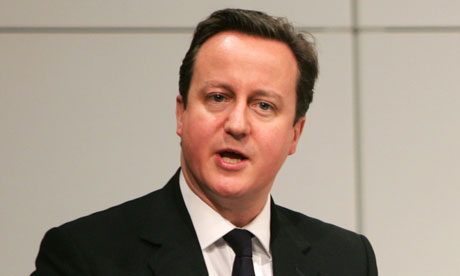
Interesting First Person column in today's Leicester Mercury, in which the Prior of Holy Cross, Father Leon Pereira OP (photo above), responds to Prime Minister David Cameron's recent speech on multiculturalism. Fr Pereira isn't a member of Leicester Council of Faiths, he does not in any way speak for Leicester Council of Faiths. He is, nonetheless, a high profile religious figure in the city, with regular contributions to the Mercury through its First Person column. His piece to today's paper (which I am sure will stimulate discussion and may well receive published responses) is reproduced in full below: 
State-sponsored multiculturalism breeds division

Fr Leon Pereira on "muscular liberal" integration versus "weak liberal" ghettos

I was born in a Muslim-dominated country (Malaysia) and spent my childhood in a secular one (Singapore), so I have some knowledge of what I'm about to say below. Singapore and Malaysia are both made up of three main races, Chinese, Indians and Malays, in different proportions. Malays predominate in Malaysia, and the Chinese in Singapore. (As an Indian I've lucked out, haven't I?).

Since independence from Britain, the inordinate emphasis in Malaysia on race and religion (specifically, Islam) has produced an unhappy and unjust situation, which is not immediately obvious to casual tourists, blinded by state propaganda.

In Singapore, despite its faults, the heavy emphasis on merit over other considerations has produced a strong, united national identity and culture. Not a "state multiculturalism" but a "national culture". Its former Prime Minister, the famous (or notorious, it depends on your perspective) Mr Lee Kuan Yew recently upset Muslim Malaysian politicians by noting that Islam was the one element of his society that "resisted integration".

Last Saturday our own Prime Minister lamented that "state multiculturalism" had failed in Britain.

The state, he said, had "encouraged different cultures to live separate lives, apart from each other and the mainstream".

For Mr Cameron the culprit is "weak liberalism", which bends over backwards to accommodate Islam without insisting on a give-and-take.

For example, Peter Sissons, the doyen of broadcasters, recently accused the BBC of institutionalised bias: "Islam must not be offended at any price." Universities (our local ones are no exception) by making unbalanced concessions to Muslims (in a well-meaning but naïve attempt to minimise extremism) breed resentment and division.

The "weak liberal" approach does not foster integration, but solidifies cultural enclaves.

Those who complained that Mr Cameron's words were "not helpful" ought to consider what is helpful, and tell him. The majority of Muslims who want peace and tolerance should not feel that they are being singled out. The ones who did that are those who engage in terrorism, who vandalize war memorials with threats against the infidels (non-Muslims), who protest at funerals of British soldiers, the "honour" killers, and the groomers of young white girls for sexual exploitation.

Mr Cameron carefully and prudently distinguished between Islam and Islamic extremism – the latter is propagated by fanatics who enjoy the freedoms of Britain to act against the rest of us. They are fostered by "weak liberalism", which, by also making the majority feel like strangers in their own land, will only stoke the other enemy: fascist nationalism, for example, the thugs of the English Defence League.

Tuesday, 8 February 2011

ARE WE TO BE DENIED OUR CHRISTIAN BELIEFS?

This letter appears in today's Leicester Mercury: 
Are we to be denied our Christian beliefs?

So, the Secular Society wants us to deny our Christian beliefs because we don't always go to church ("Non-believers told to make mark on census", Mercury, February 1) – in order to prove what, exactly, in the next census?

We Christians, of whichever branch of the Church, believe in the birth of Christ, as celebrated at Christmas and the bitter-sweet death and resurrection of Jesus Christ at Easter. We constantly remember our early teachings and in times of need or thankfulness we think of God as a natural thought process.

Everyone practises their faith in a different way and must be entitled to call it as they feel it. I felt that there was a suggestion of hypocrisy in the field of Christianity only, and have taken it very personally. I have lost my right to declare myself as English in favour of British. Long live my right to be Christian!

MOSQUE WOMEN IN BAZAAR BOOST

This article appears in today's Leicester Mercury:
Mosque women in bazaar boost
Women at a mosque have raised more than £1,100 to help redevelop their building.
Members of Ahmadiyya Muslim Association, in Clarendon Park, Leicester, held a meena bazaar to raise funds.
Riffat Ahmed, president of the women's section of the mosque, said: "We are delighted with the success of the bazaar. We had a wide variety of foods, as well as clothes stalls and nail art.
"Children also brought items to raise funds for the mosque.
"We are grateful to all who contributed and for the prayers of everyone who made the occasion such a blessed one."

Monday, 7 February 2011

MINDFULNESS & MORALITY 4: BUDDHIST PERSPECTIVE


At Christchurch, Clarendon Park, for the fourth session in the course on Mindfulness & Morality, offered by Christians Aware as part of their Faith Awareness programme. This 12-week course has been devised by Ian Grayling and Kevin Commons from the Leicester Serene Reflection Meditation Group.

It's a Buddhist perspective this evening, led by Rev Master Saido Kennaway, who has come over from Telford (on the left in the photo above, speaking with Devon Stuart).

I get there just before 1930, but to judge by the amount of writing on the flipchart, things have already been underway for a good few minutes.

Here's the moral dilemma we're given this evening, which we discuss in small groups, then come back together to share our insights.
Cecelia's dilemma
Cecelia worked as a section head in the social services department at Northshire County Council.  The impact of the government’s austerity measures meant that all local authorities were seeking ways of reducing their spending to bring it into line with the substantially lower grant expected from central government.  Cecelia had been involved in departmental discussions to review current staffing levels and was privy to a list of post holders who were to be made redundant so that the department could balance its new, lower, budget.  Like all those involved she had promised not to reveal the names of the staff involved until the County Council announced its decision for all departments. Many of the staff in Social Services had worked with Cecelia for a long time and as rumours began to circulate about the redundancies she was approached many times for information.  Not unreasonably, some people wanted to know whether they should be applying for jobs in other organisations. What is the moral dilemma facing Cecelia?
Should she reveal what she knows if she is asked directly?
Should she say she doesn’t know?
Why? Or why not?
Give your reasons and share your feelings about the case.
One day when the tension at work was really rising, Cecelia received, by accident, a copy of a confidential  e-mail from the Chief Executive to the Director of Social services stating that they were seriously thinking of out-sourcing the whole of the Social Services Department and that all staff would be made redundant. Does this latest information make any difference to what Cecelia should do?

Here are some of the observations made and questions raised in the group discussions:
  • This is the kind of dilemma that our facilitator had said earlier is a staple of soap operas. Were Cecilia to divulge what she knows, it would be like tearing open a pillowcase on a mountaintop and the feathers blowing everywhere. Once let out, it would be impossible to predict where they would go - or to gather them all up again and put them back in the pillowcase.
  • It's hard to disentangle politics from ethics in this case. Many people here this evening claimed personal experience of this sort of situation.
  • Cecilia has made a professional commitment to confidentiality, but she's privy to information about some people that will affect their lives. What if those who are made redundant find out that Cecilia knew about their situation but didn't tell them?
  • Do any of Cecilia's options allow her to act truthfully? If she says she doesn't know, then she'd be lying. Be as truthful as possible - which doesn't necessarily mean revealing everything she knows.
  • Do we assume that "being truthful" equals spilling all the beans all the time?
  • Can we assume that the employer would carry out this process in a human and sensitive way?
  • It's only fair that everyone involved in the process is informed of the outcome at the same time and in the same way - or is it?
  • What if there were some special, overriding reason why one person needed to know this information: for instance, if one of the people on Cecilia's team is able to remain in this country only if they have a job; and if they don't, they are in danger of being sent back to their country of origin, which would place them in harm's way?
  • Could Cecilia consider herself beholden to a higher principle of truthfulness that that of employer/employee confidentiality?
  • From a certain point of view, it could be said that losing one's job might allow one to break the cycle of dependency on material possessions.
  • Is taking refuge in the Buddha the same as praying?
  • Our discussion is a kind of "taking refuge".
  • When we're talking about this, do we assume that Cecilia is exercised by the same moral wranglings that we are going through this evening? Are we to assume that Cecilia is a Buddhist? Are we doing that anyway?
  • It's a Buddhist principle that one should take responsibility for one's actions. It's also a Buddhist principle that we must recognise that actions have consequences. Cecilia can't mimic the accidental forwarding of that email, for example. Whatever she does - even if she takes no deliberate action - Cecilia's involvement here will have repercussions.
  • We recognise the place in this dilemma of the Buddhist precept of doing least harm. But if one wants to do good, then how is that measured - in the short term, medium term and/or long term.
  • At the end of the day, you've got to be able to live with yourself, to be able to say that you've done your best to do good. We acknowledge the role of conscience, heart, intuition in this.

SEEKING SPIRITUAL NOURISHMENT

This letter appears in today's Leicester Mercury. Kevin Commons is a member of Leicester Serene Reflection Meditation Group and is one of the facilitators of the Mindfulness and Morality course recently started at Christchurch, Clarendon Park Road.
Seeking spiritual nourishment
I was fascinated by three items on faith issues (Mercury, January 29).
First, Lyn Hurst pointed out that Islam, as a religion not a race, was a lifestyle choice. The compelling point that, in this country, we are allowed to choose how we practise our faith, if we wish to do so, was made by Malcolm Elliot. His journey from the Church of England to finding a home in the Quaker practice resonated with my own gradual shift from Anglo-Catholism [sic] to Soto Zen Buddhism.
The focus on mindfulness and meditation as a central aspect of Zen practice was an underlying theme for the Bishop's description of the newly-refurbished Launde Abbey as "one of the last bastions of hush". His challenge to seek out places of silence is what Zen Buddhists and Quakers do.
I was also delighted to read that the Prince of Wales described Launde Abbey as a "place of retreat for people of any faith and no faith". 
Wouldn't it be wonderful if this valuable facility could be opened occasionally for a retreat that brought together people of all faiths and none to share the opportunity of finding "spiritual nourishment in an otherwise hectic world".
Kevin Commons, Wigston

STATE-FUNDED HINDU SCHOOL IN EVINGTON HAS OPEN DAY

This article appears in today's Leicester Mercury:
State-funded Hindu school in Evington has open day
A new school, set to open in September, is already proving popular.The Krishna-Avanti Primary School in Evington will be only the second state-funded Hindu school in the UK when it opens later this year.
It is one of the coalition Government's new "free" schools – set up by charities, parents or teachers outside local authority control but paid for by the state.
The I-Foundation, an education charity, is behind the new primary school and yesterday an open day was held to allow parents of prospective pupils to look at the school.
A school spokesman said the high attendance yesterday had suggested the school would be popular.
He said: "We had 60 to 70 people coming through in the first 45 minutes alone and about 30 to 40 of them told me they had applied to the school."
Prospective parents were given a tour of the school and also heard from Naina Parmar, the headteacher of the state-funded Krishna-Avanti school in Harrow. Both schools are advised by the International Society for Krishna Consciousness.
Vishal Brahmbhatt, 30, from Belgrave, has applied for his three-year-old son Pritam to go to the school.
He said: "It's very exciting because it's the first Hindu school where children can stay in touch with their culture."
Jessica Desai, 29, from Humberstone, who visited with 15-month-old daughter, Danisha, said: "I've heard good things about the school in Harrow and I know it's very popular."
The I-Foundation has said its first intake will be 60 reception-age pupils but that it aimed to provide 420 places for children aged four to 11 by 2018.
Half of the new intake will be Hindu and the other half children who live nearest the Spencefield Lane site.
Children will follow the national curriculum but their day will include daily Hindu prayers among other things.

LEICESTER SHOWS HOW WE CAN LIVE TOGETHER

There's a good, reasonable, down-to-earth piece in today's Daily Mirror, showcasing multiculturalism in Leicester, in light of the Prime Minister's recent speech.

MULTICAPITALISM IS TO BLAME, NOT MULTICULTURALISM

From today's Guardian, by Madeleine Bunting.
Cameron is wrong. Multicapitalism is to blame, not multiculturalism

Multiculturalism is dead, long live multiculturalism. It's not a slogan that slips easily off the tongue, but it's the only one that seemed to capture the bizarre dissonance of a media abuzz with David Cameron's speech in Munich on the failed policies of "state multiculturalism" and my Saturday morning shopping in Hackney's Ridley Road in east London. Dozens of nationalities jostle for the best vegetables, dresses, blankets and cookware. The air is full of the smell of Turkish bread and African salted fish, the stalls are heaped with yams and chilis. The street traders' banter is littered with the Cockney endearments of love and darling. No one is dewy-eyed about this kind of London – there is too much poverty for that – but for all its many shortcomings, there is something extraordinary about how Britain has accommodated this hyper-diversity, the legacy of its economic boom of the last decade. And a sense that the process of how people become British, what it is to be British, is being subtly negotiated in a myriad of interactions on the street, in schools and hospitals.

What was so infuriating about Cameron's speech at the weekend is that this organic street-level process of Britishness was held up to ridicule as "passive tolerance", derided as a product of "failed policies of the past". In a speech that excoriated "muddled thinking" it then offered plenty of its own; worst of all, it dangerously confused the distinct agendas of counter-terrorism and community cohesion. This was precisely what the all-partty committee on communities and local government warned against in a report a year ago. Cameron then went on to offer a straw man version of multiculturalism as promoting segregation. Despite all the spin ahead of the speech – "bold", "brave" – there was nothing new in his speech. We heard plenty of its kind under the last government. All that was distinctive about this usual formula of "signing up to British values" was the speech's timing and the venue – which I'll come back to.

But the thought that dogged my Saturday shopping was the irrelevance of this kind of political rhetoric. It is political posturing at its most pointless. The language is macho and energetic with phrases like "muscular liberalism" – this is the politics of body building: largely cosmetic but with an implicit capability to bully. It has almost no impact on policy – apart from snubbing a few community leaders – and the hard graft of maintaining good community relations, raising educational standards or improving health in poor communities grinds on, reaching out to the organisations in ethnic communities who can help achieve these goals. As Professor Tariq Modood recently pointed out, despite the continuing hostile political rhetoric the irony is that multiculturalism has continued to expand in government policy. It's partly a matter of pragmatism – how do you reach Asian mothers to teach them English? – and partly due to explicit government promotion such as new faith schools and the "big society" agenda of encouraging community groups. Politicians' speeches have floated free of policy development.

What grates even more is the self-aggrandising alarmism, so that Cameron urged "Europe to wake up to what is happening in our countries" as if no one had noticed extremist Islamist terrorism until he pointed it out. More sinister, the choice of phrase is a chilling echo of phrases used by the neoconservative US journalist Christopher Caldwell, whose doom-mongering Islamophobic book described the Muslim enemy within, whose birth rates threaten to overwhelm the continent. This kind of alarmist argument is increasingly popular in Germany with recent bestsellers such as Can Germany Save Itself?


It's disturbing that Cameron wants to align himself with this hysterical and extremely unpleasant German debate. What kind of ambition and projection on the European stage prompted Cameron to deliver what is essentially a speech aimed at a UK audience? (The finer details of which Muslim organisation to work with can hardly be expected to interest a European security conference.) It could get very nasty if Cameron is jostling with Sarkozy and Merkel to establish his credentials to articulate European anxiety about Islam.

Equally disturbing was the coincidence of Cameron's speech and the demonstration of the English Defence League in Luton on the same day. Downing Street insisted Cameron's speech had long been in the diary and wasn't going to be thrown off course by a few protesters. But at the very least Cameron could have put some clear distance between himself and such far-right extremism. His words were seized upon by protesters in Luton as support for their fight with Islam. Cameron was being at best careless, at worst dangerous, as the two stories were juxtaposed in news bulletins all day.


The problem is that how politicians choose to frame these issues seeps into the culture, establishing new assumptions and prejudices. How Britain and Europe accommodate Muslim minorities has become neuralgic – a source of deep anxiety that politicians are using to build up their constituencies. Nations are a product of the imagination and the stories we choose to tell ourselves of our past and present: that is the much quoted insight of the historian Benedict Anderson. If a generation of political leaders keep telling us that the hyper-diversity of London, Rotterdam and Hamburg is a failure, then that is how it will be understood; it robs millions of some measure of dignity in their efforts to adapt and accommodate difference. It deprives European urban multiculturalism of hope, as Modood points out, and makes it instead something to fear.


Ultimately this kind of political narrative is selling us all short with both a flawed analysis and diagnosis. Behind Cameron's speech – and those of Blair and Brown – is a nostalgia for a strong national collective identity, and a sense of shared values. But after a generation of individualism and globalisation, all kinds of collective identities have been weakened or abandoned. Many of the institutions that expressed and inculcated a sense of nationhood are in decline, whether political parties, trade unions or Christian churches. The fabric of institutional life in which we expressed values has been discarded in favour of individual freedom. The "vision of society" that Cameron urges as necessary is in fact already in evidence – in a million versions of consumer capitalism 24/7, and it promotes acquisitiveness.


Pinning these long-term trends to questions of Muslim integration has been a cruel and deceitful sleight of hand of politicians on both sides of the spectrum. It has ensured two things: first the key questions of racism and inequality – which drive segregation – are ignored. Second, it dodges the political rationale for extremist violence as a critique of UK foreign policy. Attention is driven to relatively trivial cultural symbols such as hijabs and minarets; and the language becomes vague and emotive with rallying cries about "our way of life". That ensures a debate in which there is plenty of heat, but little light.

Saturday, 5 February 2011

PM'S MULTICULTURALISM SPEECH IN FULL


Here's the full text of Prime Minister David Cameron's speech on multiculturalism, delivered today at an international security conference in Munich. It's taken from Number10.gov.uk - the official site of the Prime Minister's Office.
"Today I want to focus my remarks on terrorism, but first let me address one point. Some have suggested that by holding a strategic defence and security review, Britain is somehow retreating from an activist role in the world. That is the opposite of the truth. Yes, we are dealing with our budget deficit, but we are also making sure our defences are strong. Britain will continue to meet the NATO 2% target for defence spending. We will still have the fourth largest military defence budget in the world. At the same time, we are putting that money to better use, focusing on conflict prevention and building a much more flexible army. That is not retreat; it is hard headed.

"Every decision we take has three aims in mind. First, to continue to support the NATO mission in Afghanistan. Second, to reinforce our actual military capability. As Chancellor Merkel’s government is showing right here in Germany, what matters is not bureaucracy, which frankly Europe needs a lot less of, but the political will to build military capability that we need as nations and allies, that we can deliver in the field. Third, we want to make sure that Britain is protected from the new and various threats that we face.  That is why we are investing in a national cyber security programme that I know William Hague talked about yesterday, and we are sharpening our readiness to act on counter-proliferation.

"But the biggest threat that we face comes from terrorist attacks, some of which are, sadly, carried out by our own citizens. It is important to stress that terrorism is not linked exclusively to any one religion or ethnic group. My country, the United Kingdom, still faces threats from dissident republicans in Northern Ireland. Anarchist attacks have occurred recently in Greece and in Italy, and of course, yourselves in Germany were long scarred by terrorism from the Red Army Faction. Nevertheless, we should acknowledge that this threat comes in Europe overwhelmingly from young men who follow a completely perverse, warped interpretation of Islam, and who are prepared to blow themselves up and kill their fellow citizens. Last week at Davos I rang the alarm bell for the urgent need for Europe to recover its economic dynamism, and today, though the subject is complex, my message on security is equally stark. We will not defeat terrorism simply by the action we take outside our borders. Europe needs to wake up to what is happening in our own countries. Of course, that means strengthening, as Angela has said, the security aspects of our response, on tracing plots, on stopping them, on counter-surveillance and intelligence gathering.

"But this is just part of the answer. We have got to get to the root of the problem, and we need to be absolutely clear on where the origins of these terrorist attacks lie. That is the existence of an ideology, Islamist extremism. We should be equally clear what we mean by this term, and we must distinguish it from Islam. Islam is a religion observed peacefully and devoutly by over a billion people. Islamist extremism is a political ideology supported by a minority. At the furthest end are those who back terrorism to promote their ultimate goal: an entire Islamist realm, governed by an interpretation of Sharia. Move along the spectrum, and you find people who may reject violence, but who accept various parts of the extremist worldview, including real hostility towards Western democracy and liberal values. It is vital that we make this distinction between religion on the one hand, and political ideology on the other. Time and again, people equate the two. They think whether someone is an extremist is dependent on how much they observe their religion. So, they talk about moderate Muslims as if all devout Muslims must be extremist. This is profoundly wrong. Someone can be a devout Muslim and not be an extremist. We need to be clear: Islamist extremism and Islam are not the same thing.

"This highlights, I think, a significant problem when discussing the terrorist threat that we face. There is so much muddled thinking about this whole issue. On the one hand, those on the hard right ignore this distinction between Islam and Islamist extremism, and just say that Islam and the West are irreconcilable–that there is a clash of civilizations. So, it follows: we should cut ourselves off from this religion, whether that is through forced repatriation, favoured by some fascists, or the banning of new mosques, as is suggested in some parts of Europe. These people fuel Islamophobia, and I completely reject their argument. If they want an example of how Western values and Islam can be entirely compatible, they should look at what’s happened in the past few weeks on the streets of Tunis and Cairo: hundreds of thousands of people demanding the universal right to free elections and democracy.

"The point is this: the ideology of extremism is the problem; Islam emphatically is not. Picking a fight with the latter will do nothing to help us to confront the former. On the other hand, there are those on the soft left who also ignore this distinction. They lump all Muslims together, compiling a list of grievances, and argue that if only governments addressed these grievances, the terrorism would stop. So, they point to the poverty that so many Muslims live in and say, ‘Get rid of this injustice and the terrorism will end.’ But this ignores the fact that many of those found guilty of terrorist offences in the UK and elsewhere have been graduates and often middle class. They point to grievances about Western foreign policy and say, ‘Stop riding roughshod over Muslim countries and the terrorism will end.’ But there are many people, Muslim and non-Muslim alike, who are angry about Western foreign policy, but who don’t resort to acts of terrorism.  They also point to the profusion of unelected leaders across the Middle East and say, ‘Stop propping these people up and you will stop creating the conditions for extremism to flourish.’ But this raises the question: if it’s the lack of democracy that is the problem, why are there so many extremists in free and open societies?

"Now, I’m not saying that these issues of poverty and grievance about foreign policy are not important. Yes, of course we must tackle them. Of course we must tackle poverty. Yes, we must resolve the sources of tension, not least in Palestine, and yes, we should be on the side of openness and political reform in the Middle East. On Egypt, our position should be clear. We want to see the transition to a more broadly-based government, with the proper building blocks of a free and democratic society. I simply don’t accept that there is somehow a dead end choice between a security state on the one hand, and an Islamist one on the other. But let us not fool ourselves. These are just contributory factors. Even if we sorted out all of the problems that I have mentioned, there would still be this terrorism. I believe the root lies in the existence of this extremist ideology. I would argue an important reason so many young Muslims are drawn to it comes down to a question of identity.

"What I am about to say is drawn from the British experience, but I believe there are general lessons for us all. In the UK, some young men find it hard to identify with the traditional Islam practised at home by their parents, whose customs can seem staid when transplanted to modern Western countries. But these young men also find it hard to identify with Britain too, because we have allowed the weakening of our collective identity. Under the doctrine of state multiculturalism, we have encouraged different cultures to live separate lives, apart from each other and apart from the mainstream. We’ve failed to provide a vision of society to which they feel they want to belong. We’ve even tolerated these segregated communities behaving in ways that run completely counter to our values.

"So, when a white person holds objectionable views, racist views for instance, we rightly condemn them. But when equally unacceptable views or practices come from someone who isn’t white, we’ve been too cautious frankly–frankly, even fearful–to stand up to them. The failure, for instance, of some to confront the horrors of forced marriage, the practice where some young girls are bullied and sometimes taken abroad to marry someone when they don’t want to, is a case in point. This hands-off tolerance has only served to reinforce the sense that not enough is shared. And this all leaves some young Muslims feeling rootless. And the search for something to belong to and something to believe in can lead them to this extremist ideology. Now for sure, they don’t turn into terrorists overnight, but what we see–and what we see in so many European countries–is a process of radicalisation.

"Internet chatrooms are virtual meeting places where attitudes are shared, strengthened and validated. In some mosques, preachers of hate can sow misinformation about the plight of Muslims elsewhere. In our communities, groups and organisations led by young, dynamic leaders promote separatism by encouraging Muslims to define themselves solely in terms of their religion. All these interactions can engender a sense of community, a substitute for what the wider society has failed to supply. Now, you might say, as long as they’re not hurting anyone, what is the problem with all this?

"Well, I’ll tell you why. As evidence emerges about the backgrounds of those convicted of terrorist offences, it is clear that many of them were initially influenced by what some have called ‘non-violent extremists’, and they then took those radical beliefs to the next level by embracing violence. And I say this is an indictment of our approach to these issues in the past. And if we are to defeat this threat, I believe it is time to turn the page on the failed policies of the past. So first, instead of ignoring this extremist ideology, we–as governments and as societies–have got to confront it, in all its forms. And second, instead of encouraging people to live apart, we need a clear sense of shared national identity that is open to everyone.

"Let me briefly take each in turn. First, confronting and undermining this ideology. Whether they are violent in their means or not, we must make it impossible for the extremists to succeed. Now, for governments, there are some obvious ways we can do this. We must ban preachers of hate from coming to our countries. We must also proscribe organisations that incite terrorism against people at home and abroad. Governments must also be shrewder in dealing with those that, while not violent, are in some cases part of the problem. We need to think much harder about who it’s in the public interest to work with. Some organisations that seek to present themselves as a gateway to the Muslim community are showered with public money despite doing little to combat extremism. As others have observed, this is like turning to a right-wing fascist party to fight a violent white supremacist movement. So we should properly judge these organisations: do they believe in universal human rights–including for women and people of other faiths? Do they believe in equality of all before the law? Do they believe in democracy and the right of people to elect their own government? Do they encourage integration or separation? These are the sorts of questions we need to ask. Fail these tests and the presumption should be not to engage with organisations–so, no public money, no sharing of platforms with ministers at home.
"At the same time, we must stop these groups from reaching people in publicly-funded institutions like universities or even, in the British case, prisons. Now, some say, this is not compatible with free speech and intellectual inquiry. Well, I say, would you take the same view if these were right-wing extremists recruiting on our campuses? Would you advocate inaction if Christian fundamentalists who believed that Muslims are the enemy were leading prayer groups in our prisons? And to those who say these non-violent extremists are actually helping to keep young, vulnerable men away from violence, I say nonsense.

"Would you allow the far right groups a share of public funds if they promise to help you lure young white men away from fascist terrorism? Of course not. But, at root, challenging this ideology means exposing its ideas for what they are, and that is completely unjustifiable. We need to argue that terrorism is wrong in all circumstances. We need to argue that prophecies of a global war of religion pitting Muslims against the rest of the world are nonsense.

"Now, governments cannot do this alone. The extremism we face is a distortion of Islam, so these arguments, in part, must be made by those within Islam. So let us give voice to those followers of Islam in our own countries–the vast, often unheard majority–who despise the extremists and their worldview. Let us engage groups that share our aspirations.

"Now, second, we must build stronger societies and stronger identities at home. Frankly, we need a lot less of the passive tolerance of recent years and a much more active, muscular liberalism. A passively tolerant society says to its citizens, as long as you obey the law we will just leave you alone. It stands neutral between different values. But I believe a genuinely liberal country does much more; it believes in certain values and actively promotes them.  Freedom of speech, freedom of worship, democracy, the rule of law, equal rights regardless of race, sex or sexuality. It says to its citizens, this is what defines us as a society: to belong here is to believe in these things. Now, each of us in our own countries, I believe, must be unambiguous and hard-nosed about this defence of our liberty.

"There are practical things that we can do as well. That includes making sure that immigrants speak the language of their new home and ensuring that people are educated in the elements of a common culture and curriculum. Back home, we’re introducing National Citizen Service: a two-month programme for sixteen-year-olds from different backgrounds to live and work together. I also believe we should encourage meaningful and active participation in society, by shifting the balance of power away from the state and towards the people. That way, common purpose can be formed as people come together and work together in their neighbourhoods. It will also help build stronger pride in local identity, so people feel free to say, ‘Yes, I am a Muslim, I am a Hindu, I am Christian, but I am also a Londonder or a Berliner too’. It’s that identity, that feeling of belonging in our countries, that I believe is the key to achieving true cohesion.

"So, let me end with this. This terrorism is completely indiscriminate and has been thrust upon us.  It cannot be ignored or contained; we have to confront it with confidence–confront the ideology that drives it by defeating the ideas that warp so many young minds at their root, and confront the issues of identity that sustain it by standing for a much broader and generous vision of citizenship in our countries. Now, none of this will be easy. We will need stamina, patience and endurance, and it won’t happen at all if we act alone. This ideology crosses not just our continent but all continents, and we are all in this together. At stake are not just lives, it is our way of life. That is why this is a challenge we cannot avoid; it is one we must rise to and overcome. Thank you."

Friday, 4 February 2011

WIKILEAKS ON LEICESTER

There's so much stuff pouring out of WikiLeaks that it's not surprising Leicester is mentioned. Sooner or later, it seems like just about everywhere, everything (and everyone?) will be.

I get into the office late, after a day of meetings out, to find a phone message left by Neil Tweedie, from The Daily Telegraph. He asks if we would contact him urgently. I do, just after 1600. Neil tells me that he's been hoping to get someone from Leicester to comment on a document released by Wikileaks, in which a US State Department official reported on a visit to Leicester, giving her impression about the city's Muslim population.

Since leaving his message, Neil has spoken with someone at the Federation of Muslim Organisations, But I can't let the opportunity pass without saying that I'll get him some comment which they can publish in our Chair's name. And here it is, as sent to Neil within the next couple of hours:
"In Leicester, we're used to being the focus of attention for visitors, observers and commentators from all over the world. Hardly a week goes by without some individual or group contacting us (or some other agency working for community cohesion in the city) with an eye to seeing what's going on here - and this has included journalists from the US. We'd never claim to be perfect, or to have solved the issues that come with being a diverse city, but people here are genuinely trying to make things work out for the good of all. The thing that makes this matter newsworthy, of course, is its connection with WikiLeaks. But helping the different communities within the city of Leicester live and work side by side is an ongoing activity from which we can never really take a break, or say that it's been achieved once and for all."

Cllr Manjula Sood, Chair of Leicester Council of Faiths, was the first Asian woman Lord Mayor in Britain. She was featured on the front page of The Daily Telegraph in March 2009, when Leicester hosted a homecoming parade for British Service personnel returning from active service in Afghanistan and Iraq. Our parade was free of the kind of protests that marred similar events in some other British cities at the time.

Neil tells me that the story will be published in tomorrow (Sat 5 Feb). In the event, it doesn't appear - lots of space is devoted to the Prime Minister's declaration of his "war on multiculturalism", so I'm not surprised if some other issues have to move aside to make space for this.

The latest development in the Wikileaks story is that it has been nominated for the Nobel Peace Prize.

For a more skeptical view of cultural diversity in "One Leicester", read Ed West, writing on the Telegraph blog.