Friday, 30 April 2010

HAPPY BIRTHDAY JC!


An invitation this evening to the Late Lounge (under The Quarter Restaurant and Bar, Halford Street) to celebrate John Coster's birthday. Those connected with Leicester and Leicestershire will know John as the prime mover behind Citizens' Eye Community News Agency. Here's a bit from the website of Citizens' Eye, saying what they do:
The Citizens’ Eye Community News Agency website has been established to enable community people in Leicester and Leicestershire to become "Citizen Reporters" and provide a news gathering platform for current and relevant news to the third sector.
We aim to provide a professional media outlet for community groups to promote their events and share best practice amongst their peers.
We aim to present the stories and photographs received in a professional and unbiased way, and to accurately represent all communities.
In our portrayal of the people and locations reported, we shall strive to dispel much of the ignorance that erodes community cohesion.

As a gift, I buy John a copy of William Morris's Useful Work Versus Useless Toil. I think that's appropriate, since John's birthday (I don't know the precise date) is only a few days away from Workers' Memorial Day (28 Apr), which was observed in Town Hall Square and covered by Citizens' Eye.

Always nice to get so many of the positive, active and creative (and amusing) people in Leicester under one roof. I'm glad of the chance to have a sit-down with Gill Buttery, Development Worker with Leicester City of Sanctuary. It still amazes me, the number of people I've worked with over the past three years or so, but still barely know. Thanks for the time and the chat, Gill. Only sorry that I have to leave after just an hour or so and miss Steve Beverley's stint as DJ.

DAVID LYNCH'S DIVERSITY TWEET


I don't normally copy things from those I follow on Twitter onto this blog. That would be such a lazy way to fill it, and I'm lazy enough - I wouldn't want to encourage myself. However, today the "maverick" American film maker and painter (and most other things you could name) David Lynch tweeted the following, which I thought nice and succinct (hey, it's Twitter!) and eminently quotable here:
The world is filled with diversity and there really is beauty in all of it.
I'm definitely going to keep that quote and want to find other ways of using it.

my management group


This morning I'm meeting with my Management Group. We decamp to Coffee Republic in Granby Street, as I've absent-mindedly double booked with the regular last-Friday-of-the-month hiring of the Welcome Centre by Leicestershire Active Retirement Association (LARA). Campaigning and related activities for the General Election next week affect attendance by other members, but we're still able to have a wide-ranging, lively and fruitful meeting. Among other topics, we discuss relocation of my office space, more systematic and coordinated responses to media enquiries, tentative arrangements for National Inter Faith Week in November and the viability of commissioning a book celebrating the Council of Faiths' 25th anniversary in 2011. Watch this space for updates on these topics and more!

Mr Clegg comes to town


Walking my usual route to work this morning, I'm surprised to see a big crowd - make that a very big crowd outside the Newark Houses Museum and even more surprised to see the Lib Dem's election battlebus parked there. There's a host of TV cameras, boom mikes etc among a sea of photographers. Party leader Nick Clegg emerges, making his way among cheers and squeals to the middle of the square outside the new Hugh Aston Building, climbs onto a soapbox and starts speaking to the crowd. His microphone doesn't work so we can't hear a word he says at the back of the crowd but no one seems to mind - and no one seems to leave either (mind you, the matter of microphones on political walkabouts is something of a hot topic today). The first few rows of people around Clegg cheer now and again and there's a jolly atmosphere - even from those holding up "Vote Labour" placards (and there is one large placard bearing the legend, "I agree with Nick", of course).

Now, faithful reader, don't take this to mean that either I, or Leicester Council of Faiths, supports or endorses Nick Clegg or the Liberal Democrats. The Council of Faiths is an apolitical organisation and that's the end of it. I'll post a picture and article about the leaders of other political parties - or any other notable figure - whom I see on my travels around town or elsewhere (e.g. Eddie Izzard campaigning for Labour in Leicester - see blog entry, Sat 24 Apr). And this on the day after I made a point about avoiding watching the TV debate between the party leaders because I was at a dinner party.

The iPhone has no zoom, unfortunately. I climbed up onto a railing (whoa ... risky, for me!) to try and get a decent picture, but you'll have to make do with a crowd shot. Pretty impressive crowd though - for Leicester. You'll just have to take my word for it that it's that Nick Clegg off the telly in the middle of it all.

Thursday, 29 April 2010

guess who's coming to dinner


To Scalford Hall, Melton Mowbray, this evening for dinner and networking at a residential conference for the East Midlands Network for Global Perspectives in Schools (EMNGPS). Delegates are attending from a variety of organisations across the East Midlands (and some from further afield) working to promote global citizenship in various forms with schools, teachers and pupils. Organisations represented at this event include:

  • Brocks Hill Primary School
  • CfBT Education Trust
  • Coaching for Hope
  • Derbyshire County Council
  • East Midlands Network for Global Perspectives in Schools
  • Education for Sustainable Development Schools Working Group
  • Global Education Derby
  • Global Education LeicesterShire
  • The Discovery Centre
  • Leicester Botanical Gardens
  • Leicester Masaya Link Group
  • Leicestershire County Council
  • Lifeworlds Learning
  • MUNDI
  • NASUWT
  • Northamptonshire County Council
  • Nottingham City
  • Skillshare International
  • Studentforce for Sustainability
  • University of Leicester

Despite the fact that EMNGPS has performed very well (indeed, the East Midlands has arguably been the most successful of all English regions in promoting the global dimension in schools), the Department for International Development has pulled funding from its national network halfway through a ten-year funding stream. Another tranche of funding has become available, but it's not in a form that could allow the work to continue in its present form. Many of the people and groups here at this event have banded together to put in a collective bid for new funding - we eagerly await the outcome of that bid.

Many of the people here are leading figures in fields of primary, secondary, further and higher education across the East Midlands - and they are the type of people who are minded to favour issues of equality, diversity and human rights. So this is a fruitful environment for me to promote the work of the Regional Equality and Diversity Partnership (REDP), especially as it relates to young people - an area for which I currently have special responsibility. Although EMNGPS itself is living on borrowed time, these individuals and (most of) the institutions they represent won't disappear and could be drawn on in a variety of ways to support REDP's mission.

Dinner was very nice; almost everyone took their desserts into the TV lounge to watch the third and final election debate. I was having none of that though and didn't get up from the table. But I couldn't resist peeping at Twitter every so often to see some of the wry, amusing or despairing postings about the debate there.

Find out more about the East Midlands Network for Global Perspectives in Schools:
http://www.emngps.org.uk/

Find out more about Scalford Hall Management Training Centre and Hotel:
http://www.scalfordhall.co.uk/

Wednesday, 28 April 2010

SACRE AT ABBEY COMMUNITY PRIMARY SCHOOL


At Abbey Community Primary School, Belgrave, this afternoon for a meeting of Leicester SACRE (Standing Advisory Council on Religious Education).

Peter Greaves, deputy head of Dovelands Primary School addresses us on how to improve the experience of school parties visiting places of worship (or "centres", so that we can include other venues, such as Secular Hall). Such visits are taking on increasing significance in the context of pupils and students learning outside the classroom and of schools' responsibility to promote community cohesion. He offered a few principles that could be observed by the school and the place of worship before, during and after arranged visits.
BEFORE THE VISIT
For the place of worship
Good communication - contact details
A "clued-up" person who can make knowledgeable arrangements - time, facilities, available adults etc
Should say what they can offer, not ask the school to say what they want

For the school
A clear age-appropriate focus for the visit - why is the school group visiting?
Clear timings
A pre-visit by a member of staff (identified as the single most important thing on this list)

For both
Confirm all arrangements in writing, with a telephone call the day before

DURING THE VISIT
For the place of worship
Sticking to arrangements and focus
Being ready
Somewhere to put stuff (coats, lunchboxes etc)
Well-stocked toilets!
Enough leaders
Keep communicating any concern to teachers/leaders

For the school
Keep communicating any concern to staff in the place of worship

AFTER THE VISIT
For the school
Notes of thanks and examples of work and photos

For both
Any feedback that would help to make future visits better

We also consider three significant difficulties on this topic. Firstly, the environment within a place of worship is normally set up for adult users and visitors. This may mean that some material (e.g. images of historical conflict between faiths and cultures) may be difficult for children to see or for adults to explain to them.

Secondly, we hear anecdotal evidence that some (unspecified) places of worship don't allow wheelchair users access to certain parts of their sites, because of concern about dirt on their wheels. This will have to be addressed (by SACRE?) to ensure that places of worship abide by legislation.

Thirdly, we discuss the common difficulties of persuading or reassuring parents (of all religions and denominations) to allow their children to visit places of worship of faiths other than their own. Schools need to make it clear that the classes will visit a place of worship for all faith communities as part of a cycle of education that is as inclusive as possible and doesn't favour any particular religion(s) over any other(s).

Jill Carr, Secretary of SACRE, gives a brief report on progress with the new series of information booklets, entitled "Engaging with Faith Communities in Leicester". The Muslim text is just about finished. The Sikh text is in advanced draft form. The Hindu text is just getting to the draft stage. The Christian text hasn't been started yet. A meeting with the Presidents of Leicester's seven gurdwaras has been called at Leicester Tigers next month (see blog, Wednesday 19 May) to discuss issues raised in the Sikh text, particularly the wearing of the Kirpan (dagger) by Sikh pupils, students and staff in schools.

Under Any Other Business, our Chair brings to our attention Celebrating RE - a month-long celebration of religious education in England and Wales in March 2011. It strikes me that this is something Leicester Council of Faiths might be able to accommodate in its 25th anniversary year.

Tuesday, 27 April 2010

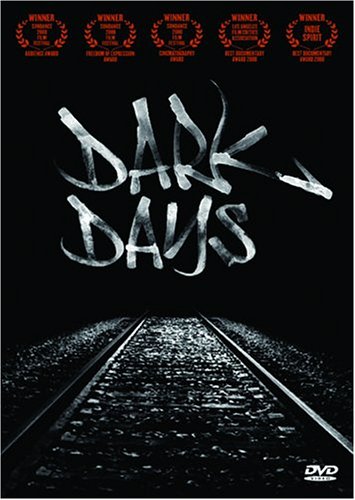
Dark Days


First meeting of the Leicester Documentary Club at Phoenix Square Digital Film and Media Centre early this evening. The Leicester Documentary Club is for enthusiasts of documentaries in Leicester. The intention at present is that we'll meet every other month to watch documentaries from across the world. These viewings will be followed by a social evening. There's 15 or so of us at this inaugural session. We meet in the Screen Lounge cafe, then proceed into the smallest of the Phoenix's three screening rooms.

Here's an extract from the Wikipedia entry for the film we're watching this evening.

"Dark Days" (2000) is a documentary made by Marc Singer, a British filmmaker. The film follows a group of people living in an abandoned section of the New York City underground railway system, more precisely the area of the so called Freedom Tunnel.

When he relocated from London to Manhattan, Marc Singer was struck by the number of homeless people he had seen throughout the city. Singer had befriended a good number of New York's homeless and later, after hearing of people living underground in abandoned tunnel systems, he met and became close to a group of people living in The Freedom Tunnel community stretching north from Penn Station past Harlem. After living with them for a number of months, he decided to create a documentary in order to help them financially. Singer had never been a filmmaker before, and saw the production of Dark Days as a means of gaining better accommodation for the residents of the tunnel.

The film's crew consisted of the subjects themselves, who rigged up makeshift lighting and steadicam dollies, and learned to use a 16mm camera with black-and-white Kodak film. The post-production process took years, as financial difficulties created delays, as did Singer's insistence of creative control to protect the tunnel residents.
During filming, Amtrak announced they would be forcibly evicting the homeless living in the tunnels. This announcement, plus the police presence backing the decision, prompted Singer and photographer Margaret Morton to go to the Coalition for the Homeless for help. Eventually, Singer and Morton managed to secure housing vouchers from the Department of Housing and Urban Development for the film's subjects, which enabled them to move out of the tunnels and into their own apartments.
The film features music by DJ Shadow, including excerpts from Endtroducing... as well as his album with U.N.K.L.E. Melissa Neidich was the editor of the film. Cinevision, a New York City camera shop, supplied Singer with cameras for the two-and-a-half years of filming. When Singer ran out of money for film, Kodak supplied free damaged film for the project.

Dark Days was released in 2000, and was nominated for several film festival awards. The film won many of these, including the Independent Spirit Award for Best Documentary Feature, Best Documentary/Non-fiction film at the Los Angeles Film Critics Association Awards, Senior Programmer's Pick at the SXSW Film Festival Awards, and three Sundance Film Festival awards in 2000: the Audience Award for best documentary, the cinematography award for documentary, and the Freedom of Expression Award.

After the film, we have a relatively structured discussion of some of the most striking points of the film in the screening room, for half an hour or so, then adjourn to the Screen Lounge Cafe to continue discussion in a more sociable environment. I get the chance to talk about what might be termed some of the more spiritual dimensions of the film with a small group of film-makers amongst our group.

Find out more about Phoenix Square Digital Film & Media Centre:
http://www.phoenix.org.uk/index.php?cms_id=21

Visit the Facebook page of the Leicester Documentary Club:
http://www.facebook.com/home.php?#!/group.php?gid=104523019580511&ref=ts

Saturday, 24 April 2010

EDDIE IZZARD GOES WALKABOUT


Spotted on Leicester's High Street this afternoon: comic, actor and marathon runner extraordinaire, Eddie Izzard. He was taking part in a city centre walkabout in support of Labour Party candidates in the General Election, Liz Kendall and Keith Vaz. Many people stopped to talk to him about politics, the general election - and marathons.

In the recent BBC TV adaptation of John Wyndham's The Day of the Triffids, Eddie Izzard's character (Torrence) assumes power by force of arms in a post-apocalyptic Britain - hence the apposite photo above!

The battery had run out on my iPhone, so I couldn't get any photos of the man himself in Leicester. But I must say, he had on the most fabulous blue suit!

ST GEORGE'S DAY IN ST GEORGE'S CULTURAL QUARTER


I take Harry and Grace to the Cultural Quarter today, for an afternoon of family activities to celebrate St George's Day. The full and proper name for this part of town is St George's Cultural Quarter, appropriately enough!


The fun takes place mostly in Orton Square, outside Curve - and it's a lovely sunny day for it. It's odd to think of these celebrations taking place in Orton Square, since Joe Orton (Leicester's most famous modern playwright and a scandalous figure in and beyond his own lifetime) was one of those characters who helped form my own idiosyncratic notion of what the English and Englishness were all about, observed through my personal telescope, growing up north of the border. I saw Orton's What the Butler Saw at the Citizens' Theatre in Glasgow in 1976: and what an eye-opener that was at the age of 16. It's a symbol of how times have changed that Joe Orton would have a public spot in his home town named after him. Good for Leicester!


Now, look at these ladies in the photo below. I don't remember there being twin dragons in the story of St George! And doesn't it change the tone a little for the dragon(s) to be female? Didn't St George rescue a damsel in distress from the dragon?


It's a bright and happy occasion today, full of imaginative ways for the kids to find out more about the country's Patron Saint and appreciate the myths, legends, true stories and tall tales that breathe life into what it means to be English - in the past, in the present and in the future. And after all the protests I make for the Scottish side of Marry and Grace's  heritage, they were born here and their mum's English. Oh, hang on - she's half Welsh ... does that mean that they should be shouting for the dragon too? Maybe even just a little bit?

Friday, 23 April 2010

21st CENTURY PATRON SAINT


In the Creative Writing group this afternoon at Network for Change on London Road (photo above), we take as our topic St George's Day and what it means to have - and to be - a patron saint. We talk about St George - who he was or might have been, where we think he came from, what we've heard he did, and what we believe about him. Wt discuss other sorts of positions in our society (e.g. Poet Laureate, Astronomer Royal) that help us see the nature and significance of a patron saint. We make a list of the sort of qualities we think a patron saint should have, then suggest people alive today or recently departed, who might be able to fill the role of a new patron saint for England, if the position suddenly became open. Some of the names are predictable, some surprising: Trevor Bayliss, Joe Bugner, Shami Chakrabati, John Cleese, Princess Diana, Malcolm McLaren, Katie Price (Jordan). We discuss the difference between appointing a patron saint and electing a new Head of State (which seems to be what some of the group members are thinking of). then they get a quarter of an hour to write the sanctifying myth for the new patron saint of their choice. One of the members of the group chooses Jade Goody. I asked their permission to reproduce that piece of writing here. Bear in mind, faithful reader, that this was written in one go, without corrections and that I've made no changes to the original.
In an era where the majority of English people have very little and aspire to find the fast track to having it all, the culture of the celebrity has talent or being able to do something well isn't as important as being able to fight for what you've got and pay for what you've done wrong.
To be famous without deserving fame could be said to be vulgar and negative but the English still struggle with a rigid class structure. Some are born with privilege, some aren't. Those who triumph over this injustice inspire aspirational worship.
As well as the rigid class structure in 21st century England we still have a rigid race problem.
Jade Goody exhibited cliched western racism and ignorance and she paid for it via eastern laws of karma. It all came back on her, she suffered publicly and died a martyr.Also it is still a woman's role to provide for her children. Her sacrificial public death allowed her to make money for her boys made her celebrity status for nothing justifiable. She took it all on the chin and made money from her own death to provide for her boys.
Kind of like the way Thatcher only became powerful and popular through the Falklands War. She was doing what she was doing in defence of "our boys".
Jade Goody was white, matriarchal, heroic in death and strong enough to be wrong in public and pay her karmic debt. Like the best traditions of the British army.


Impressive, I hope you'll agree. I was particularly taken with the clash of east and west in this piece and the role of karma (which, I have to admit, I'd never associated with this story before).