Tuesday, 20 April 2010

JON RONSON APPEARING AT SKEPTICS IN THE PUB


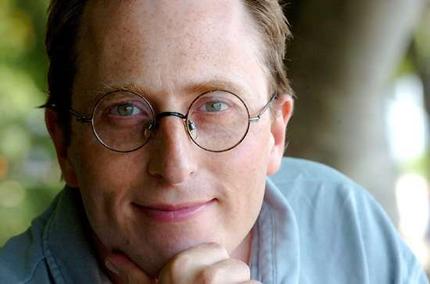
One of my contemporary heroes is appearing in Leicester this evening. Jon Ronson is speaking at the monthly meeting of Skeptics in the Pub, at The Park in Hotel Street.

For anyone who doesn't know the man or his work, Jon Ronson is a writer and documentary film maker. His books, Them: Adventures With Extremists and The Men Who Stare At Goats have been international bestsellers. The latter has been made into a "major motion picture" (don't all films describe themselves thus?) starring George Clooney, Ewan McGregor, Kevin Spacey and Jeff Bridges. He's also the author of two collections of his columns and essays, OutOf The Ordinary: True Tales of Everyday Craziness and What I do: More True Tales of Everyday Craziness. He's written the popular "Human Zoo" and "Out of the Ordinary" columns for the Guardian Weekend, to which he still contributes features. He currently writes and presents the twice-Sony nominated BBC Radio 4 series, Jon Ronson On.... Jon has made a number of films for Channel 4 including the acclaimed five part series Secret Rulers of the World and the multi award-winning Tottenham Ayatollah. His most recent documentaries are Reverend Death (Channel 4), Stanley Kubrick's Boxes (More4) and Robbie Williams and Jon Ronson Journey to the Other Side (Radio 4). In the US, he is a contributor to Public Radio International's This American Life. (Much of this information has been pinched from Jon's own website).

Throughout the day, I've been following Jon's tweets in advance of this evening's meeting:
jonronson Off to Leicester for Skeptics in the Pub even though my nose and mouth feel like a million tiny ants have dug holes in them.
jonronson All I can say, Leicester Skeptics, is don't expect me to be in the least bit funny or interesting. I'm really ill. See you in a bit!
jonronson Just arrived at Leicester station. Don't know what to do or where to go. Skeptics: help.
jonronson Oh God. I am ill and unmet at Leicester station and my gums hurt and I want to go to bed.
jonronson Am met and alive and in zizzi.

I've seen Jon Ronson once before in Leicester, in autumn 2006 at Phoenix Arts. A whole Friday evening was devoted to documentaries and discussion related to conspiracy theories (main themes being the supposed faking of the moon landings and the "truth" behind 9/11). The programme started at 1715; I left just before midnight and it looked like it could have gone on all night. It may well have done for all I know. Jon was light, engaging and funny. He's not so much interested in conspiracy theories as he is in the people who devote themselves to conspiracy theories - whether they're trying to push them, debunk them, or are at the centre of them. Come to that, it's best to say that he's interested in people. And he's self-deprecating to the nth degree. I envy his insight and admire his writing. I'd been able to ask him a question from the audience that night, spoke briefly with him at the interval and prevailed upon him to sign several of his books (I'm such a fanboy!)

If he's still unfamiliar to you, faithful reader, consider him the thinking man's Louis Theroux - a topic which itself contributes to Jon's schtick, as the following recent tweet attests:
jonronson As some know, I've always thought of me and Louis as conjoined twins, in that for one of us to grow stronger the other must die.

Though, to be fair, he also tweeted this right after:
jonronson Actually, Louis is really getting brilliant."

So, back to the present: I'm otherwise engaged for most of this evening at two consecutive meetings of the Council of Faiths. Those meetings wrap up around nine and I dash the few hundred yards from the Welcome Centre down to The Park, just in time to hear the last bit of the Q&A. When the "formal" part of the presentation finishes, I push my way through to say hello to Jon, remind him of our meeting last time he came to Leicester (which he says he remembers - bless him), tell him I've been reading his tweets, muse on our mystery sore throats being induced by the descent of dust from the Icelandic volcanic ashcloud and get him to sign a copy of What I Do (the only book of his I owned which was as yet still unsigned). I'm glad I get to do that, at least. Later that evening, one last tweet from Jon:
jonronson Thanks to all the Leicester sceptics for being so fab.

All's well that ends well.

LEICESTER COUNCIL OF FAITHS GENERAL MEETING


General meeting of Leicester Council of Faiths at the Welcome Centre, 1930-2100. This business meeting is scheduled six months after our Annual General Meeting. Twenty-two people in attendance, representing seven different faith communities. (The fountain in Town Hall Square is the most prominent feature of the view from the window of the Welcome Centre.)

SURVEY PAINTS SPIRIT OF CITY IN ITS TRUE COLOURS

This is Samina Ali's First Person column, published in today's Leicester Mercury:
Survey paints spirit of city in its true colours
Is Leicester's reputation for managing community cohesion justified, asks Samina Ali?
The largest and most detailed study of Muslims in Leicester is published on Thursday. The research – by the Policy Research Centre, Markfield, and published by the Open Society Institute as part of its project looking at 11 cities in the EU – reveals interesting findings, largely positive, about the city.
This study reviewed Leicester's approach to integration and inclusion of Muslims in areas such as employment, health, education, policing and levels of civic and political engagement. It looked at how Muslims felt in Leicester in discussions on identity and belonging. It focused on three wards, Evington, Spinney Hills and Stoneygate, chosen for their high levels of ethnic minority population.
So what do Leicester's Muslims think? Seventy-two per cent of Muslims born abroad said they felt British, whereas 94% of second-generation Leicester Muslims consider themselves British. The responses show that they are more patriotic compared to Muslims in other EU cities and showed a stronger sense of belonging to the city. Also contrary to popular perception values held by Muslims were not much different to non-Muslims in Leicester.
But there are also challenges, and little room for complacency. As one of the researchers, I heard some of the difficulties of some Muslims in Leicester. In one focus group discussion, discrimination was talked about in relation to employment. One person said he applied for jobs and did not get to the interview stage and when he applied for a job with a non-Muslim name his application was successful.
While there were a lot of complaints about the national media, Muslims in Leicester painted a positive picture of their local media, especially the Mercury! The success of interfaith dialogue is also flagged up, particularly the role played by the Anglican Church in helping to manage a positive inter-faith ethos. But poor educational attainment and economic deprivation in parts of the city are seen as major challenges that affect people of all backgrounds.
The study recognises that Leicester offers a number of very positive practices for the inclusion of ethnic minorities, but it also makes a number of recommendations which address the need for further engagement by the council, media, police, and other key policy sectors, as well as the Muslim community itself.
Talking to and meeting Leicester Muslims, key stakeholders and the wider community gave me a sense of pride living in Leicester. Off came my rose-tinted glasses and I saw the real spirit of Leicester in its true colours.
Samina Ali is a Research Fellow at the Policy Research Centre, Markfield

SAFER LEICESTER PARTNERSHIP


At Leicester City Council (Block B, New Walk) this afternoon, for a meeting of the Safer Leicester Partnership Board. This body focuses on crime (or, more especially it's prevention and reduction). I represent the Equality and Diversity Partnership (EDP) here - and, of course, speak up for the Council of Faiths and its interests when appropriate. In that capacity, I have a special interest in hate crime. The central feature of today's meeting is a presentation of the Safer Leicester Partnership's Delivery Plan 2010-11. This is led by two representatives of the Leicestershire Constabulary. It's a very dense sort of presentation, in the sense of being tightly packed with information - the kind of thing that's hard to grasp and respond to at this one sitting.

There's someone here (sitting immediately to my right) from the Audit Commission, who gives a preliminary (and generally positive) response to the Delivery Plan. It's hot in this room, my side of the table is bathed in direct sunlight and it's just after lunch. I'm conscious of a few moments of gonking; I hope the fellow from the Audit Commission didn't spot that.

Sunday, 18 April 2010

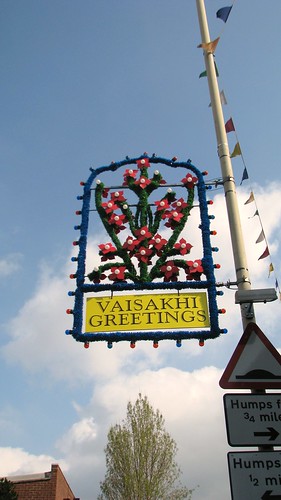
VAISAKHI


The annual Vaisakhi parade has, in the past few years, become one of the most notable faith community events in Leicester. Its route takes it through the city centre from Guru Nanak Gurdwara in Holy Bones (starting at 1130) then on eastward to Guru Teg Bahadur Gurdwara in East Park Road (ending at 1430). Sikhs celebrate Vaisakhi  as the holiest festival of their calendar. It commemorates the founding of the Khalsa (the community of saints) by Guru Gobind Singh, tenth and final living Guru, in 1699.

The Leicester Mercury (Monday 19 April) reported the parade thus:
Sun smiles on festival day as 20,000 Sikhs celebrate in Leicester
Streets were transformed into a rainbow of colour as thousands of worshippers from all over the country flocked to Leicester to mark the Sikh festival of Vaisakhi.
Up to 20,000 people yesterday joined a parade in glorious sunshine led by five Panj Piara, or the beloved ones, while crowds lined the streets and music rang out from decorated floats.

The procession started at the Guru Nanak Gurdwara in Holy Bones at 11.30am and snaked its way through the city for about three hours before arriving at the Guru Teg Bahadur Gurdwara, in East Park Road.

Vaisakhi is one of the most important dates in the Sikh calendar, celebrating harvest time in India and marking the creation of the Khalsa, the Sikh baptism ceremony.

Steward Kuldip Kooner said: "It's a very important event and the parade also helps teach other communities as well as ours what it is all about."

Kam and Suky Garcha, of Scraptoft, joined in the parade with their children, Simran, 13, and Kamran, 11.

Mrs Garcha, 40, said: "It's nice to bring the kids to make sure they learn about our religion and it's a beautiful day as well."
Gita Bagrah, of Braunstone Town, also attended with members of her family.

The 38-year-old said: "I haven't been for a few years because I work shifts . I got the opportunity to come and I didn't want to miss out again because it's a great way of getting the community together."

Jaspal Minhas, president of the Leicestershire Asian Business Association, also took part. "I join in whenever I can and I think it's fantastic how the community comes together. It's one of the biggest events in the Sikh calendar and it's a great way to celebrate."

Spirits were high as the colourful procession lit up the streets.

Gurmeer Singh, 19, of Evington village, said: "So many people have come from outside – Peterborough, Manchester, London – which shows how big it is.

"It's a really enjoyable, peaceful and spiritual day for us."

Teacher Gurwinder Obhi was taking part in the parade with pupils from the Khalsa Education Centre, in East Park Road.

"It's important for the children to celebrate," she said.
Kawalpreet Singh, 23, one of dozens of volunteers helping to hand out refreshments, said: "It's taken lots of hard work but it's worth it."
Mohinder Singh Sangh, president of the Guru Teg Bahadur Gurdwara, said: "It's a beautiful day and thousands of people have turned up."

While I wouldn't claim to have walked in the parade today, I did trail along behind it for 20 minutes or so.

Saturday, 17 April 2010

RED LETTER DAY ON SIKH CALENDAR

This article appears in today's Leicester Mercury:
Red letter day on Sikh calendar
Thousands are expected to take part in a procession to mark the Sikh festival of Vaisakhi tomorrow.
It will start at the Guru Nanak Gurdwara in Holy Bones, Leicester, at 11.30am.
A route through the city centre will end at the Guru Teg Bahadur Gurdwara, in East Park Road, at about 2.30pm.
Vaisakhi celebrates harvest time in India and also marks the creation of the Khalsa, the Sikh baptism ceremony.
It is one of the most important dates in the Sikh calendar and about 15,000 people are expected to take part in the celebrations in Leicester.
Police are warning motorists to expect delays.
Inspector Jason Ross said: "Vaisakhi is the most important date for the Sikh community worldwide. We hope everyone who participates in this year's event, or watches the procession enjoys the celebrations.
"If motorists find themselves caught up in traffic, we would ask that they be patient until the procession ends."
Traffic diversions will be in place and officers will be patrolling to ensure a steady flow of traffic.
Organisers have encouraged participants to park near East Park Road and have arranged a shuttle bus to take them to Great Central Street.
Temporary no-waiting restrictions will be in place along the route of the procession but will be lifted afterwards.

Thursday, 15 April 2010

profile of the non-religious


To Secular Hall, Humberstone Gate this evening, for a talk sponsored and hosted by Leicester Secular Society: "Profile of the Non-Religious" by Prof David Voas (photo above). Prof. Voas is Simon Professor of Population Studies at the Institute for Social Change, University of Manchester.

His theme this evening is "Who are the 'non-religious' in Britain and where do they come from?" His presentation is based on statistics obtained from the 2001 Census and from the British Social Attitudes survey. Consequently, he takes into account how factors such as age, education, ethnicity, gender, marital status, political affiliation, social attitude affect or reflect whether (and to what extent) individuals, families and groups are or are not "religious". Several of these aspects of personal and social identity seem to have unexpected and intriguing implications on this topic. He also looks at geographical breakdown of religious and non-religious respondents to these questionnaires. Apparently, Aberdeen has the biggest percentage of its population who declare themselves to be "non-religious" (but the census question in Scotland was slightly different from the in England and Wales and allowed one to identify oneself as "non-religious" more easily).

The presentations contains some interesting definitions of what it means to be "religious" and "non-religious", which will be of interest here. We're asked to consider whether religious identity comprises on dimension or many and depends on the nature of the question being asked. A question such as "Would you say that you think of yourself as a religious person?" is different from a tick-box exercise. Definitions and typologies are justified by utility, although the real goal of this kind of investigation is to understand the world. It may not matter a jot in the end where we locate someone (or where they locate themselves) on such a scale. We learn about "strong" and "weak" forms of being religious and non-religious:

  • attendance at services or prayers
  • participation in religious rites of passage
  • belief in God (with varying degrees of certitude or doubt)
  • identifying with, or accepting affiliation, to a particular religion
  • attitudes to religion range from hostility to indifference to support.

We also discuss distinctions between "secularity" (which is a descriptive term related to the absence of religious motivation or content) and "Secularism" (with a capital "S", being a particular ideology actively opposed to religious privilege).

From a personal point of view, I become more aware of  the difference between how the definitions of "religious" and "non-religious" are treated in England and in Scotland. For example, those who ticked "other religion" in the 2001 Census and wrote in "Jedi Knight" in England were put into the category of "no religion", while those who did the same in Scotland were classified as "another religion" alongside more recognised minority faith communities.

Dr Voas's conclusion this evening? That Britons are becoming secular without quite knowing it or knowing quite what it means.

Find out more about Prof. David Voas and his work:
http://www.ccsr.ac.uk/staff/voas.html

Find out more about Leicester Secular Society (the oldest secular society in the world - formed 1851):
http://www.leicestersecularsociety.org.uk/

Amplified Leicester Showcase


To Phoenix Square this morning (I should live in this place!), for the Amplified Leicester Showcase event. Amplified Leicester is a city-wide experiment designed to boost the innovation capacity of Leicester and share new skills which are fast becoming essential in 21st century workplaces and communities. In 2009/10 Amplified Leicester offered a small group of participants from across the city the chance to:
  • benefit from Leicester's huge diversity of people and cultures;
  • generate new ideas quickly;
  • think like a futurist and see the bigger picture;
  • organise and collaborate better;
  • be persuasive in different social situations;
  • share and develop creative ideas;
  • manage the stream of information bombarding us every day;
  • choose the best people with whom to collaborate;
  • make the most of different kinds of resources – social, economic, creative.
Every fortnight participants attended lectures and workshops and in between meetings worked together via Twitter, Facebook and other social media applications. They filmed interviews in their communities and shared the videos online.

The project has been inspired by (and is based on) research done by The Institute for the Future at Palo Alto, California. The amplified individual is (consciously):
  • highly social;
  • highly collective;
  • highly improvisational;
  • highly augmented.
At the end of (this part of) the project the participants are showcasing their work and expanding the conversation to include more people from the city of Leicester and beyond. This one day event at Phoenix Square Digital Media Centre includes practical workshops run by the participants themselves, presentations of their experimental projects, and talks by the project team. Keynote speaker, Andrea Saveri, an independent foresight and strategy consultant based in Berkeley, California, was unable to travel here for the event for medical reasons. However, she still delivered her speech via skype. The theme of her talk was locating the Amplified Leicester experience within a global context. Leicester is ther first and only amplified city in the world!

I missed out on the chance to participate in Amplified Leicester. I believe I was the first person to apply to be considered for the project, but withdrew my name almost immediately when I realised that work commitments would have proevented me from attending the fortnightly sessions. but I've been a camp follower of the project all along and have lent whatever assistance I could to it, even just by "bigging it up" (especially in this blog).

This is undoubtedly an excellent project and I have many good things to say about it. If you can sense a "but" coming, it's not a new one or that different from one that I have to raise with many of the events and activities, groups and organisations with which I've been involved over the past few years. There tends to be something of a "disconnect" between Leicester's faith communities at large and what we might call the "mainstream" cultural life of the city. Now, no doubt that some of those involved with a project such as Amplified Leicester are people of faith or strong beliefs. And there are individuals who would appear to be easily identified as members of the faith communities themselves. I'm talking about something different and (I believe) deeper.

As part of my ongoing efforts to overcome that "disconnect", I invited Ramila and Ravi from the "Get Inspired 2010" team to come along today so that I could put them in touch with a few people who might be able to help them promote their event coing up in August. I'm pleased to see that they appear to benefit from this, as I had hoped.

Find out more about Amplified Leicester:
http://www.amplifiedleicester.com/

Wednesday, 14 April 2010

wheels of change

Have spent most of today proofreading and copy-editing a 74-page long report entitled, "Wheels of Change" - the write-up of a survey on barriers faced by disabled Gypsies and travellers when accessing the Social Care system. This project was commissioned by the Equality and Human Rights Commission and jointly carried out by Leicestershire Centre for Integrated Living (LCIL) and Derbyshire Gypsy Liaison Group (DGLG). I'm doing this as part of my work with the Regional Equality and Diversity Partnership (REDP). What an excellent piece of work this is. It's a good example of the kind of project that can lead to something that will improve the lives of a neglected and put-upon minority group.

CreativeCoffee Club (3)


To Phoenix Square Digital Film and Media Centre this morning, for the regular fortnightly meeting of CreativeCoffee Club. Almost entirely new faces today; it's great to see how this is growing with every meeting. The dominant theme of this meeting is preparation for the Amplified Leicester showcase, which is taking place here tomorrow.

The Leicester on the Map website goes live today, in advance of tomorrow's showcase. Leicester On The Map is an independent online PR network to promote the City of Leicester. It aims to make Leicester the first city to promote itself using crowd-sourcing and social media. It's looking for citizens from all backgrounds to act as advocates, lobbyists and ambassadors for the city.

Find out more about Leicester on the Map:
http://www.leicesteronthemap.org.uk/

Find out about Leicester on the World Map and help show how globally connected our cosmopolitan city is:
http://www.leicesteronthemap.org.uk/world.asp