Saturday, 28 January 2012

HOLOCAUST MEMORIAL DAY 2012: SPEAK UP, SPEAK OUT!


The city formally commemorates Holocaust Memorial Day this evening. The event is jointly sponsored by Leicester Council of Faiths, the Schools Development Support Agency (SDSA), the Stanley Burton Centre for Holocaust and Genocide Studies at the University of Leicester and Leicester City Council. 

The annual commemoration of Holocaust Memorial Day officially falls on 27 January, which was yesterday - a Friday. Since the Jewish community plays such a prominent part in this annual occasion, it would be daft to hold it on a day on which they'd be unable to take part.

Leicester's Holocaust Memorial Day has obtained funding from the Big Lottery's Awards For All scheme this year, which has allowed preparations for the event and the commemoration itself this evening to step up a gear.

There are 140 people attending this evening, in what is a new venue for this event: Embrace Arts at the University of Leicester's Richard Attenborough Centre.

The programme is introduced by Tony Nelson (Chair of Leicester Holocaust Memorial Day Committee and Treasurer of Leicester Council of Faiths - and my line manager). Tony welcomes special guests, including Cllr Robert Wan, Lord Mayor of Leicester; Lady Gretton, Lord Lieutenant of Leicestershire; and The Right Revd. Tim Stevens, Bishop of Leicester. Apologies were received from Sir Peter Soulsby, Mayor of Leicester.

Charlie Neale and Joe Flavell from English Martyrs Catholic School, Laura Whitehouse and Craig Heffernan from Beauchamp College speak on their experiences of the Holocaust Educational Trust's Lessons from Auschwitz Project, then answer questions. 

Now, normally when I hear anyone introduced as a "Performance Poet" my eyes dart to the nearest exit (and in my previous incarnation as a Creative Writing tutor, I've had to do that plenty of times). But this evening, I'm glad to say, Leah Thorn is definitely the exception that proves the rule. She makes a wonderful contribution - touching, moving and uplifting, engaging and involving - occasionally bringing us up short with moments of insight or revelation. She's accompanied on a variety of musical instruments by her partner, Arike. Leah has spent time in five Leicester schools working with pupils, coaching them in writing their own poetry about appropriate themes for Holocaust Memorial Day which are relevant to their own experience (later in the week, the Leicester Mercury gives good coverage to this part of the project). The poems have been collected in a booklet, entitled "SPEAKUPSPEAKOUT: Holocaust Memorial Day Poetry Collection 2012", which is distributed free of charge to attendees here this evening. Here's Leah's introduction to the booklet:
I arrived in Leicester on the 4th of December 2011 to lead a week of poetry in workshops in Leicester schools for Holocaust Memorial Day 2012. I was to work in a boys' secondary school, some primary schools and I was excited to meet the young people. I was also curious. How would we get on? In a period of a few hours, would it be possible to create a safety and an atmosphere in which young people could share honestly their thoughts and feelings about genocide?
My mother was a Holocaust survivor and when she learned of my work with non-Jews on the subject of the Holocaust, she tellingly asked, "Do they listen? Do they care?" Thinking of the young people I met during my week in Leicester, my answer is a resounding "YES!"
The young people, aged ten to fifteen, cared a lot. Whether we were looking at bullying as the first step to genocide, or at the role of the bystander, or at metaphors for the Holocaust, they were attentive, thoughtful - and full of poetic ideas. They surprised themselves with their achievements, and I appreciated the warmth with which they welcome me and listened to my poetry and my stories. The poems they created are a powerful testimony to their talent and to their sensitivity.


As well as Leah reading some of the children's poems, she mixes in some of her own, reflecting her family's recollections of the Holocaust. A few of the children are welcomed onstage to read their contributions. The Leicester schools with which Leah worked were:


The Holocaust is a choking sound,
a shattering sound around the whole world;
the screeching sound of a blackboard being scratched
and a building crashing down.
The Holocaust is dark silver, the colour of upset,
the blue of tears and the sleepy pink of smoke.
It is a journey stuck in freezing snow.

It stings and pinches skin. It is a bruise.
The Holocaust is a draught up your arm,
a spider creeping up your sleeve.
The Holocaust is rough on the tongue, like sharp metal.
The Holocaust is a game of Hide'n'Seek.
It is an explosion of destruction.
The Holocaust lives in an abandoned castle
with boarded up windows.
It is a ripped-up teddy bear
with its stitching dropped.
It is a rocking horse, rocking backwards and forwards.
It is a heart full of ice.
It says to me, "Everywhere I go,
everything nice dies."
The Holocaust lives in a dark, mysterious forest,
in the cold with dust.

(group poem by Year 6 pupils, Queensmead Primary School)


Next in this evening's programme there's a more formal musical interlude (two Chopin Preludes) by Markian Lachmann from English Martyrs at the piano.

Siobhan Begley presents certificates to the young people who have participated in the Speak Up, Speak out! project, in memory of her late husband, Paul Winstone.

Professor Aubrey Newman (Past Director of the Stanley Burton Centre for Holocaust and Genocide Studies at the University of Leicester) addresses briefly this year's theme: "Speak Up, Speak Out!"


In the photo above (left to right): Tony Nelson, Juliet Martin (SDSA), Leah Thorn, Arike, Cllr Manjula Sood.

Some thoughts on "monitoring" are appropriate here: at the last few commemorations of Holocaust Memorial Day, I've put out the forms required by Leicester City Council as part of their monitoring regime on the seats before anyone turns up. And whoever's been chairing the meeting has waved the forms from the front and asked attendees to complete them before leaving. Knowing how much store our various monitoring officers at City Council set by these forms, I'm always anxious to ensure as many of these forms as possible are completed and collected. I've had occasional comments - verbal or in writing - from attendees that this may be seen as a bit obtrusive. This evening I wasn't able to leave the monitoring forms on the seats before the meeting began, but lay them out on chairs and tables in the cafe, so that attendees can complete them during the reception after the formal part of the programme.

This time however, I'm slapped in the face by the irony of asking people to declare disability, religion and sexual orientation at an event, commemorating victims of the holocaust and of genocide who were persecuted, tortured victimised and done to death for possessing characteristics in those three areas that deviated from some arbitrary norm. Inside 20 minutes I go from (politely) butting into conversations round the tables, encouraging everyone to fill out the forms and explaining why we need them to do so, to going round collecting the unfilled forms and binning them. I have a conversation later with Rev. David Clarke about this and he offers to write supporting comments on one of the forms and sign it.

EDL'S LETTER DOES NOT REASSURE US

This appears in the Editoral Opinion column of today's Leicester Mercury:
EDL's letter does not reassure us
The English Defence League has written an open letter to Leicester businesses in which it states that its only intention in coming to Leicester next Saturday is to stage a peaceful protest.
We sincerely hope this is how things turn out but the EDL cannot be surprised that people are fearful about its return to Leicester. On the last occasion it staged a protest here, in October 2010, people in the EDL section pelted police officers with bottles, cans, bricks and coins.
At one point a Leicester Mercury reporter and photographer had to flee a building as debris crashed through the windows. Another group of EDL followers broke through police lines to engage in running battles with local youths and officers. In contrast, Unite Against Fascism, which the EDL tends to accuse of provoking trouble, staged a counter-protest which seemed to us to be entirely peaceful. This is not propaganda, as the EDL would no doubt suggest, but what our journalists saw with their own eyes.
The EDL in its open letter is also at pains to assert that it is not seeking to divide communities but to unite them. However, earlier in the letter it says, without a shred of evidence to support its claim: "It has become increasingly evident that there is an anti-English sentiment amongst some communities of Leicester."
It is hard to imagine a much more divisive statement than this.
The EDL believes that there is a "two-tier justice system" at work in the UK where Muslims are treated more leniently than English people. It is coming to Leicester because its supporters think that a court case last year at the city's crown court illustrated this.
We are not going to go through all this again – we did so at length last Saturday – suffice to say that what actually happened in court does not bear out the EDL's view. We know because our reporter was at the hearing.
The EDL's open letter is articulately expressed in measured tones.
Some people might conclude that it is perfectly reasonable. However, our experience of this group is not a good one and we think that what its supporters say and do is frequently divisive and damaging. That is not scaremongering or propaganda but is based on what we have seen for ourselves.

CITY BUSINESSES HAVE NOTHING TO FEAR, INSISTS EDL

This article is published in today's Leicester Mercury:
City businesses have nothing to fear, insists EDL
The English Defence League has told businesses they have nothing to fear from its supporters during next weekend's planned protest in Leicester city centre.
The EDL, which says it was created to combat Islamic extremism, plans to stage a protest in the city centre on Saturday, February 4.Leicester Unite Against Fascism hopes to stage a counter-protest on the same day.
Police are planning a major public order operation to "facilitate" peaceful protest and to combat any potential for a repeat of the violence which broke out when the EDL last staged a major protest in the city.
On that occasion, in October 2010, many businesses chose to close for the day and many premises near the protest site in Humberstone Gate East were boarded up.
Now, the EDL's local leadership has written an open letter, on Facebook, to city businesses to urge them to ignore "propaganda" it claims is being spread about its supporters' behaviour during protests.
It has passed a copy to the Leicester Mercury.
The EDL letter restates that the purpose of the march was to highlight the group's anger that, in a recent court case, four Somalian women "escaped jail for a savage street attack" on a white woman.It says: "It has come to our attention that many communities and businesses prior to our demonstrations are misinformed by certain groups or individuals as to our intentions, and many places of business are advised to close.
"We feel this is an attempt, merely to raise tensions and undermine our message.
"I would like to assure you there is no need to close because of an English Defence League demonstration.
"We have marched through many cities and towns across the country with zero disruption to communities and that is our full and only intention for February 4."
Chief Superintendent Rob Nixon, head of city police said: "We trust that EDL will fulfil their promises as set out on the letter.
"The police have a legal duty to facilitate peaceful protests.
"We take our role of protecting our communities seriously and there is a significant policing operation in place as a precautionary measure."
Martin Traynor, chief executive of Leicestershire Chamber of Commerce, said: "I'm encouraged by the police approach of trying to control this march. However, based on past experience and people's perceptions of them this will still have a detrimental effect on the city centre."
Suleman Nagdi, spokesman for the Leicestershire Federation of Muslim Organisations, said: "What we have seen in other parts of the country does not instil confidence in this letter.
"So, we welcome their undertaking but we have doubts this will be the case on the day.
"If violence does break out – and we hope it does not – will they blame a fringe group they have no control over?
"They are responsible for bringing people to Leicester on that day and they have to rein in any fringe groups."
Mayor Peter Soulsby said: "We are talking to business leaders about our plans for the day, and these discussions will increase next week as more details become available.
"The success of city centre businesses is vital to Leicester and we will do whatever we can to ensure they can operate normally before, during and after the demonstrations.

Friday, 27 January 2012

THIS WEEK'S VISITORS (2,384)


Regular update on the number of pageviews received from different parts of the world in the week just ending.
  1. United States 1,064
  2. United Kingdom 801
  3. Germany 240
  4. Russia 83
  5. Japan 54
  6. France 49
  7. India 40
  8. Ukraine 29
  9. Ireland 12
  10. Netherlands 12

This week's total: 2,384 (last week: 1,289). These are aggregates of figures from the top ten countries only. Blogger's stats software doesn't show me numbers of pageviews below the tenth-ranking country.

The world map at the top of this post is the graphic that I see on the stats page. The darker the green, the more pageviews from that country. I can see different versions of that map for "now" (i.e. in the last two hours), "today", "this week", "this month" and "all time" (which seems to mean the last 12 months). They're updated each time I look at them.

DEATH OF KING AND MARTYR REMEMBERED

This letter is published in today's Leicester Mercury:
Death of king and martyr remembered
At noon tomorrow, there is to be a service at the Church of St Mary de Castro, Castle Street, Leicester, commemorating the death of Charles, King and Martyr.
This is very appropriate in view of the part played by Leicester in the English Civil War and the Siege of Leicester in May 1645, when King Charles I was present.
Refreshments, a display and, hopefully, members in uniform from the Civil War re-enactment societies, will follow. All are welcome.Leaflets will be available at the service describing why King Charles is described as a martyr, a controversial subject.
The Church of St Mary de Castro was close to the scenes of the main action and indeed, the south wall of the churchyard is, to this day, still loop-holed in preparation for a last-ditch stand by the defending garrison and townspeople of Leicester.
There is also a mass grave of the defenders close to the churchyard.King Charles was offered his life by Parliament if he would abandon Episcopacy, the governance of the Church of England by the Bishops, which we still have today; but this would have removed the church from being part of the One Holy Catholic and Apostolic Church, which we still say in the Creed and would have made the church into a sect.On this point, Charles stood firm and for this he died.
I can be contacted on 0116 271 6086 for any queries on leaflets and I hope as many as possible will attend this historic service.
Chris Stephens, Oadby

VOLUNTEER IS MADE MBE FOR CITY WORK

This article is published in today's Leicester Mercury:


Volunteer is made MBE for city work
A community leader was presented with an MBE by Prince Charles at Buckingham Palace yesterday.
Hashim Duale, 44, a hard-working volunteer and member of the Somali community on Leicester's St Matthew's estate, was recognised for his work to promote harmonious relations between the city's different communities.
Mr Duale was one of hundreds of thousands of Somalis who left his country during the war and famine of the 1990s.
He said: "There were 43 of us receiving honours and we went up to collect them and had a chat with the Prince, and then he shook our hands to signal the conversation was over and we stepped back.
"I think my conversation was one of the longest because he was very interested in the situation in Somalia.
"He was saddened by the fact people are still dying and there's still war going on. He clearly knew a lot about it.
Mr Duale was accompanied on his trip to the capital by his family.
He said: "I took my children aged seven, 10 and 11 along, as well as my wife. My children were hoping to see the Queen. They were very well behaved."
Mr Duale's volunteer work is aimed at integrating the Somali community in Leicester. He serves on advisory panels for both the Bishop of Leicester and the police.
He is also involved with the Federation of Muslim Organisations in Leicester, and the Muslim Burial Council of Leicestershire.

Hashim was a member of Leicester Council of Faiths when I took up my post in the summer of 2007.

Wednesday, 25 January 2012

BURNS NIGHT 2012


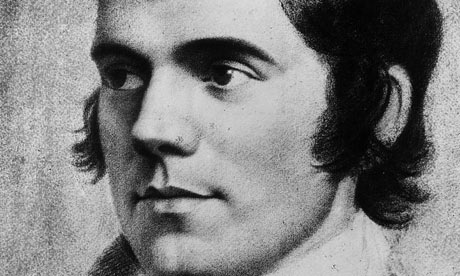
Today, 25 January, is the 253rd anniversary of the birth of Scotland's national poet, Robert Burns. Here in Leicester, as in innumerable places all over the world, people of all sorts (many of whom have never set foot in Scotland) will be celebrating Burns Night.

I've never been to a Burns Supper. But then, as a teetotal vegetarian who can't stomach neeps (as turnips are called for this purpose), I might be considered a bit picky over the fare on offer. And I've never worn a kilt; in fact the only way you've ever get me into a kilt is if I'm buried in one. But even though I've never bought into the memorabilia and paraphernalia that surround Robert Burns, still his poetry and songs hit home with me, for q variety of reasons. Back in 1979, when I was just 19, the Bahá'ís whom I first got to know in Glasgow often spoke about the perceived connection between the unity and solidarity of the whole human race that is expressed in Burns's poetry and the same core teaching of the Bahá'í Faith. Of course, all sorts of people and ideologies - religious, political, secular, social and more - claim ownership of Burns, or have hitched their waggon to his star, but I'd like to think that this instance was (and continues to be) more honest, insightful and sincere. It certainly worked for me and got me to appreciate and understand Burns in ways I never had before ... and it gave a route into the Bahá'í Faith that still illustrates its appeal and relevance to Scots.

Burns's universalism (which is, of course, but one facet of his writing) took on particular and personal significance for me when I was working on a book about 'Abdu'l-Bahá's 1913 visit to Edinburgh. The Seven Candles of Unity (1991) by Anjam Khursheed, acknowledges the resonance that Scots Bahá'ís feel with the spirit of Robert Burns. In that context, the book quotes his well-known words which foretell the inevitable overturning of prejudice and tyranny and the coming together of all the world's peoples:

Then let us pray that come it may,
As come it will for a' that
That Sense and Worth o'er a' the earth
Shall bear the gree an' a' that,
For a' that an' a' that,
It's comin' yet for a' that,
That man to man, the world o'er
Shall brithers be for a' that.

George Reid MSP & Carrie Varjavandi
Perhaps the single most significant occasion on which this connection with the legacy of Robert Burns was demonstrated was when Carrie Varjavandi, a member of the Dundee Baha'i community was invited to address the Scottish Parliament during its weekly short Time for Reflection session on 18 January 2006. Presiding Officer of the Scottish Parliament, George Reid MSP made a direct connection between the fundamental principles of the Bahá'í Faith and the words of Robert Burns:
The Bahá'í belief in the unity of mankind matches our commitment to build an inclusive society in Scotland. It recalls the words of Robert Burns [which were quoted] at the Opening of the Parliament in 1999: "That man to man, the world o'er, Shall brithers be for a' that."

Find out everything you wanted to know about Robert Burns (but were afraid to ask) on the Guardian Edinburgh website.

CREATIVECOFFEE CLUB


At Phoenix Square Film and Digital Media Centre this morning for CreativeCoffee Club. Another good turnout, with just as many, maybe more, as at the last session a fortnight ago (at least two dozen people today - including, for the first time, a babe in arms). A very positive feeling about the session today, a palpable buzz in the air - and that's not just thanks to the caffeine!

Patrick Welsh (Marketing Manager at Phoenix Square) and I have an interesting discussion about "ownership" of CreativeCoffee Club. What's the relationship between CreativeCoffee Club and Phoenix Square? Is this a loose, informal group of people who met for a while at DMU Graduate Bar, currently meet at Phoenix Square and at some time in the future might meet somewhere else? Is CreativeCoffee Club an integral part of Phoenix Square's programme? Who runs it? Who makes it work? What can be done to make it work better?

We don't reach any conclusion about this, but it's an interesting question to ask, with obvious implications for promotion and publicity, retaining the existing membership (if it can be said to have such a thing) and bring in new people. Take, for instance, blogging. At the moment, that's only done here, by me, attached to the Council of Faiths website. So it reflects my interest and involvement - and that of the organisation for which I work. But there's more to Creative Coffee Club than just what I see in it and what I get out of it. Should it have a blog of its own? If so, who would do that? Can it be done collectively?

One veteran of CreativeCoffee Club (and of the late, lamented - by me, at least - Amplified Leicester) tells me that this shouldn't be thought of as a networking event any more; that we might as well be meeting in the pub. My response to that is that if we were meeting down the pub at 10 o'clock on a Wednesday morning, then it would say something very different about us as a group! My feelings are that CreativeCoffee Club is that it's loose, relaxed and low-key (which, for some people, can mean it's frustratingly baggy, shapeless and unmanageable) and that it doesn't work to try and mould it into some other shape followed by other groups and meetings of which we might have experience or knowledge. There are other networking events happening in and around Leicester - and some of us take part in those too. If CreativeCoffee Club is a square peg, it can't be battered into a round hole.

Since I keep telling anyone who's interested (and plenty who're not) that I'm the longest-serving member of CreativeCoffee Club (having been here since the second-ever meeting at DMU in the autumn of 2007) I think I'm entitled to take the long view. Some folk questioned why I was coming to CreativeCoffee Club at all (including some of my employers), but from my point of view it's paid off, in spades. I don't have a product to promote, or a service of the kind that others have here. It's been a process of building credibility, trust, even friendship - that others attending see my open hand, understand my agenda (and don't think there's a hidden one). In the context of attending and supporting CreativeCoffee Club at Phoenix Square, that paid off for me (and for Leicester Council of Faiths) with the Faiths Film Festival during Inter Faith Week 2011. Getting that put on was the perfect example of pushing at an open door. Phoenix Square even went the extra mile by having one of our banners on display for a whole month leading up to that event and for the week of the festival itself.

I have an interesting chat about social media with one chap, here for the first time today, which reflects on the nature and purpose of CreativeCoffee Club itself. Twitter, for example, could be said to be dynamic, non-hierarchical, to evade standard ideas about management and ownership. Get the picture, faithful reader?

Listed below are some of today's attendees. These are live links; click on them to go straight through to the relevant website or Twitter account.

    PLENTY TO LEARN FROM SCOTLAND'S GREATEST POET

    This is Fr Gregory Murphy's First Person column, published in today's Leicester Mercury:
    Plenty to learn from Scotland's greatest poet
    Fr Gregory Murphy considers Robert Burns, Devolution and the cause of Christian unity
    The season of Christmas, in the calendar of the Church, continues until the feast of the Presentation of the Lord, or Candlemas, on February 2. It provides a useful excuse if, like myself, you've been a bit tardy with the Christmas cards.
    There are some secular feasts as well: especially, if you're Scots, or have Scottish connections, Burns night suppers around January 25.
    Robert Burns, the ploughman poet from Ayrshire, rose from humble origins to be feted by the literary society of the late Scottish Enlightenment.
    Burns was – on the evidence of his writings – a pretty level-headed character, happy to accept the fame (and the money) while keeping his feet on the ground ("A man's a man, for a' that").
    As someone who enjoyed wine, women and song ("'Gae bring to me a pint o' wine") he had a certain reputation in Presbyterian Scotland, though this did not inhibit his secular success – his love songs were quickly set to music, and their popularity endured well beyond Burns' lifetime.
    Though a Scots patriot he was happy enough to take the King's shilling, working as a customs officer in a time of chancy employment ("The Deil's awa wi' th'Excisemen") so it's likely that, as most Scots from his time onwards, he'd have looked at the question of devolution with an eye to the main chance.
    Growing up in a Presbyterian background his roistering would have attracted negative comment, and he in turn was critical of religious hypocrisy ("Holy Willie's Prayer").
    One of his works echoed the age-old question of the Delphic Oracle – know yourself – "O would some power the giftie gie us/tae see oursel's as ithers see us!"
    That plea takes on a deeper resonance during this week of prayer for Christian unity.
    We are all liable to the gospel critique of being hypersensitive to the splinter in our brother's eye while being oblivious to the beam in our own.
    The mutual increase in knowledge and tolerance of other Christian traditions is, I would argue, evidence of the working of the Spirit in our own times.
    The great Dominican theologian and ecumenist, Yves Congar, whose work bore fruit in the Second Vatican Council, used to say that each of the main divisions of Christianity emphasised a particular aspect of Christianity which it was their privilege to share with the others: from the Orthodox churches, the sense of life in the Spirit; from the Catholic Church, the presence of the Lord in his sacraments; and from the churches of the Reformation the presence of the Lord in his Word.
    Let's pray that we can become mutually enriched by drinking from each other's wells.

    Fr Gregory Murphy, OP, is a Dominican priest at Holy Cross Priory, in Leicester

    Tuesday, 24 January 2012

    FEDERATION OF MUSLIM ORGANISATIONS DISCUSSES EDL DEMO


    At Highfields Centre, Melbourne Road (photo above), this evening, where the Federation of Muslim Organisations (FMO) has called a meeting to discuss the proposed demonstration by the English Defence League (EDL) and counter-demonstration by Leicester Unite Against Fascism (LUAF) in Leicester city centre on Saturday 4 February.

    The meeting is led by City Mayor Sir Peter Soulsby and BCU City Centre Commander Chief Superintendent Rob Nixon. A number of other City Councillors (Cllr Patrick Kitterick and Cllr Abdul Osman sitting on the row in front of me), City Council officers and officers from Leicestershire Police are also in attendance.

    After those at the top table have spoken, Riyadh Ul Haq, a Shaykh associated with a number of mosques around the country, is called upon to give religious guidance on the situation. He focuses in particular on the amount and kind of misinformation and rumour that was put about for a variety of reasons during the last such event in October 2010, basing his short talk on the following verse from the Qur’án (Surat An-Nisa', 4:83):
    And when there comes to them information about [public] security or fear, they spread it around. But if they had referred it back to the Messenger or to those of authority among them, then the ones who [can] draw correct conclusions from it would have known about it.

    This verse was revealed when Muhammad and his small band of companions were in Medina, living under constant threat of attack from those who wished them ill. And it could hardly be more apposite. Now, I know that other verses may be adduced to make other points (and a few people have done so for my benefit on Twitter) but that's not the point, faithful reader. Here it felt like the right words making their impact felt on the right people for the right occasion.

    Attendees are assured that ionic buildings and sites throughout city and county (including all places of worship, community centres and faith-based schools) have been identified by the authorities and special efforts will be made to ensure their security.

    Of course police will try to facilitate peaceful demonstrations on all sides, minimising any chance of conflict between parties and to minimise the extent to which EDL can claim the event is a success.

    One young man speaks from the floor, introducing himself as Daniel, from Unite Against Fascism. He makes the case for a peaceful counter-demonstration, arguing against the demonisation of UAF alongside EDL. His contribution is the first one of the evening to be met with a round of applause. A young Muslim woman from UAF speaks shortly after Daniel, urging us to keep in mind that "actions speak louder than words".

    It's our legal right to demonstrate in a peaceful and orderly fashion and this can't be considered wrongful. No one is going to be criminalised simply for attending a counter-demonstration. What FMO is warning people (especially young people) about is the possibility of their being swept up in events of the day and, in the heat of the moment, they may find themselves doing something that they wouldn't normally do. This is what Suleman was warning against in his First Person column in the Leicester Mercury last week. FMO can't  tell anyone what to do before, on or after Saturday 4 February, but its members are turning to it for advice and guidance. Its guidance is to leave it to the professionals. 

    FMO has made conciliatory approaches to Rhea Page, offering support after her attack by four drunken Somalian women in Leicester city centre - the pretext for EDL deciding to come to Leicester this time. FMO has offered Rhea the chance to meet with a small group of Muslim women in a friendly atmosphere and is hoping for a positive, healing outcome.

    Many people at this meeting were formally involved with the police during the October 2010 event as community mediators - a system that has been activated again, involving many of the same individuals. FMO is encouraging its member communities, groups and centres to direct anyone who feels the need to be directly involved on the day to come forward for training as community mediators, legal observers or stewards. This will help focus energy of those who want to do something active and positive to help.

    Suleman describes how FMO was represented at all levels of the command structure within the police during the October 2010 event and will be so again this time. He briefly outlines how this command structure works and the role that FMO plays at the three different levels: gold, silver and bronze. (I wonder which element of the command structure I'm involved at: tin, probably).

    Groups such as Islam4UK are mentioned in contributions from the floor. While there’s no expression of support for them (on the contrary, there’s strong condemnation of their aims and intentions) still there is dissatisfaction that such groups can be proscribed in their activities on relatively little hard evidence whereas EDL, with a proven track record of violence and disruption virtually everywhere they go, are allowed relative freedom to say whatever they want and go wherever they want. If the EDL are basing their forthcoming demo on unfair variations in legal treatment based on religious identity, then surely this is a case of that very thing, but working against Muslims.

    The City Mayor assures the meeting that once events of Saturday 4 February are out of the way, Leicester City Council will work with other cities and towns that have felt the effect of EDL, to see whether the law is as good as it can be and whether the range of options fro response to this kind of event is as wide as it can be. FMO has written already to the Attorney General's Office and HM Solicitor General asking for a review of the current legal situation.

    As the evening progress I jot down some words to describe the tone of the meeting: dignified, polite, reflective, thoughtful, though not without humour or a light touch of self-deprecation. There were no raised voices and no expressions of anger. Even complaints and contrary opinions were offered in that same spirit of fellowship. Even what look like a couple of walk outs are done quietly. These are the qualities I like to associate with my Muslim friends and colleagues in Leicester and it was gratifying to see them exemplified here this evening.

    The meeting concludes with a short prayer in Arabic, offered by Riyadh Ul Haq.