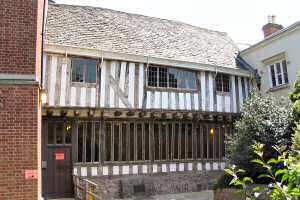
Friday, 10 September 2010

MORE THAN 500 LEICESTERSHIRE PILGRIMS TO JOIN MASS WITH POPE

This article appears in today's Leicester Mercury:
More than 500 Leicestershire pilgrims to join mass with Pope
A convoy of more than 500 pilgrims is to leave Leicester on a week on Sunday to take part in an open-air mass celebrated by the Pope.
Eleven coaches full of worshippers will be heading to Birmingham on an organised trip for the service with Benedict XVI.
Strict security is being imposed for the mass, which is part of a four-day official state visit, to prepare against any disruption.
Peaceful protests are likely over the Pope's record on child abuse in the Catholic church, his views on homosexuality and opposition to the ordination of women.
In all, 70,000 Roman Catholics including 1,000 priests are expected at the ceremony in Cofton Park.
The mass will beatify Cardinal Newman, a Victorian clergyman who converted to the Roman Catholic Church from the Church of England.
The service will mark a step towards Cardinal Newman being canonised as a saint.
Local Papal visit co-ordinator Father David Cain, who is based at St Peter's Catholic Church in Leicester, is confident the day will pass off well but he said security was a serious consideration.
Father Cain said: "Originally we had thought of just the coach leaders having photo ID. But it was felt that if everyone had it then the police would be helped and we all could be identified should something happen."
All the pilgrims will carry either a passport, photo driving licence or other form of identification card with a picture.
As part of a "pilgrim pack" which costs £25, there will be an itinerary for the day and orders of service.
Places on the trip were in high demand and oversubscribed.
Each parish in Leicestershire was allocated 16 places on a coach which would have worshippers from three parishes.
Father Cain said: "Each of the 11 coaches will have 49 passengers. Parishes had their own selection systems.
"Some held lotteries. At one parish, I picked out the winning numbers."
The convoy will leave at 3.45am from the Mother of God Church, in New Parks Boulevard.
Gates will open at 6am, there will be a morning service followed by the beatification mass at 10am. One county resident guaranteed to meet the Pope is Marion Lewis, who is a member of the Church of England.
She will be attending a welcoming reception by the Queen at Holyrood Palace in Edinburgh shortly after the pontiff lands in Britain on Thursday.
Mrs Lewis is the national chairman of the Neighbourhood Watch scheme.
She has been chosen by the Home Office to represent voluntary organisations.
Mrs Lewis, who lives in Market Harborough, said: "I have had some ribbing from my Catholic friends who could not get a place on the bus when they found out I was going to meet the Pope."
She said security for the reception would also be very tight.
"I too have been asked to bring photo identification at the event to accompany my official invitation," she said.

A NATION OF FUZZY DOUBTERS

Ahead of the visit to the UK of Pope Benedict next week, today's Guardian contains an interesting article about how religious adherence is measured.
A nation of fuzzy doubters 
"People cling to the idea of religion as a source of morality," says Terry Sanderson, president of the National Secular Society. "There is general apathy: people don't want to make a fuss."


Many Britons have at best a shallow belief in God: the most recent British Social Attitudes survey found that just a third of the population held firm religious beliefs, with another third deeply sceptical and the final third uncertain.


[...]


"People prefer to talk about spirituality rather than religion, which can mean anything you want it to," says Sanderson.


[...]


According to demographer David Voas at Manchester University: "The part of the population that is properly religious is a minority, but so is that part which is overtly secular. In the middle is an informal group of fuzzy people who don't really care."


Britain is not, as some think, the most secular nation in Europe; it is less so than Scandinavia and parts of the former Soviet bloc.


Migrant communities are the most committed - even long-standing ones, such as the Irish Catholics who dominate what Voas calls "the British bible belt running from Merseyside to Wigan pier."


Most other people are less engaged, although measuring belief is difficult and the data conflicting.


Much depends on how questions are asked and whether they refer to broad social identity or practical belief.


The census, which records the highest level of religious belief, assumes people are adherents of one religion or another and actively asks them to choose from a list.


In 2001, more than two-thirds selected Christian and well under a fifth no religion. that, says Voas, overstates the reality of British religious belief. Asked to choose Christian rather than Muslim or Hindu, people see it as an ethnic identity. Voas argues that the British Social Attitudes survey, which found over half the population holding no strong religious views, is a better measure.


Other polls go further. In a 2006 Guardian/ICM poll only 33% described themselves as religious, against 69% who said they were not - including a majority who described themselves as culturally Christian.


Women and older people were more likely than average to believe in a god, but overall only 13% said they went to a place of worship at least once a week. More people saw religion as a force for harm than for good.


That suggests a country where religion is on the retreat. "There is a huge change - the trend is toward secularism," says Sanderson.


Others, pointing to the impact of migration, from Catholic Poland as well as the Indian subcontinent, are less sure.


The country's religious makeup is fragmenting as the Church of England declines. "It is not the case that Britain is getting more religious," says Voas.

Wednesday, 8 September 2010

DISCOVER LEICESTER

"Discover Leicester" is coming up this weekend: our city's annual contribution to a national Open Days event supported by English Heritage. I've taken from the programme only those sites in the city related to religion. There are more than just these destinations on offer during the four day period. Leicester Council of Faiths organises a "Faiths Trail" as part of this event. I'll be blogging about that separately on Sunday.


St Margaret's Church
St Margaret's Street, LE1 3EB

St Margaret's is a large medieval church rich in history. A warm welcome is extended to everyone. Beautiful stained glass windows - the east window by Thomas Willard.
Sat 11 Sep 1000-1330

Leicester Synagogue
Highfield Street, LE2 1AD

The Synagogue is a listed building and well over 2100 years old. There will be informal tours of the building as well as explanations about its use and the Jewish Faith.
Sun 12 Sep 1000-1600 (Photo of the synagogue, above, from the Leicestershire Beehive, which hosts a number of websites for local not-for-profit groups and organisations)

All Saints' Church
Highcross Street, LE1 4PH

Norman/Medieval Church. Rare 1610 working clock with striking quarter Jack figures. There will be an exhibition of Victorian funeral memorabilia and displays by Leicestershire Calligraphers and the War Memorials Trust.
Thu 9 Sep 1100-1800; Fri 10 Sep 1100-1800; Sat 11 Sep 1000-1800; Sun 12 Sep 1430-1730

Places of Worship, Welcome & Wonder!
Friends' Meeting House, Queens Road, Clarendon Park, LE2 1WP

A chance to explore Stoneygate and Clarendon Park's many and varied places of worship and learn about their history and the often remarkable buildings that house them. From the grandeur of St James the Greater and the Clarendon Park Congregational Church to the Regency villa home of the Jesus Fellowship in Springfield Road. Collect your free map and itinerary and make your own way. Guides will be available at each venue to help make your visit a memorable one.
Sat 11 Sep 1000-1600

St Mary de Castro
Castle Street, LE1 5WN
Norman/Medieval church originally connected to Leicester Castle. the South Wall is still loopholed in preparation for the last ditch stand in the Siege of Leicester 1645.
Thu 9 Sep 1200-1400; Fri 10 Sep 1200-1400; Sat 11 Sep 1200-1700

St Nicholas' Church
129 St Nicholas Circle, LE1 5LX
A hidden treasure of Leicester's heritage, St Nicholas Church has had a long and colourful history. Sited near the centre of the Roman Town of Ratae Coritanorium, some Roman remains visible, but visitors will also find Saxon features dating from AD900.
Sat 11 Sep 1400-1600

Leicester Cathedral

Peacock Lane, LE1 5PX
Cathedral for Leicester and Leicestershire, 13th century church building. Enjoy peace and quiet, prayer and history. Exhibitions and tours, 13 bells, superb organ, recently restored tower and spire.
Fri 10 Sep 1000-1600; Sat 11 Sep 1000-1600; Sun 1000-1600

Leicester Abbey Revealed
Abbey Park, Abbey Park Road, LE4 5AQ
Leicester Abbey was founded in the 12th century and became one of the richest abbeys in the region. Learn of the growth of the abbey and the daily life of the monks.
Thu 9 Sep 0900-1400


St George's Serbian Orthodox Church
Rutland Street
Built in local sandstone in 1827, and largely rebuilt in 1912-13; St George's is now a Serbian Orthodox Church. Enjoy a friendly tour around this fascinating church.Sat 11 Sep 1600-1700


Bishop Street Methodist Church
10a Bishop Street, Town Hall Square, LE1 6AF
Georgian Grade II listed historic Methodist Chapel with an impressive interior. guided tours of the building, opportunity for family historians to consult our historic registers, displays on our church history and information about church heritage project.
Sat 11 Sep 1000-1600

Great Meeting Unitarian Chapel
East Bond Street, LE1 4SX
300 year old non-conformist place of worship, the oldest brick building in Leicester. Set in pleasant gardens in the heart of the city, with many original features and some significant Victorian additions.

Sat 11 Sep 1000-1700; Sun 12 Sep 1030-1230

National Inter Faith Week 2010 planning meeting

It's our first (and only?) planning meeting for the forthcoming National Inter Faith Week, at the end of November. There are nine of us gathered here in the Welcome Centre this afternoon: Daphne Beale (Faiths Forum for the East Midlands, Loughborough Council of Faiths); Gill Buttery (Leicester City of Sanctuary); Rachel Carmichael (Leicester City of Sanctuary, Religious Society of Friends); Amanda Fitton (Christian Aware); Janet Ingram (Leicester Diocese Education Officer); Resham Singh Sandhu (Interfaith Forum for Leicestershire, Leicester Council of Faiths, Sikh Cultural & Welfare Scoiety); Noel Singh (Leicestershire County Council); Mike Smith (Leicester Diocese) - and me.

We debrief on last year's inaugural week, discuss what worked then and what didn't work so well, talk about what we should try and improve on, repeat or forget for this year.

There were several planning meetings for the 2009 event. We think that this will be the only meeting of this kind we need hold this year.

Thursday, 2 September 2010

Centre of Excellence in Community Cohesion (2)

I rush straight from Braunstone Leisure Centre to St Philip's Centre (dropping off our exhibition at the Welcome Centre on the way) for the first meeting of our small group working on advancing ideas and proposals for presenting Leicester as a centre of excellence in community cohesion. There are five of us meeting today: Jasbir Mann (Head of Learning Services, Leicester City Council) who's responsible for driving this project forward; Dilwar Hussain (from the Policy Research Centre), Riaz Ravat (Training Manager at St Philip's Centre), Resham Singh Sandhu (President of the Sikh cultural and Welfare Society and former Chair of Leicester Council of Faiths) and me.

The one definite proposal we agree upon to put to the larger group is that we should be going for a virtual presence for this centre, not a geographical physical site. Jasbir will work that into a position paper that we can present to the next full meeting.

LEICESTERSHIRE CARES "SPORT & SUPPORT DAY"


At Braunstone Leisure Centre, for the "Sport and Support Day" organised by Leicestershire Cares. The event, several weeks in the planning,  has been widened out somewhat, from the original target group of homeless and vulnerably housed people, to encompass people experiencing situations of domestic abuse or violence, asylum seekers and refugees.

Chris Toon, Homelessness Project Officer for Leicestershire Cares (who has been the driving force in this event) asked me to bring the full set of banners in the Council of Faiths display. I thought that might be a little overwhelming, given the nature of the displays that some of the other participants would be able to put up, but he insisted that we show ourselves off in our full regalia.

Councillor Wesley (who has backed this event since it was first mooted) spoke from the stage. Councillor Wan dropped by and Councillor Hall (the Lord Mayor of Leicester) came round the stalls (in mufti).

Other agencies, groups and organisations taking part today include:

The day seems to have been a success, with perhaps as many as 350 people attending. People attending get a free day pass to the leisure and sport facilities here (except for the swimming pool) and First Bus have offered a free return ticket to those travelling here by public transport. Staff and service users from hostels and other facilities take a variety of materials from our stall, such as the set of introductory leaflets.

Claire Glanville, from Action for Children Family Intervention Project, signs me up to take part in a "Diversity Day" that they'll be holding at the end of October. Think I'll bring just the one banner for that one though!

Tuesday, 31 August 2010

DIVERSITY HUB


At Diversity Hub this afternoon, for a meeting to discuss them making progress with their online presence. What starts as being focused purely on their Facebook page extends to include a wider social media strategy encompassing Twitter, blogging and (maybe) Flickr. I come with Ian Davies and Chris Florance and we stay on for an hour or so after the meeting, to help set up some of these accounts.

Losing our religion

Here's an interesting article from this month's GQ:
Losing our religion
Britain has lost its faith in the Church, and Christians are calling for special privileges. But, argues our free-thinker, emptying pews show a new-found belief in equality.
By Johann Hari
And now, congregation, put your hands together and give thanks, for I come bearing Good News. Britain is now one of the most irreligious countries on earth. This island has shed superstition faster and more completely than anywhere else. According to an ICM survey, 63 per cent of us are non-believers, while 82 per cent say religion is a cause of harmful division. Now, let us stand and sing our new national hymn: "Jerusalem was dismantled here/in England's green and pleasant land."
How did it happen? For centuries, religion was insulated from criticism in Britain. First its opponents were burned, then jailed, then shunned. But once there was a free marketplace of ideas, once people could finally hear both the religious arguments and the rationalist criticisms of them, the religious lost the British people. Their case was too weak, their opposition to divorce and abortion and gay people too cruel, their evidence for their claims nonexistent. Once they had to rely on persuasion rather than intimidation, the story of British Christianity came to an end.
Now that less than seven per cent of British people regularly attend a religious service, it's only natural that we should dismantle the massive amounts of tax money and state power that are given to the religious. It's a necessary process of building a secular state, where all citizens are free to make up their own minds. Yet the opposition to this shift is becoming increasingly unhinged. The Church of England has only one explanation: Christians are being "persecuted" by a movement motivated by "Christophobia". George Carey (pictured), the former archbishop of Canterbury, says Christians are now "second-class citizens" and we are only "a small step" away from "a religious bar on any employment by Christians".
Really? Let's list some of the ways in which Christians and other religious groups are given special privileges. Start with the education system. Every British school is required by law to make its pupils engage in a daily "act of collective worship of a wholly or mainly Christian character". Yes: Britain is still a nation with enforced prayer. The religious are then handed total control of 36 per cent of state schools, in which to indoctrinate children into their faith alone.
These religious schools, paid for by you and me, are disfiguring Britain. One reason I grew up without the prejudices of some of my older relatives was because I went to school with kids from every ethnic and religious group, and I saw they were just like me. But in Britain today, that mixing is happening less and less. The children of Christians are sent to one side, Jews to another, Muslims to another still. Yet after the race riots in Bradford, Oldham and Burnley in 2001, the official investigations found that faith schools were a major cause.
So why keep them? Their defenders say these schools perform better in exams - and, at first glance, it seems to be true. On average, they get higher grades. But look again. Several studies, including one by the think-tank Civitas, have shown that faith schools systematically screen out children who will be harder to teach: children from poor families, and less bright children. Once you look at how much a school improves its pupils (the only real measure of a school's success), it turns out faith schools do less well than other schools - not surprising given they waste so much time teaching nonsense such as virgin births and Noah's Ark. The British people instinctively know all this: 65 per cent want every state school to be neutral when it comes to religion.
Special rights for the religious don't stop at the school gates. They get 26 unelected bishops in the House of Lords. Public broadcasters are legally required to give money and screen time to religious propaganda. Jews and Muslims can ignore animal cruelty laws and slit the throats of live animals without numbing them to create kosher and halal meat.
Given all this unearned privilege, how can Christians claim they are "persecuted"? Here are the cases they offer as "proof". A nurse called Shirley Chaplin turned up to work with a crucifix around her neck. Her hospital told her that they were worried elderly and confused patients could grab it, and said she could pin the crucifix to her uniform instead. That's it. That's their cause célèbre. Oh, and a registrar called Theresa Davies refused to perform civil partnerships for gay couples, so... she was moved to work on reception.
In response, Carey and the Church of England demanded Christians be allowed to break the law requiring them to treat gay people equally when providing a service to the general public, and Christians in discrimination cases should be judged by a special court of "sensitive" Christians.
If we started allowing religious people to break anti-discrimination laws, where would we stop? Until 1978, the Mormon Church said black people didn't have souls. (They only changed their mind the day this was made illegal, and God niftily appeared to their leader to say they were ensouled after all.) Would we let a Mormon registrar refuse to marry black people? Would it be "Mormonophobic" to object?
Carey has said Christians might engage in "civil unrest" if judges continued with "dangerous" rulings. His suggested exemptions were dismissed by Lord Justice Laws - a Christian himself - as "irrational, divisive, capricious and arbitrary". Carey's rageful threats made me think of a child who had been beating up gay kids for years and is finally told to stop - only to bawl that he's the one who is being picked on.
As their dusty churches crumble because nobody wants to go to them, the few remaining British Christians will only grow more angry. Let them. We can't let hysterical toy-tossing stop us turning our country into a secular democracy where everyone has the same rights, and nobody is granted special privileges just because they claim their ideas come from an invisible, supernatural being. Now, if you'll excuse me, I have a Holy Lamb of God to carve into kebabs - it's our new national dish. Amen, and hallelujah.

Sunday, 29 August 2010

Leicester's support for Pakistan flood victims


Today's edition of BBC Radio 4's "The World This Weekend" has an item on how Leicester is helping raise money for those affected by the floods in Pakistan. The feature includes an interview with Manzoor Mogul, Chair of the Muslim Forum of Leicester and long-standing member of Leicester Council of Faiths. You can hear this edition of "The World This Weekend" on the BBC iPlayer for the next seven days by clicking the link below. The Leicester feature starts twelve minutes into the broadcast and lasts five and a half minutes.

http://www.bbc.co.uk/iplayer/episode/b00thmvj/The_World_This_Weekend_29_08_2010/

Friday, 27 August 2010

JIMI HENDRIX CONVERSE IN THE WILD


I've been keeping an eye on a number of shoe shops in Leicester over the last week or so for first sight of the Converse All Stars on which is reproduced artwork from the 1967 Jimi Hendrix Experience album, Axis Bold as Love with its pantheon of Hindu deities and sacred figures. This product has been met with strong prtest from many sections of the Hindu community, not only in this country, but also around the world. Today, on a family trip to London, I see my first pair in the wild - in Carnaby Street, appropriately enough!