Saturday, 20 February 2010

JEWEL IN THE LOTUS


To the Quaker Meeting House, Queens Road, for a dayschool looking at correspondences between Hinduism and the Bahá'í Faith. This is led by Anupam Premanand, who has travelled here from Nivelles, Belgium (despite difficulties with the Eurostar service since the train crash outside Brussels earlier this week). Anupam came into the Bahá'í Faith in India some 19 years ago. He's a striking example of a phenomenon that often happens when people become Bahá'í, and after a while find themselves possessed of a deeper knowledge and greater love for the faith tradition into which they were born. The same thing happened to me when I became Bahá'í in 1979, having been brought up vaguely Protestant in the Church of Scotland.

Anupam has an infectious enthusiasm for the subject that conveys itself to everyone here today. There are more than 25 attendees, mostly from Leicester and its environs, a few from Nottingham.

While the Bahá'í World Centre in Israel has long sported buildings of architectural note and splendid gardens (recently named to UNESCO's World Heritage List in recognition of their "outstanding universal value" to the common heritage of humanity) it's the Bahá'í House of Worship in New Delhi that has arguably become the single most recognisable symbol of the Bahá'í Faith worldwide. The Lotus Temple (as it's popularly known) was dedicated to public worship in 1986 and has become a tourist landmark in India. Figures show it to be the most popular visitor attraction in the country after the Taj Mahal. Many people of Indian origin and heritage in Leicester have visited the Lotus Temple and have come away with a very positive impression of it. While that is undoubtedly a good thing, one may wonder how much such visitors glean about the history, beliefs and practices of the Bahá'ís themselves. Of course, a similar question may be asked of the Bahá'ís: how much do they know in their turn about Hindus and Hinduism - particularly in Leicester, where  Hindus are such a large and significant element in the local population? The purpose of this study day is to help the Bahá'ís understand and appreciate more about their Hindu neighbours: what they believe and how their beliefs impact on their lives. Bahá'ís are into finding correspondences between the world's religions as part of their programme for elimination of prejudice and building bridges between different cultures. This event is a good example of them doing just that.

Our day starts with an introduction to the religious and cultural diversity of India, and we see how the history and development of the Bahá'í community of India fits in that context. Since the earliest days of the Baha'i Faith, in the 1840s, some of its followers settled in India, having trading links with the city of Bombay (as it was then). Over the years, many teachers whose names are still celebrated in the annals of the Bahá'í community travelled the length and breadth of India, introducing the Bahá'í teachings to people of diverse backgrounds and interests. Up until the late 1950s and early 1960s, there were only a handful of Bahá'ís scattered around India, mainly in the north, mostly of Zoroastrian (Parsee) background. Indian adherents of Bahá'í would mostly have been educated people, living, working or studying in the major cities. However, after that period, the Bahá'í Faith became more widely known and better supported in the smaller towns and villages. In terms of numbers alone, India has the world's biggest Bahá'í community, at nigh on one-and-a-half million, although this pales into virtual insignificance when seen as part of that country's total population.

Now, many of the Hindu friends I talk with don't seem to mind the name, "Hindu" being used to describe themselves or their communities. But as I learned while writing the Council of Faiths leaflet on Hinduism, when it comes to the name of the religion they follow, many dislike it and prefer the term Sanatan Dharma - meaning the eternal path, way or law. Seeing this religion in that light helps Bahá'ís align their thinking with Hindus, as it brings out relations between the way the two religions see "progressive revelation" - a concept central to them both. Indeed, there are so many fundamental beliefs and practices in common between Bahá'ís and Hindus, many Bahá'ís have found (and, to go on the reactions here today, are still finding) that some of the more abstract teachings in their religion make sense when seen alongside comparable teachings in Hinduism. This is often to the surprise of many Bahá'ís who come from a background more influenced by the Abrahamic traditions of Judaism, Christianity and Islam - and surprise most often grows into delight at recognition of the similarities.

Before the end of the day, Anupram has us learning a Bahá'í prayer in Hindi and chanting a key verse from the Bhagavad Gita in Sanskrit! When one of these songs is over, someone wonders if there are any recordings of it available; "As long as it's not that one" I pitch in. Well, the comment sounded amusing on my side of the room! Here's a photo taken in the garden at the Quaker Meeting House of some of the attendees at this study day. Anupram is second from the right:


During one of our breaks, I bump into a few members of a chapter of the Friends of the Western Buddhist Order (FWBO) newly established in Leicester. They're holding their own meeting upstairs. In my job for the Council of Faiths I'm keen to establish, maintain and develop good relations with all kinds of religious and spiritual groups in the city, so I stop them for a chat. A little later in the afternoon, when their meeting is over, one of their number comes downstairs to hand out invitations that we might join them in their future day retreats or discussion evenings, which are held in the Quaker Meeting House. As their business is done for the day and they're in the process of packing up, I'm invited upstairs for a few minutes to tell them a little about the Council of Faiths and about my role with them. Positive contact is made today, and I come away with a phone number for follow up.

Wednesday, 17 February 2010

equality bill non-statutory guidance consultation


To Nottingham (again!) for this consultation on the Non Statutory Guidance that will accompany the Equality Bill. The meeting is hosted by the Equality and Human Rights Commission, at the Nottingham Hilton Hotel (photo above). A good event in a nice venue with warm and courteous staff, good range of food at lunchtime with decent vegetarian, vegan and halal options.

I'm here representing REDP, but also on behalf of Leicester Council of Faiths - my badge has both on it. Also on hand from REDP is core partner Ian (from the LGBT Centre) and staffer Kelly. There are two delegates from Leicester City Council and I spot at least two people who attended our Involvement Event in Derby yesterday and one from the Retford event last week. On my table is one person whom I first met at our Involvement Event in Leasingham.

Today we're looking at this guidance, seeing if it's fit for purpose, helping get the language right. It's not the time to look at the Equality Bill itself, but to concentrate on the Non Statutory Guidance. There will be changes in gthe Bill as it proceeds toward being signed into law; the final version of the Non Statutory Guidance will reflect that.

The Codes of Practice that go with the Bill are legal documents. They take a ling time to prepare beacuse they have to be legally watertight and they have to take into account the case law that has built up in relevant areas. Non Statutory Guidance is a bit quicker in the making. They mirror the Codes of Practice, but are more in the nature of being practical "how to" guides, aspiring to be simple and easy to follow, user-focused and tailored to their identified audience. They will inform employers, businesses, service providers, clubs and associations of all kinds what they can and can't do, how they should and should not behave toward individuals and groups. Non Statutory Guidance will advise us how we should expect to be treated as individuals an/or as members of groups in society. NSG is written for people who are not HR specialists or legal experts, often working in (or receiving services from) smaller organisations. The NSG has to reflect the language, needs and aspiration of those whom it directly affects. Two versions of the documents are being produced, in print and online: one for service providers and the like, the other for recipients of the services etc. It will also provide examples of good practice and will incorporate a short, straightforward "What's New" guide that will be helpful to newcomers as well as those already familiar with equality legislation.

The four people round our table are asked to consider two scenarios: the first, in the morning, has to do with making reasonable adjustments in order to make public buildings accessible to as wide a variety of users as possible; in the afternoon, we look at the theory and practice of Positive Action as included in the new Bill.

Interesting article in today's Guardian: "Voluntary sector is key to a 'good society' says Etherington". Stuart Etherington is Chief Executive of the National Council for Voluntary Organisations (NCVO). His article can be read at: http://www.guardian.co.uk/society/joepublic/2010/feb/17/future-voluntary-sector-role

Tuesday, 16 February 2010

REDP involvement event: Derby


To Derby, for the sixth in the series of "Involvement Events" hosted across the East Midlands by the Regional Equality and Diversity Partnership. Dee (from LCIL) drives Taherah (from TREC) and me through from Leicester. We leave just after eight and would have got there in double-quick time if Dee's sat nav hadn't thrown her off when we arrive in Derby city centre by telling her to take the third turning off a roundabout that doesn't appear to be there.

Today's venue, The Spot, is very "clubby". There's no natural light, the air conditioning is noisy and the place is festooned with posters for appearances by the "UK's number 1 tribute act!" (self-proclaimed, methinks) for a variety of turns: Calvin Stardust, Mylie Minogue, Rake That (I might have made those names up, but you get the picture). A great night's entertainment plus a three-course meal for only £22.95. Well, at least the venue is central and should be easy to find, but the whole place is fraught with roadworks and the venue itself appears to be in the middle of a building site, like an unfinished Spanish resort hotel. The sound of drilling outside occasionally intrudes on our presentations and discussions.

We have 10 attendees from the Voluntary and Community Sector when we get underway, a few minutes late to accomodate those delayed by the roadworks. I'm chairing the morning session. Dee's presenting the Beginner's Guide to REDP and Ian (from the LGBT Centre) is operating the slides. His is the hardest job in the first session, as Dee does a fair bit of extemporising. She has much more historical knowledge related to this project (particularly knowledge about a number of  failed attempts to do something similar across the region in the past); well, she just has much more knowledge about this, full stop. She's the best known of all of us who make up the core partners of REDP; she can speak with authority and experience, but not necessarilly to the running order of the slides!

I haven't said much about the workshops that form such an important part of the progrmme at these events. We've been using this "world cafe" model for workshops at these events, where participants are invited to write or draw on the paper covers we put on the tables they sit around. If you've ever taken part in a workshop where you've felt that your views aren't being recorded (and felt that means your contribution has not been respected) then the world cafe approach is an antidote to that. You get the chance to write down your own thoughts and feelings there and then. There's an REDP staffer sitting in on the discussions on each table as scribe too, so hopefully, just about everything gets recorded. These paper table cloths and notes are being compiled into one set of notes, for sending out to all those who have participated in these Involvement Events once they're over. All very good and well, but then, there's the pens ... we started using some alcohol-based pens, in a variety of bold colours, but we got complaints about their intoxicating properties when working with them so close up for the hour or so that these workshops take. At our event in Loughborough, Laura nipped out to buy some non-intoxicating pens, but these older ones refuse to die, and keep turning up, no matter that we think we've chucked them away!

The questions to be considered by each of the workshops are:

"What should REDP look like and what model best fits the needs?"


"How do you ensure engagement of all organisations?"

"What are the natural organisations that could sit on the core reference group to not only represent your views but also work in partnership?"

"What do you think are the key issues that should be considered at a regional level for your area?"

Mind you, we all know what Alexei Sayle said about anyone who uses the word "workshop" who isn't connected with light engineering, don't we?

We have the services of two palantypists today, who keep a full record of the day's proceedings, although the person for whom we'd booked them doesn't appear at the meeting. Gill Croft's website is http://www.gillcroftpalantype.co.uk/; Georgina Ford can be contacted on ginford@aol.com

After lunch (the first hot one we've been offered on any of these events) we're joined by another ten people from the public and private sector, making this the best attended of these events so far. Ian takes over the chairing. Carolyn Pascoe presents her "Profile of Derby" based on published statistics. She gets more vigorous interogation today then she probably has at any of the earlier events, but rides the wave in her usual confident and professional manner.

Next up it's me, presenting half an hour on the Equality Bill. Since we have to use a hand mic today, I feel that makes me a little more awkward and a little less natural with the presentation. The projector (provided by the venue) blacks out halfway through my presentation. I prefer not to use PowerPoint and can happily cope with that; but if it goes off halfway through, that's not quite so easy to deal with. Still it gets done, though having to move into the audience with the mic for questions is also stiff and awkward - especially if people actually shrink from me when I approach them with the microphone! At the end of my presentation, Dee takes the opportunity to emphasise the importance of Carolyn's stat-based presentation and clarifies how that aspect of REDP's work will become more of a two-way process.

There's a question why so much time is being given to the Equality Bill, when surely we're preaching to the converted on this topic. An assumption's being made that everyone who attends a meeting such as this will know the Equality Bill inside out, but that proves not to be so. During the break in the afternoon session, two attendees (one from the public sector, the other from the private) confess to me that this is the first time thy've been onb the receiving end of any presentation on the Equality Bill, that their employers, although they have clear interest in it, have not provided any kind of briefing on it.

For the second time in this series of events, Vidar Hjarding is our guest speaker, bringing proceedings to a close. Vidar, who is blind, is Diversity Manager for ITV News Group. There's some interesting discussion about the relationship between diversity and equality in the context of Vidar's work. You can read a profile of Vidar at:
http://www.efd.org.uk/role/vidar-hjarding-political-producer-amp-diversity-advisor-itv-bcidn-associate-political-producer-

Friday, 12 February 2010

karma police

I found £20 on the pavement in Narborough Road earlier this week. I spent it treating myself and a friend to a meal in a restaurant. Next day, in the same road, I lost a leather slip case for my iPhone that had cost me £20. Thanks to Gursharan thanis who, when I told her this story, said that there's room in the blog for this sort of thing!

Thursday, 11 February 2010

REDP INVOLVEMENT EVENT: RETFORD


At Retford Town Hall, for the fifth in the series of Involvement Events held by the Regional Equality and Diversity Partnership (REDP). This is the second day in a row that I've travelled out to Nottinghamshire for REDP-related purposes and the third time in a week I've come to this part of the region, counting my visit to Nottingham Trent University last Saturday to lead the first session of the term for the Open University course I'm tutoring.

Bit of an odd journey over here. Iris from The Race Equality Centre (TREC) driving, with Dennis from Leicester Lesbian, Gay, Bisexual and Transgender Centre and Taherah (also from TREC). Taherah input the postcode for today's venue into an AA route planner and printed out directions. But when we get to what's supposed to be our destination, it's a private house on the main street through Rampton! Thankfully, Retford is only six miles further on, so we still get there in decent time.

On our arrival, the laptop isn't working; Kelly appears to have been struggling with it for ages and a man from the hall is trying to help too. We eventually get it working - sort of - although I'm unable to access my PowerPoint presentation. But such things no longer faze me. On more than one occasion I've had to proceed with a session without use of PowerPoint. I would say that, more often than not, it actually improves things - if you're up for the challenge of actually talking to people, rather than reading to them (or at them). Everyone has a printout of the slides in their packs anyway, so we talk through them together. Feels like there's more audience participation doing it this way, which is a bonus in the end.

We're getting some good and positive suggestions from attendees at all these meetings. Having attended all these Involvement Events to date, it really feels like we're drawing in a good number of potential supporters and contributors - and that REDP is taking off.

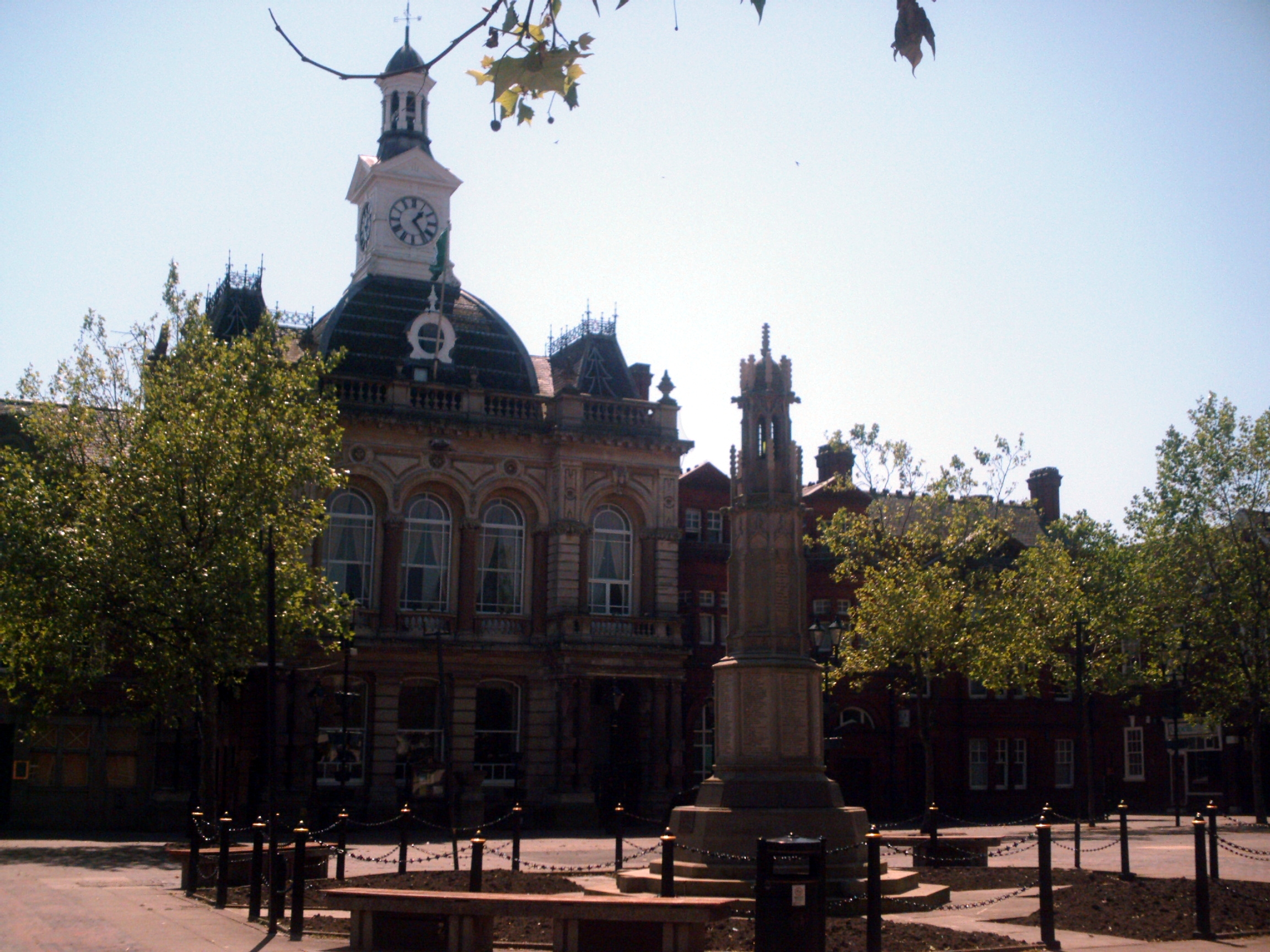
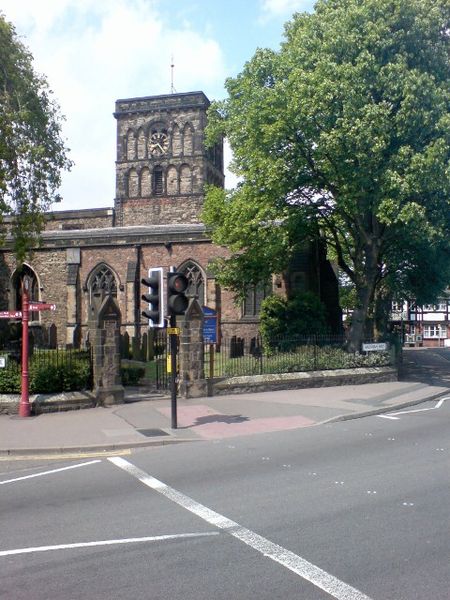
I'm beginning to think that the real legacy of these Involvement Events will be a photographic collection of examples of civic architecture around the East Midlands, as used to illustrate these blog entries.

On the way home, we stop off at Tuxford Windmill, where Fari and Paul Wyman treat us to some very nice cake and coffee in the tearoom. I've been hoping to visit them at the windmill for years and am glad that today's trip has allowed me to do that at last.

East Midlands Network on Spirituality and Mental Health


To Bulwell, Nottingham, this morning, for a meeting of the East Midlands Network on Spirituality and Mental Health (EMNSMH) at Highbury Hospital. It's my first visit to Bulwell and my first (six-minute long) trip on the Robin Hood Line from Nottingham station. I'm mildly disappointed that no arrows are fired at the train from the surrounding woods when I made this remark to someone at the meeting, I was told that if I'd stayed on the train for another few stops ...).

The quarterly meetings of this network are usually held at Kingsway Hospital, Derby, where the network was founded in summer 2007 - all barring the last one (Oct 2009) which was held in Leicester, at our Welcome Centre. Only five people attended that meeting and I'm apprehensive that we'll have even fewer this time. If that turns out to be the case, I fear we'll decide to pack it in today. Thankfully, my fears prove groundless. In fact, I'd go so far as to say that this meeting felt like something of a rebirth for our network.

A good omen: I find a decent cafe on Main Street that serves a nice hot veggie breakfast: English muffin with scrambled egg, cheese and mushroom. That's the kind of thing that sets up the day nicely for me, especially in a strange town on a bitterly cold morning like this one. Guided by my iPhone GPS I walk a quarter of an hour or so to Highbury Hospital. There's a lot of building going on here, and our meeting is in what appears to be high quality temporary accommodation.

There are eleven in attendance including me, representing (in geographical terms) Nottinghamshire, Derbyshire, Northamptonshire (and myself, Leicestershire). We also have a visitor from the West Midlands counterpart of our network - Capt. Keith Shaw, from Staffordshire. I met Keith when I went over to spend a day at a meeting of the West Midlands network, in Jan 2009. I still owe him a set of the our leaflets! In terms of "interest", we have representatives of practitioners (psychiatrists and psychologists), spiritual or pastoral care providers, chaplains and service users. It's pointed out by Sarajane Aris (chairing) that I'm the only one there not directly paid by the NHS. There are several new faces around the table; introductions take a full hour!

Katja Milner (Spirituality Healthcare Worker, Notts Healthcare NHS Trust) gives a PowerPoint presentation introducing Values in Healthcare, a personal and team development programme for healthcare practitioners, which is being used in Nottinghamshire. Katja describes this programme as helping healthcare professionals tap into what it was that attracted them to this kind of work in the first place and helping put them back in touch wth those values and principles, as well as helping them nurutre their own sense of spirituality.

To close her presentation, Katja gives us a five-minute guided meditation, using one of the CDs from the "Peace" module of the "Values in Healthcare" resources. The theme of the meditation is "Inspired to be me".

This approach is inspired by the teachings and leadership of Dadi Janki, Administrative Head of Brahma Kumaris. The Janki Foundation for Global Health Care is "a UK-based charity which encourages research and awareness in the field of health and spirituality. It is dedicated to positive human development and whole-person healthcare, an approach that considers the needs of patients and practitioners at the levels of body, mind and spirit." Some attendees at this meeting have attended training provided by the Janki Foundation and described it as having been beneficial and enjoyable.

When I get the chance to input to the meeting, I stress the potential for involvement of this network with the Regional Equality and Diversity Partnership. The nature of EMNSMH's engagement with mental health care in its many forms would allow it to bring a distinctive contribution to REDP's work.

Dave Waldram, the voice of service users in this network, reported on a conference on Mental Health and the Exploration of Faith which took place in Derby, 2 Feb 2010. Downloads from this conference can be found at the Diocese of Derby Faith in Action website.

Sarajane tells us about two regional conferences on spirituality and mental health to be held in the East Midlands (probably both in Derby, but there's the possibility that one of them could be in Leicester) in October and November respectively.

One memroable thing to take away from this meeting is an aphorism from Vaclav Havel, chipped into the consultation by Hugh Middleton: "Follow the man who seeks the truth; run from the man who has found it."

Tuesday, 9 February 2010

REDP INVOLVEMENT EVENT: LOUGHBOROUGH


To Loughborough Town Hall, for the fourth of the Regional Equality and Diversity Partnership's "Involvement Events" spread across the East Midlands over seven weeks. We're getting the hang of these meetings nicely now and are able to be pretty laid back and relaxed about them. That's helping bring out the best in other attendees, I would say. I chair the morning session, in which Iris Lightfoote from The Race Equality Centre (TREC) presents the Beginners' Guide to REDP. then we go turn about in the afternoon when Iris chairs and I do a presentation on the new Single Equality Bill. We get some lively and informed engagement from the audience, which helps the whole thing go with a bit of a swing.


I take the opportunity today to pass on one of the Council of Faiths' "generic" banners to Gulnaz from East Midlands Ambulance Service. EMAS made a contribution to the cost of our new exhibition and their logo is on each one of the banners. This one will go on permanent display, touring ambulance stations in Leicester and Leicestershire.


Our guest speaker this afternoon is Vidar Hjarding, Diversity Manager for ITV News Group. Vidar himself is blind.

Monday, 8 February 2010

mindfulness (4)


Fourth session in the course on "Mindfulness" offered by Christians Aware at Christchurch, Clarendon Park Road. Leading the session is Ian Grayling (backed up by his colleague, Kevin Commons) from the city's Serene Reflection Meditation Group. This evening's topic is "the other senses" (in what Ian describes as "a job lot").

Ian shows us two "calming techniques" using accupressure which we can apply ourselves, on our wrists, then our hands. Ian wonders aloud if these techniques actually work or if it's just the practice of doing something mindfully that brings a sense of calm.

We are each asked to pick a single raisin from a tub that is passed around the room. We hold it between thumb and forefinger and roll it around. How does it feel? Then hold it up to our noses. How does it smell? Then place it against our lips: how does that feel? Pop it in our mouths, roll it around on your tongue - but don't chew it! How does that feel? Start chewing, but don't swallow it until you feel compelled to.

Later we try standing perfectly still. This is rather like our attempt to be completely silent last week. When we're trying to be silent we hear stuff going on inside our bodies and inside our heads. When we try to stand still, we feel our body making adjustments to our position as our brain checks and fixes our balance.

soup song


At St Nicholas Church, 12 noon, for a "Soup Lunch". I've been invited by Julie-Ann Heath. Her husband Barry and his mate Bill have a range of hearty soups on offer - and it's just the right day for it too, with the snow belting down outside. I get a few mugfuls of the butternut squash. There are 13 of us round the table together, which raises a few knowing laughs.

It's remarkable how many people just come in to the church over the hour or so I'm there. They can't smell the soup from outside or even know that we're in here; the door is firmly shut against the cold.

Find out more about St Nicholas Church:
http://www.stnicholasleicester.com/

Thursday, 4 February 2010

box 15


To Walkers Stadium this afternoon, for a meeting called by the Leicester Strategic Partnership for those doing the work in their Host Organisations. This meeting follows on from an all-day event, the latest in the "Making It Real" series of events - this one on the theme of "Stronger Neighbourhoods". We only received a week's notice of this and the other Host Organisations may not be able to send someone in support, but I thought it a good idea to go, so I've confirmed that I'll be there. This despite the fact that I'm labouring with a heavy cold and it's raining.

The woman on reception has this event on her schedule as the "Post 3:30 Meeting" and she directs me to Box 15, on the third floor. I sit in Box 15 (which has a very nice view of the pitch, as you can see, above) for about 20 minutes, wondering when anyone else is going to show. Sitting in this empty room, gazing out on the deserted stadium, pitch partly covered, goalposts taken down ... it begins to feel like a meditation on nothing much at all. After a while, I start to wonder if I'm in the right place. I make my way back down to the Grand Hall, where the "Making It Real" event would have been held. Perhaps it's overrun. I'll probably meet some people making their way up to the third floor for my meeting. These corriders are longer and quieter than I would have first thought - and because the lights switch on automatically by sensor as you pass under them, it's all a bit darker too. When I do find the Grand Hall, it's empty, with only a few staffers in the early stages of cleaning up. I ask one young woman picking up empty cups and saucers if she knows whether anyone was making their way up for the "Post 3:30 Meeting"; but she tells me she heard them making the decision to cancel that meeting earlier in the day.

On the way home through the rain, I phone Dee at LCIL. She reminds me that we'd made a decision that since we couldn't all go, then none of us would go. I remember discussing this at our meeting on Tuesday, but don't remember actually deciding anything about it. But it makes sense, and it's our mutually supportive way. But if that's so, how come the woman doing the cleaning up heard them decide to cancel the meeting this morning? And why was it still on the schedule at reception? My head is too full of cold and I've had way too much Lemsip to figure this one out - obviously.

Find out more about the Walkers Stadium:
http://www.thewalkersstadium.co.uk/